
Hear from Our Customers
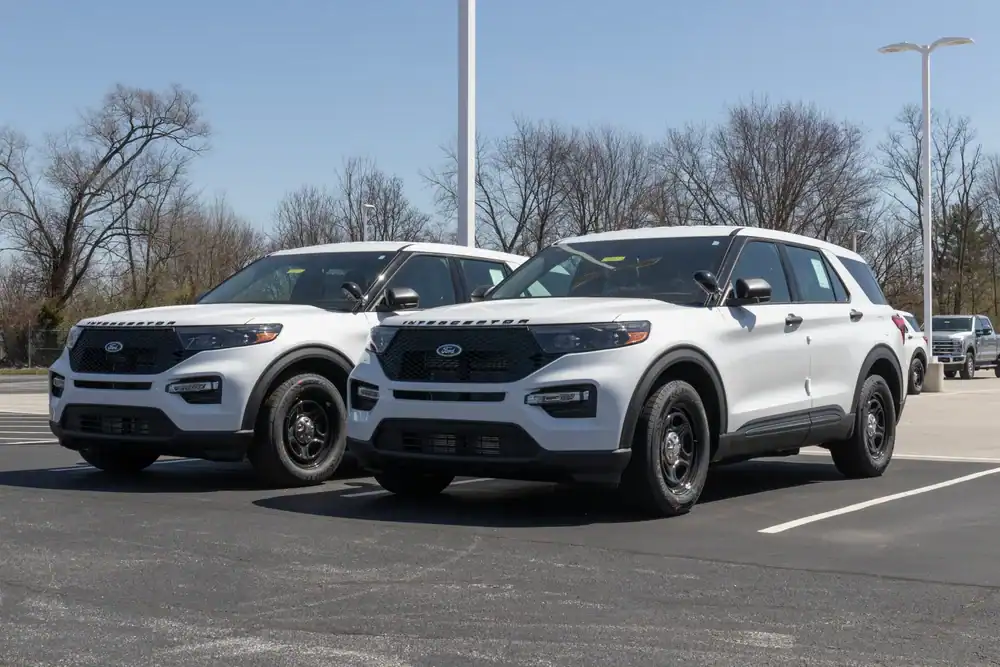
You’re not buying someone’s neglected trade-in. These Ford police interceptor utility vehicles were maintained on strict schedules by law enforcement agencies that couldn’t afford breakdowns during shifts.
Every cop car for sale in our inventory comes with heavy-duty components that civilian models don’t get. Stronger suspension. Beefier alternators. Cooling systems built for idling during long shifts. Steel wheels designed for pursuit situations. You’re getting engineering that was never meant for casual weekend drives.
The mileage looks high—most of these sit between 120,000 and 160,000 miles. But here’s what that number doesn’t show: departments change oil every 300 hours. They inspect brakes, fluids, and critical systems constantly. These vehicles were built to run hard and maintained to keep running. That’s not something you’ll find on a random used SUV lot.
We don’t dabble in police interceptors—it’s all we do. While other used car dealers in the Greensburg area mix in trade-ins and auction leftovers, we focus exclusively on retired law enforcement vehicles.
That focus matters because buying a Ford Explorer police interceptor isn’t the same as buying a regular Explorer. You need someone who understands what police departments do to these vehicles, what modifications were made, and what that means for you as the next owner. We know which fleet maintenance practices to look for and which red flags to avoid.
We’re here in Greensburg serving buyers throughout Western Pennsylvania who want straight answers about what they’re buying. No inflated promises. No hiding the odometer reading or the fact that these were working vehicles. Just honest information about police impound cars for sale that still have plenty of life left.
You start by looking at what’s actually in stock. Our inventory changes as we acquire vehicles from police auctions and department fleet sales, so what you see today might not be here next week. If something catches your eye, reach out and we’ll give you the full breakdown—mileage, known history, condition, and price.
You can come see the vehicle in person at our Greensburg location. We’ll walk you through what you’re looking at: the engine option (whether it’s the 3.3L V6, the hybrid, or the 400-horsepower EcoBoost), the drivetrain, any cosmetic issues from equipment removal, and what kind of duty it saw. You’ll know if it was a highway patrol unit or a city vehicle before you decide.
Once you’re ready to move forward, the process is straightforward. These are used cop cars for sale—not certified pre-owned with warranties. You’re buying the vehicle as-is, which is why the price is thousands below retail. You handle your own financing if needed, we handle the title and paperwork, and you drive off in a pursuit-rated Ford that most people will never get to own.
Ready to get started?
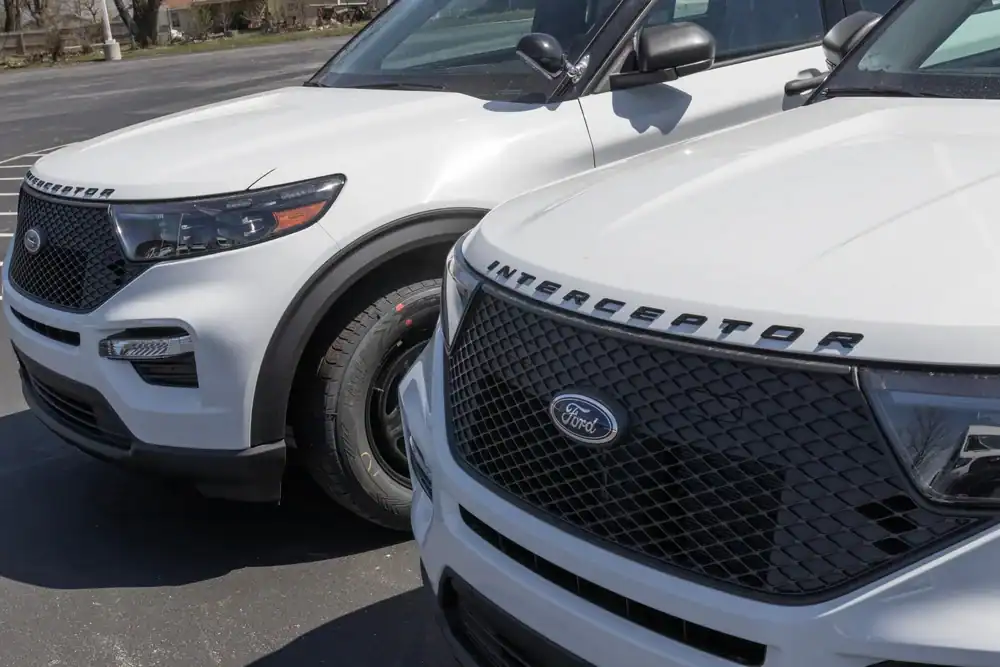
The Ford police interceptor utility isn’t just a rebadged Explorer. It’s a purpose-built vehicle that went through testing by agencies like Michigan State Police and LA County Sheriff before it ever hit the street. The 3.0L EcoBoost version outperformed every other police vehicle tested—including V8 sedans—in acceleration and handling.
You’re looking at intelligent AWD that handles Pennsylvania winters better than most Subarus. You’re getting a vehicle that accelerates 0-60 in 5.5 seconds if it’s the EcoBoost model. The suspension is tuned for high-speed stability, not soft comfort. The brakes are oversized because they were stopping a 4,500-pound SUV from pursuit speeds, not mall parking lots.
In the Greensburg market, you’ll typically find these Ford Explorer police interceptor for sale models priced between $5,500 and $15,000 depending on mileage, condition, and engine. Compare that to a civilian Explorer starting above $20,000 used, and you’re saving serious money. Yes, you might need to touch up paint where light bars were mounted. Yes, the interior might show wear from gear and daily use. But the mechanical guts? Those were built to a completely different standard than what regular buyers get.
The odometer tells you one story, but it’s not the full picture. Most of these vehicles racked up miles during highway patrol, which is far easier on an engine than stop-and-go city driving. A Crown Vic or Explorer that spent years on interstate duty isn’t stressed the same way a delivery van or taxi would be.
More importantly, police departments maintained these vehicles on schedules that would bankrupt most private owners. Oil changes every 300 hours. Brake inspections constantly. Fluid checks before every shift. When something showed early signs of wear, it got replaced—not because it failed, but because departments couldn’t risk a breakdown during a call.
The components themselves are also built tougher. Heavy-duty alternators, upgraded cooling systems, reinforced suspension. These aren’t parts that were value-engineered to barely last through a warranty period. They were specced to handle years of hard use, which means they’ve still got plenty left even after 120,000 miles of police work.
Cosmetic work is the most common need. When departments remove equipment like light bars, push bumpers, radio mounts, and console computers, they leave holes and wear marks. You might want to repaint sections, patch mounting holes, or replace interior panels that got beat up from gear rubbing against them daily.
Mechanically, you’re buying a vehicle with no warranty, so you’re responsible for anything that comes up. That said, the major systems—engine, transmission, drivetrain—are usually solid because of the maintenance history. What you’ll want to inspect closely are wear items: tires, brake pads, battery condition, and fluid levels. These are things that might be near end-of-life simply because of the mileage.
The good news is parts availability for Ford police interceptors is excellent. These were produced in huge numbers, and Ford’s police vehicle heritage means mechanics know these platforms inside and out. You’re not dealing with some obscure import where parts take weeks to arrive. Most common repairs can be handled at any competent shop without special tools or training.
In terms of straight-line performance and handling dynamics, yes—especially the EcoBoost models. The 400-horsepower twin-turbo 3.0L engine in the top-spec interceptor utility hits 60 mph in 5.5 seconds and tops out at 148 mph. That’s legitimately quick. Even the base 3.3L V6 with 285 horsepower moves better than most family SUVs because it’s not carrying the weight of luxury features and sound deadening.
The suspension tuning is completely different. Civilian Explorers are tuned for soft, quiet rides that isolate you from the road. Police interceptors are tuned for high-speed stability and quick directional changes. They feel more planted in corners and more responsive to steering inputs. Owners describe them as handling “like they’re on rails” compared to the floaty feel of regular SUVs.
But here’s the trade-off: they’re louder, stiffer, and less comfortable for daily commuting. The ride quality is harsher because the suspension is built for performance, not cushioning. You’ll hear more road noise because there’s less sound insulation. If you want a quiet, smooth family hauler, buy a regular Explorer. If you want something that drives like a sport sedan in an SUV body, the interceptor delivers.
In the Pennsylvania market, Ford police interceptor utility models typically start around $5,500 and go up to $15,000 depending on year, mileage, engine, and condition. The nationwide average sits at $15,400 for utility models and $10,185 for sedan interceptors, but local market pricing in Greensburg and surrounding areas tends to run slightly lower.
Auction prices for interceptor SUVs average around $7,000, which gives you a baseline for what dealers are paying before markup. If you’re seeing prices significantly higher than $15,000, you’re either looking at very low mileage examples, recent model years, or dealers adding too much margin. If you’re seeing prices below $5,000, dig deeper—there’s usually a reason it’s priced that low.
Compare that to civilian equivalents and the value becomes obvious. A used Explorer in similar condition starts above $20,000. You’re saving $5,000 to $10,000 by buying the police version, even though you’re getting heavier-duty components and more powerful engine options. The trade-off is cosmetic imperfections, higher mileage, and no warranty—but for buyers who can handle basic vehicle ownership, that’s a small price to pay for the savings.
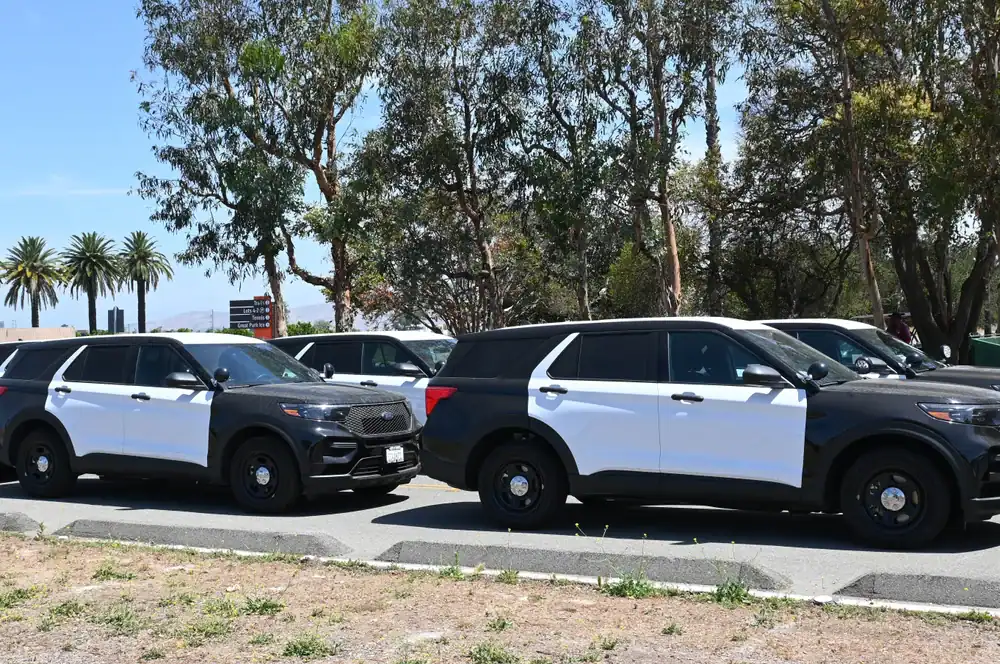
Yes, especially if it’s an unmarked white or black Ford Explorer. Other drivers will absolutely slow down, put their phones away, and check their speed when they see you in their mirrors. It’s one of the most commonly reported experiences from interceptor owners—the “stealth factor” that comes with driving something that looks like an unmarked police vehicle.
Some people love that effect. It clears the left lane on highways and makes other drivers more cautious around you. Some people find it annoying because they get stares, questions, and assumptions about who they are or what they do. If you’re someone who doesn’t want attention, this might not be the vehicle for you.
You can reduce the effect somewhat by choosing colors other than white or black, removing any remaining police-related decals or markings, and adding personal touches that clearly mark it as a civilian vehicle. But the body style and stance will always give it away to people who know what to look for. If that bothers you, buy something else. If it doesn’t—or if you actually enjoy it—then it’s just another quirky benefit of owning a piece of law enforcement history.
They focus only on the odometer and panic about the mileage without understanding what kind of miles these vehicles accumulated. A police interceptor with 140,000 highway miles and documented fleet maintenance is a better buy than a civilian SUV with 80,000 miles of unknown history, neglected oil changes, and deferred repairs.
The second mistake is expecting these to be like certified pre-owned vehicles with warranties and perfect cosmetic condition. You’re buying a work truck that happened to be shaped like an SUV. It’s going to have wear. It’s going to have quirks. Equipment removal leaves marks. If you need everything perfect and guaranteed, you’re shopping in the wrong category.
The smart approach is to focus on mechanical condition, maintenance history, and what kind of duty the vehicle saw. Highway patrol units are generally better bets than city vehicles that idled for hours and made constant short trips. Vehicles from departments with strong fleet management programs are better than ones from small agencies that stretched budgets. Ask questions. Get whatever documentation exists. And understand that you’re buying capability and value—not perfection.
Other Services we provide in Greensburg