
Hear from Our Customers
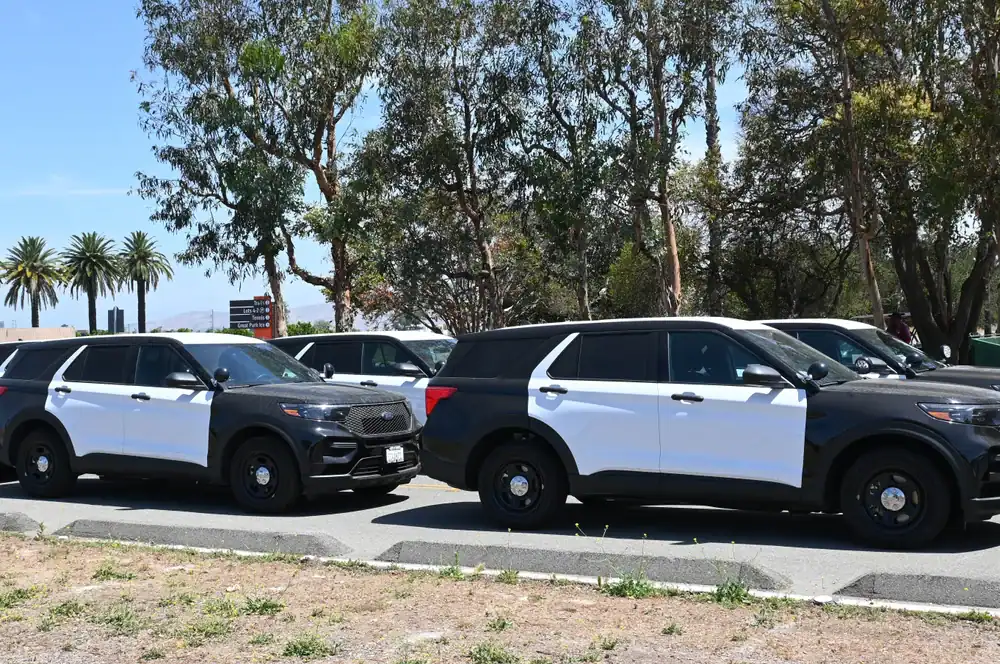
You get a vehicle that was built different from the start. Heavy-duty suspension. Upgraded cooling systems. Reinforced frames. These aren’t cosmetic upgrades—they’re functional differences that matter when you’re putting miles on a car every single day.
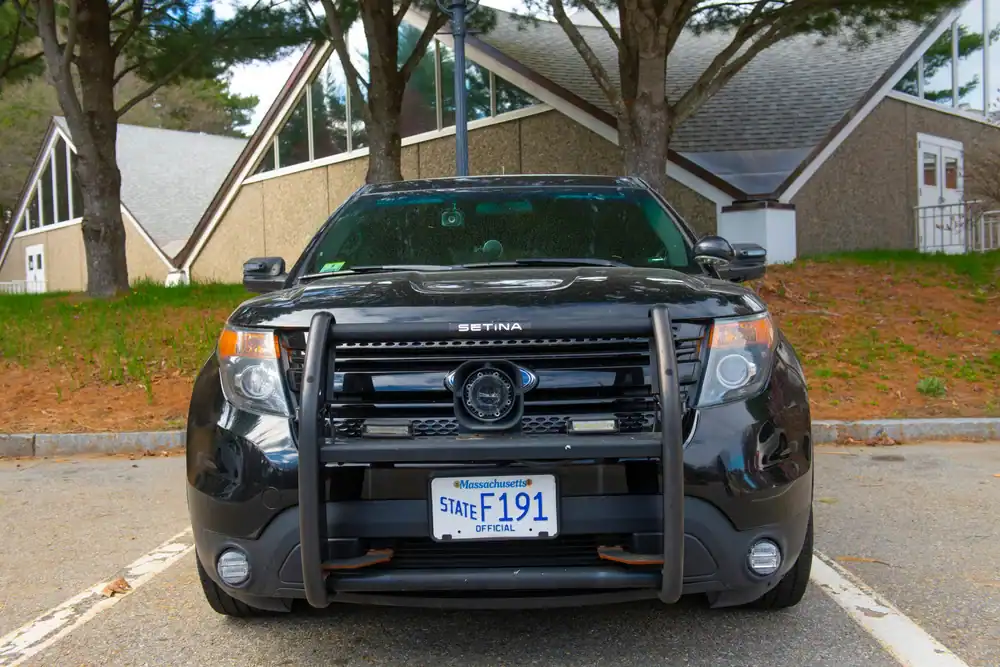
The Ford Police Interceptor Utility and Ford Explorer Police Interceptor models we sell were maintained on strict schedules. Oil changes happened on time. Inspections were documented. Departments don’t skip maintenance when officer safety depends on it.
And you’re saving real money. Most used police cars sell for $5,000 to $15,000, while comparable civilian SUVs with similar years and features start well above $20,000. That’s not a small gap. That’s the difference between affording a vehicle now or waiting another year.
We specialize in one thing: used cop cars for sale. We’re not a general used car lot trying to move whatever comes through the gate. Every Ford Interceptor for sale on our lot came from a government fleet, and we know its history.
Norristown and the surrounding Montgomery County area have always had strong ties to law enforcement, and that means there’s steady turnover of well-maintained fleet vehicles. We work directly with agencies to bring those vehicles to buyers who understand what they’re getting—and what they’re saving.
You won’t find us overselling or hiding details. The mileage is what it is. The wear is visible. But so is the value.
First, you browse what’s available. We keep our inventory updated with Ford Crown Interceptors, Ford Explorer Police Interceptors, and other retired fleet vehicles. You’ll see the year, mileage, and photos upfront.
When something catches your eye, you come see it in person. You can look under the hood, check the interior, and ask questions. We’ll tell you what agency it came from and what kind of duty it saw—highway patrol racks up different wear than city stop-and-go.
If you decide to move forward, the process is straightforward. No drawn-out negotiations or pressure tactics. You’re buying a vehicle that’s priced based on its actual condition and market value, not inflated sticker games. Once paperwork is handled, the vehicle is yours.
Most buyers are surprised how simple it is. You’re not dealing with auctions or bidding wars. You’re buying directly from a dealer who specializes in police impound cars for sale and understands this market inside and out.
Ready to get started?
Every vehicle comes with a clear title and full disclosure of its history. You’ll know the mileage, the agency it served, and any major incidents on record. We’re not hiding anything because there’s no reason to—these vehicles were maintained better than most civilian cars on the road.
Pennsylvania’s surplus vehicle market is active, with regular turnover from state and local agencies. That means consistent inventory and competitive pricing. The Ford Police Interceptor Utility remains one of the most common models we see, and for good reason—it’s been the backbone of law enforcement fleets across the country for years.
You’re also getting a vehicle with readily available parts. Because these models are based on civilian platforms and were produced in high volume, you won’t struggle to find replacement parts when you need them. Any mechanic familiar with Ford vehicles can work on these without specialized training or tools.
It comes down to three things: mileage, perception, and volume. Most retired police vehicles have between 120,000 and 160,000 miles on them. That’s higher than what you’d see on a typical used car lot, and it affects resale value even though the vehicles were maintained meticulously.
There’s also a stigma. Some buyers assume these cars were beaten up or driven hard, so demand is lower than it would be for a comparable civilian model. That works in your favor if you understand what you’re actually buying.
Finally, agencies sell in volume. When a department retires a dozen vehicles at once, they’re priced to move. They’re not trying to maximize profit on each individual sale—they’re clearing out fleet inventory to make room for new vehicles.
High mileage on a police vehicle isn’t the same as high mileage on a neglected civilian car. These vehicles were maintained on strict schedules because departments can’t afford breakdowns in the field. Oil changes, brake inspections, fluid checks—all of it happened on time, every time.
You also need to consider how those miles were accumulated. Highway patrol vehicles spend most of their time cruising at steady speeds, which is far easier on an engine than constant stop-and-start city driving. That’s why a 150,000-mile highway car can be in better mechanical shape than an 80,000-mile city commuter.
When you’re looking at a specific vehicle, ask where it served and what kind of duty it saw. We’ll tell you. And if you want to have your own mechanic look it over before buying, that’s completely reasonable. We’re not hiding anything under the hood.
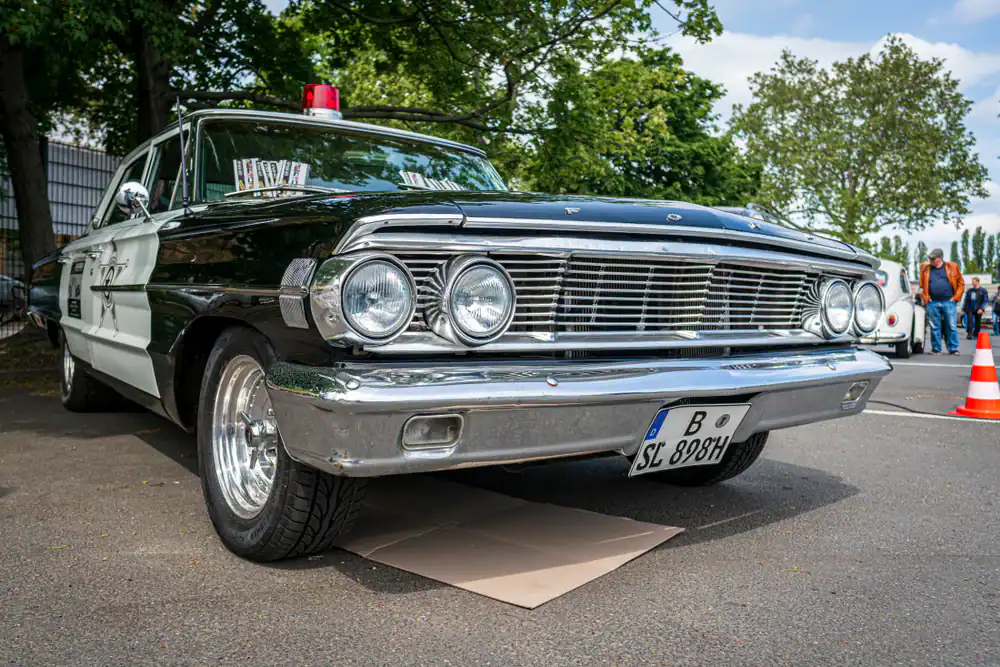
The Ford Crown Victoria Police Interceptor was the standard for decades—a rear-wheel-drive sedan that dominated law enforcement fleets until production ended in 2011. It’s known for being nearly indestructible, with a simple V8 engine that’s easy to work on and parts that are still widely available.
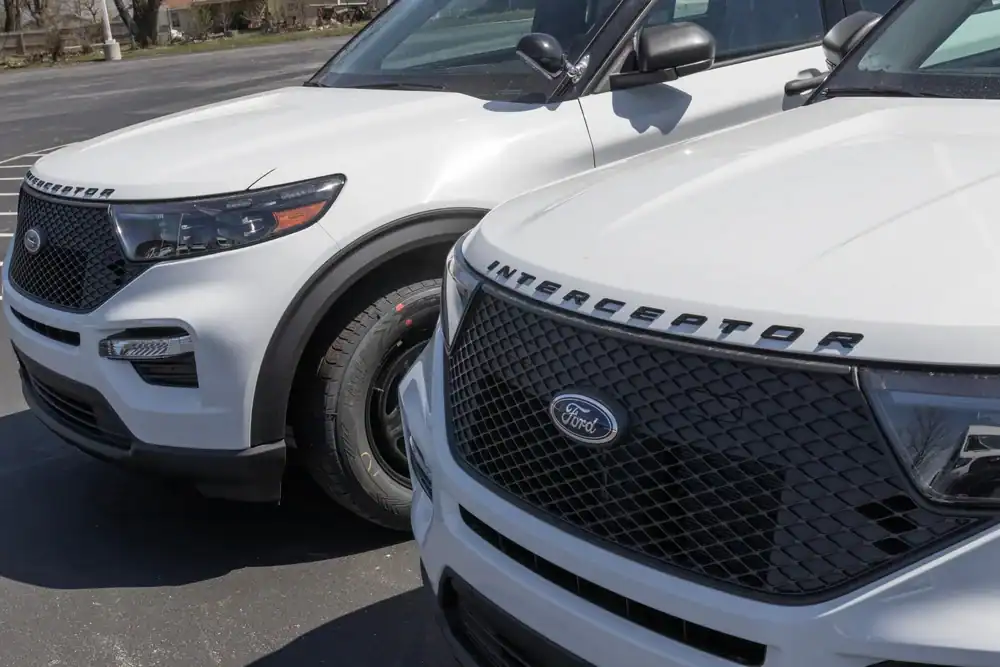
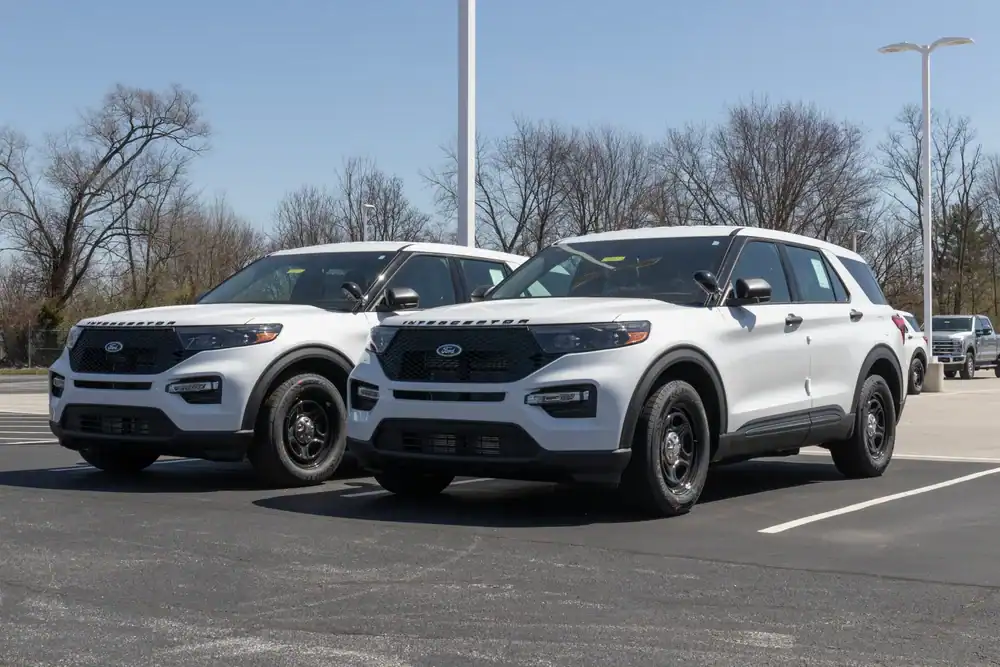
The newer Ford Police Interceptor Utility is based on the Explorer platform. It’s an SUV with available all-wheel drive, more cargo space, and better fuel economy than the Crown Vic. It’s also what most agencies have switched to, which means it’s becoming the most common option in the used market.
Both are built tough. The Crown Vic has a loyal following because of its simplicity and proven track record. The Interceptor Utility offers more modern features and versatility. It really comes down to what you need the vehicle for and what’s available when you’re shopping.
Yes. Once a police vehicle is retired and sold, it’s titled and registered just like any other used vehicle. There are no special restrictions or additional steps required in Pennsylvania.
You will need to remove any remaining police equipment or markings if they’re still present, but most vehicles we sell have already been stripped of lights, sirens, and decals. What you’re buying is essentially a civilian vehicle with heavy-duty components.
The title will be clean, and you’ll register it through PennDOT like any other car purchase. Insurance companies treat them as standard vehicles too, though you should confirm coverage details with your provider before finalizing the purchase.
Start with the basics: check the engine for leaks, look at the condition of the tires and brakes, and test all the electronics. Police vehicles often have aftermarket wiring for equipment that’s been removed, so make sure everything that should work does work.
Pay attention to the interior. Police cars see a lot of use, and the seats, door panels, and dashboard may show wear. Some buyers don’t care about cosmetic issues if the price reflects it. Others want something cleaner. Know what you’re willing to accept before you start shopping.
Ask about idle hours if that information is available. Police vehicles spend a lot of time idling, which puts wear on the engine that doesn’t show up in the odometer reading. It’s not a dealbreaker, but it’s worth knowing. And if you’re serious about a specific vehicle, bring a mechanic or pay for a pre-purchase inspection. It’s a small cost for peace of mind on a major purchase.
They’re excellent for highway driving and long commutes. The Ford Police Interceptor Utility was designed for extended patrol shifts, which means comfortable seating, solid handling at speed, and powertrains built for sustained use. If you’re racking up miles on the highway, these vehicles handle it without complaint.
You’ll also notice other drivers tend to give you more space. Even without police markings, the vehicle profile is recognizable, and people often assume it’s an unmarked car. That’s not why you should buy one, but it’s a side benefit that many owners mention.
Fuel economy is decent for the size and power. You’re not getting hybrid numbers, but you’re also not burning through gas like an old truck. For the price you’re paying compared to a civilian SUV, the cost per mile is hard to beat.
Other Services we provide in Norristown