
Hear from Our Customers
Most used cars come with question marks. Police interceptors come with answers.
These vehicles were maintained on strict schedules by municipal fleets. Oil changes, brake inspections, fluid checks—all documented. The engines are built with larger radiators and external coolers designed for high-load operation. The suspension, brakes, and frame are reinforced beyond civilian specs because they had to be.
You’re not buying someone’s neglected commuter car. You’re buying a vehicle that was built for performance and maintained like it mattered. That’s why Ford Police Interceptors have been the top choice for law enforcement across the U.S. and Canada for over a decade.
The typical used cop car for sale runs between $5,000 and $15,000. Compare that to a new SUV starting above $20,000, and you’re saving real money while getting a vehicle engineered for durability. Lower depreciation means your investment holds value better than most used cars on the market.
State Surplus Auto Sales was started by someone who spent a career in law enforcement and saw quality vehicles going to auction that still had plenty of life left. That’s how our business began—recognizing value where others saw mileage.
Since 2003, we’ve specialized in government surplus vehicles in the Pittsburgh area. We’re not a general used car lot trying to move whatever comes through. We focus on police interceptors and municipal fleet vehicles because we know how they’re built, how they’re used, and what to look for.
Pittsburgh has an active market for impound cars for sale and government auctions, but buying at auction means no financing, no support, and you’re on your own if something isn’t right. We offer zero percent interest financing to qualified buyers and actual customer service after the sale. You’re not just getting a vehicle—you’re getting someone who knows these cars and can answer your questions.
First, you look at what we have available. Our inventory includes Ford Police Interceptor Utility models, Ford Explorer Police Interceptors, and other government fleet vehicles. Each listing shows the vehicle history, mileage, and current condition so you know what you’re looking at before you drive out.
When you find something that fits, come see it in person. Check it out, ask questions, take it for a test drive. We’ll walk you through the maintenance records and show you exactly what work has been done.
If you decide to move forward, we handle the financing if you need it. Zero percent interest options are available for qualified buyers, which is something you won’t get at a government auction. We process the paperwork, get the title transferred, and you drive off the lot.
No pressure. No runaround. You’re either interested or you’re not, and we respect that either way.
Ready to get started?
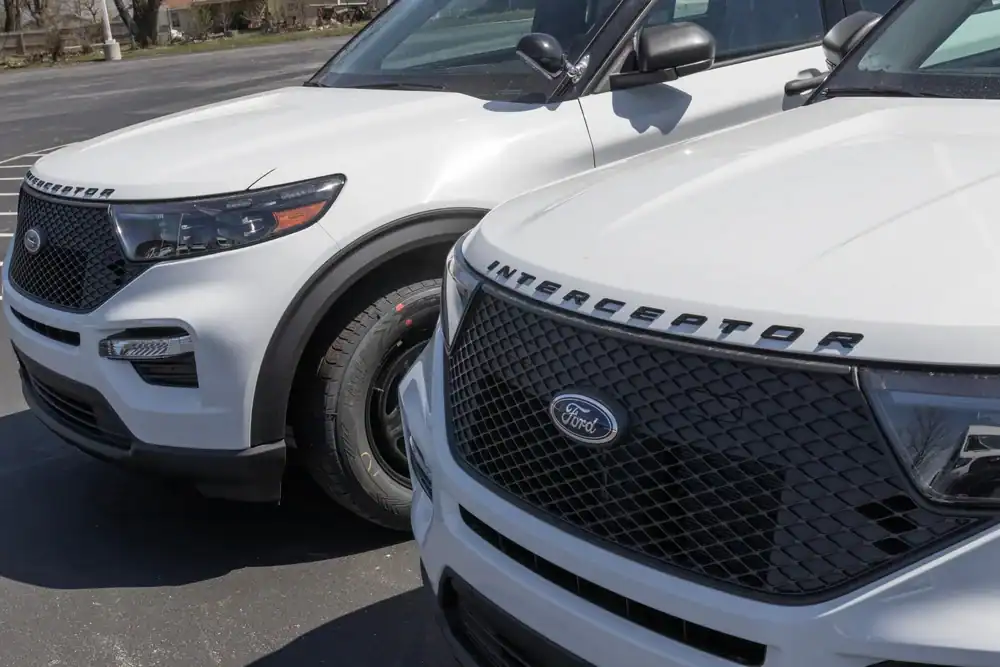
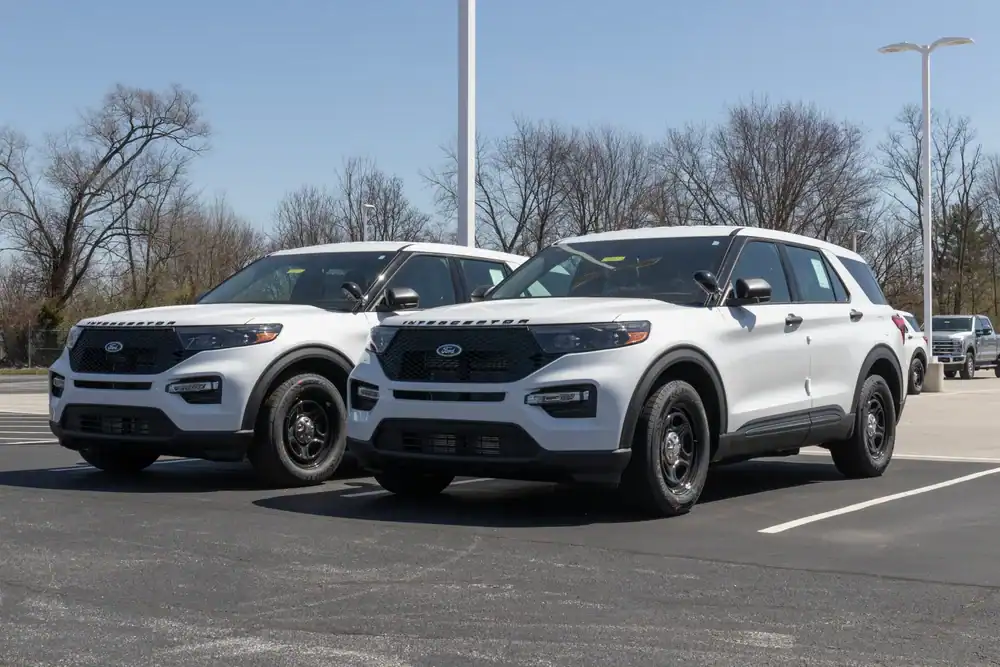
A Ford Explorer Police Interceptor isn’t just a civilian Explorer with a light bar. The engine, cooling system, electrical system, brakes, and suspension are all upgraded. These vehicles were built to handle pursuit driving, extended idling, and heavy equipment loads.
The Ford Police Interceptor Utility comes with a more powerful engine than the standard Explorer, upgraded all-wheel drive, and a frame designed to take hits. Larger brake rotors, performance tires, and reinforced mounting points are standard. The cooling systems include external oil coolers for the engine, transmission, and power steering to prevent overheating during high-stress use.
In Pittsburgh, where weather swings from summer heat to winter ice, that all-wheel drive and enhanced braking matter. These vehicles were designed for real-world conditions, not just highway cruising. Pennsylvania auctions move over 400 vehicles a year, including police interceptors, but most buyers at those auctions are dealers or resellers. When you buy from us, you’re getting a vehicle that’s been checked over and is ready to register and drive.
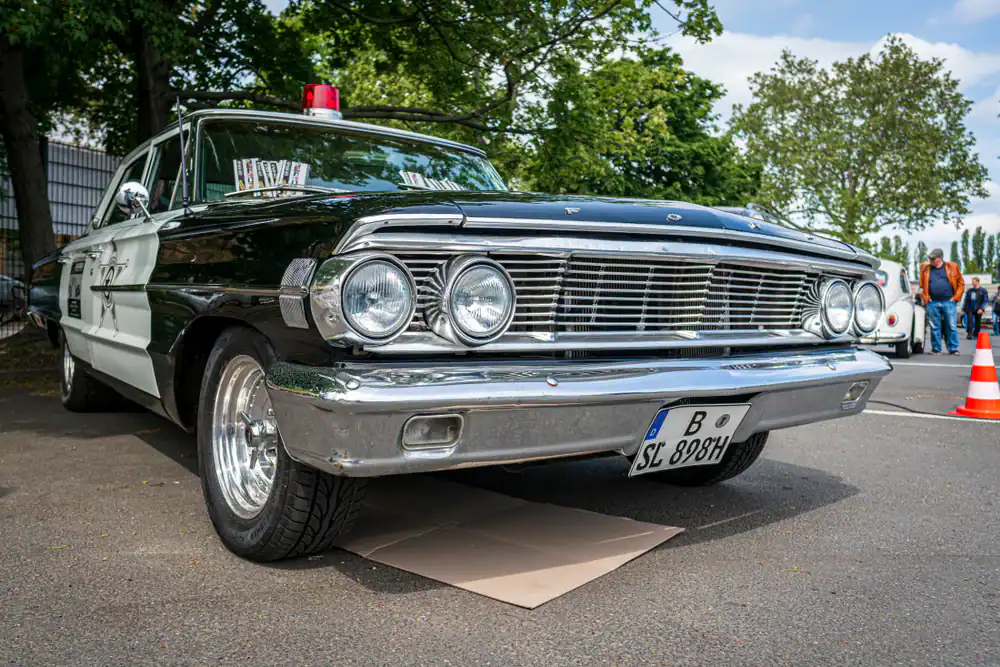
You’ll also find Ford Crown Victoria Police Interceptors in our inventory from time to time. From 1997 to 2013, the Crown Vic was the most widely used police car in North America. They’re known for being nearly indestructible, easy to work on, and cheap to maintain. If you want a no-nonsense sedan with a V8 and rear-wheel drive, that’s your vehicle.
Yes, if you’re looking for durability and value. Police interceptors typically cost between $5,000 and $15,000, while comparable civilian SUVs in similar condition often run $18,000 to $25,000 or more. You’re saving thousands up front.
Beyond the price, you’re getting a vehicle that was maintained on a schedule, not when someone felt like it. Municipal fleets keep detailed service records, and those vehicles are inspected regularly. The parts are heavy-duty spec, not consumer-grade. That means fewer breakdowns and better resale value down the road.
The trade-off is mileage and wear. Police cars idle a lot, which doesn’t show on the odometer but does put hours on the engine. They also get used hard—lots of stop-and-go, quick acceleration, and extended running time. But the components are built for that kind of use, so a police interceptor with 100,000 miles isn’t the same as a civilian car with 100,000 miles. The engineering and maintenance make the difference.
Mileage and idle hours are the big ones. Police vehicles spend a lot of time idling, which means engine wear that doesn’t show up on the odometer. Ask about idle hours if that information is available. High idle time can mean more wear on the engine, alternator, and cooling system.
Check for cosmetic damage from equipment removal. Holes in the dash, roof, or trunk from lights, radios, and computers are common. Some vehicles have scratches or paint damage from vinyl decals being removed. These are mostly cosmetic issues, but they affect appearance and might require touch-up work if that matters to you.
Look at the service records. Most police departments keep detailed logs of oil changes, brake work, tire replacements, and any other work done. If the records are incomplete or missing, that’s a red flag. You want to know the vehicle was maintained, not just driven into the ground and sold off. We provide those records with every vehicle so you’re not guessing.
Yes. We offer zero percent interest financing to qualified buyers, which is a major advantage over buying at a government auction where you need cash or a cashier’s check on the spot.
Financing a used police car works the same way as financing any used vehicle. We’ll review your credit, discuss terms, and get you approved if you qualify. The process usually takes less than an hour, and you can drive off the same day in most cases.
If you’re comparing us to an auction, keep in mind that auctions don’t offer financing at all. You bid, you win, you pay immediately, and the car is yours—no returns, no support, no help if something goes wrong. Buying from us means you have financing options, time to inspect the vehicle, and someone to call if you have questions later. That peace of mind is worth something, especially on a higher-mileage vehicle.
The Police Interceptor Utility is a factory-built law enforcement version of the Ford Explorer, and it’s significantly different under the hood and throughout the chassis. It’s not just an Explorer with police equipment added on.
The engine is more powerful—most Interceptor Utilities come with a 3.0L EcoBoost or 3.3L V6 that produces more horsepower and torque than the civilian version. The cooling system is upgraded with larger radiators and external coolers for the engine oil, transmission fluid, and power steering fluid. This allows the vehicle to run hard for extended periods without overheating.
The suspension is reinforced, the brakes are larger, and the electrical system is built to handle the load of lights, radios, computers, and other equipment. The all-wheel-drive system is calibrated for performance, not just all-weather driving. Ford also adds structural reinforcements to the frame and body to handle the stress of pursuit driving and equipment mounting. You’re getting a vehicle that was engineered from the factory to be tougher and faster than what’s sold to the public.
With proper care, a police interceptor can easily go another 100,000 miles or more after leaving fleet service. These vehicles are built for longevity, and the heavy-duty components are designed to outlast civilian parts.
The key is knowing what you’re starting with. A vehicle that was maintained well and has complete service records is going to last longer than one that was run into the ground and dumped at auction. That’s why we only sell vehicles with documented maintenance history. You’re not gambling on an unknown.
Most buyers use these vehicles as daily drivers, work trucks, or for small businesses like security companies and taxi services. They’re popular because they’re reliable and cheap to maintain. Parts are easy to find, and any mechanic who works on Fords can handle them. The resale market is stable because there’s consistent demand from people who know what these vehicles offer. If you take care of it, a police interceptor will take care of you for years.
Most used police vehicles are sold as-is, meaning there’s no manufacturer warranty remaining. These are older, higher-mileage vehicles, so factory coverage has typically expired. However, that doesn’t mean you’re buying blind.
We provide full service records and vehicle history for every car we sell. You’ll know what work has been done, what parts have been replaced, and what the vehicle’s maintenance schedule looked like while in service. That transparency is more valuable than a 30-day warranty on a car with no history.
If you want additional coverage, you can purchase an extended warranty or vehicle service contract from a third-party provider. We can point you toward options if that’s something you’re interested in. But most buyers of police interceptors are comfortable with the as-is purchase because they’re getting a vehicle with a known history, heavy-duty components, and a track record of reliability. You’re not buying someone’s problem car—you’re buying a fleet vehicle that was maintained because it had to be.
Other Services we provide in Pittsburgh