
Hear from Our Customers
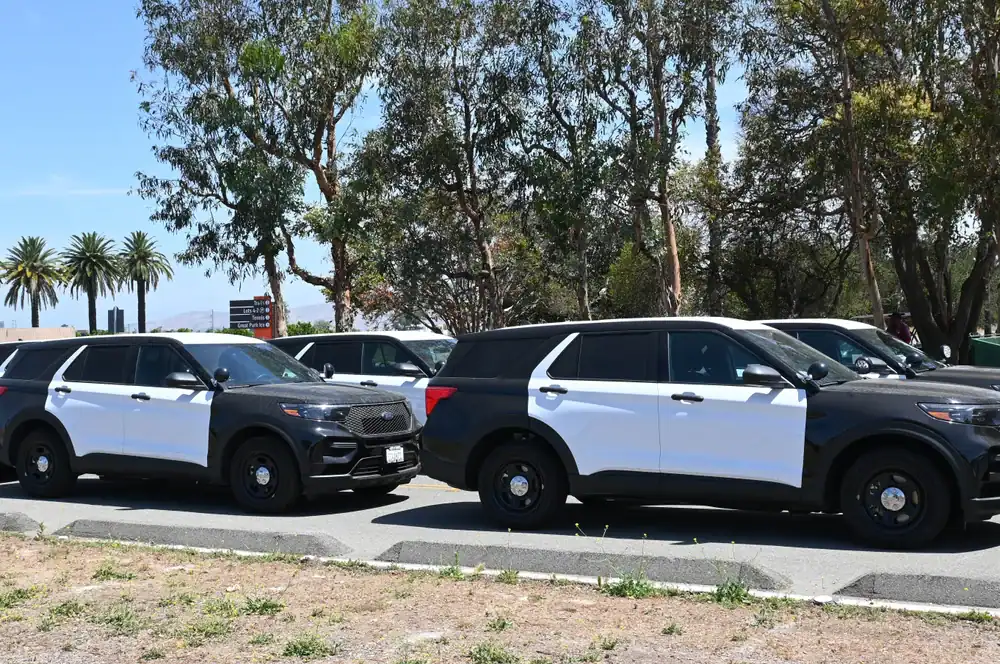
You get a vehicle that was built to chase, not commute. The Ford Police Interceptor Utility comes standard with all-wheel drive, a twin-turbocharged 3.0L EcoBoost V6 rated at 400 horsepower and 415 lb-ft of torque, and upgraded brakes designed for sustained high-speed use. These aren’t civilian Explorers with a badge slapped on—they’re pursuit-rated vehicles engineered to handle what most cars can’t.
The price difference is massive. A comparable civilian Ford Explorer starts above $40,000 new. You’re looking at $5,000 to $15,000 for a used cop car for sale with the same bones, often better components, and a maintenance history most used cars will never have. Government fleets don’t skip oil changes or let brake pads go another month. They can’t afford breakdowns during emergencies, so they maintain these vehicles like clockwork.
You’re also getting features that don’t come standard on civilian models: reinforced frames, heavy-duty cooling systems, upgraded alternators, and in many cases, ballistic door panels. The Ford Explorer Police Interceptor was built for departments that needed reliability under pressure. Now it’s available to you without the $40,000 price tag.
We don’t sell civilian cars, trade-ins, or auction leftovers. We specialize exclusively in used police cars for sale—Ford Interceptors, Dodge Chargers, and other decommissioned law enforcement vehicles sourced directly from government fleets. That’s it. That’s what we know.
We’ve been doing this for over 20 years, working directly with municipalities to acquire one-owner fleet vehicles that were professionally maintained throughout their service life. You’re not buying from a general used car lot hoping they got a good trade-in. You’re buying from a dealer that only handles police interceptors for sale, which means we know the history, the specs, and what to look for.
Clarkstown and the surrounding NY area have access to some of the best decommissioned fleet vehicles in the region. We bring those vehicles to you with transparent information, service records when available, and no runaround about what you’re actually getting.
You start by browsing our current inventory of Ford Interceptors for sale. Each listing includes the year, mileage, engine type, and any notable features or modifications. Most of our vehicles range between 120,000 and 160,000 miles—that’s standard for decommissioned police vehicles, and it’s reflected in the price.
Once you find a vehicle you’re interested in, you can visit our location to inspect it in person. You’ll see the actual condition of the interior, check for equipment removal marks, and get a feel for how the vehicle was used. We’re upfront about what these cars are: they’ve been driven hard, idled long hours, and served in demanding conditions. But they’ve also been maintained by professionals who couldn’t afford to let them fail.
If you decide to move forward, we handle the paperwork and get you on the road. There’s no financing games, no hidden fees for “dealer prep,” and no pressure to buy extended warranties you don’t need. You’re buying a used cop car for sale at a fair price with a clear understanding of what you’re getting. That’s the transaction.
Ready to get started?
The Ford Police Interceptor Utility isn’t just a rebadged Explorer. It’s a pursuit-rated vehicle that meets law enforcement standards most civilian SUVs never touch. That includes certification to a 75-mph rear-impact standard—the only pursuit-rated vehicle to meet that benchmark. It also means heavy-duty cooling systems, reinforced suspension components, and electrical systems designed to handle light bars, radios, and computers running simultaneously.
You’ll find all-wheel drive as standard, not an option. You’ll see column shifters in many models, freeing up console space that was used for equipment. The engines are the same high-output powerplants used in performance trims—many come with the 3.0L twin-turbo EcoBoost V6 that produces 400 horsepower, the same engine in the Explorer ST.
Fuel economy sits around 17 mpg city and 24 mpg highway. That’s the trade-off for a 5,000-pound SUV with a twin-turbo V6 and all-wheel drive. You’re not buying this for gas mileage. You’re buying it because it’s a $15,000 vehicle that would cost $50,000+ new, and it’s built to standards that civilian models don’t meet.
In Clarkstown and across New York, police departments have relied on these vehicles for years. They dominate the law enforcement fleet market because they work. Now that they’re decommissioned, you get access to that same performance and durability at a fraction of the original cost.
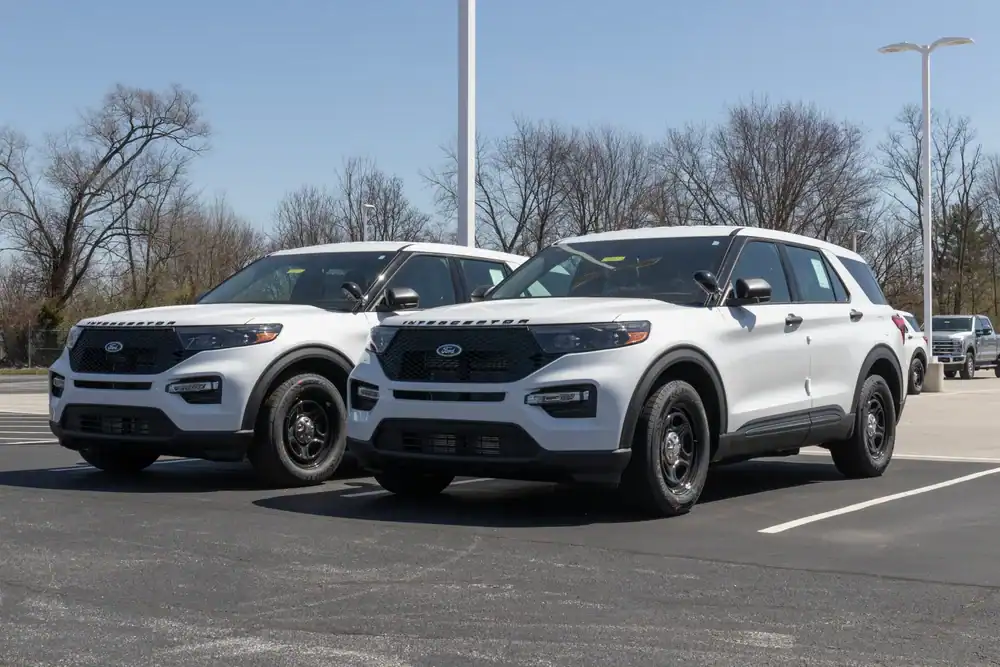
Most used police interceptors have between 120,000 and 160,000 miles. That’s completely normal for a decommissioned fleet vehicle, and it’s one of the main reasons the price is so much lower than a civilian equivalent.
Here’s what matters more than the odometer: idle hours. Police vehicles spend a lot of time idling—running radar, working scenes, sitting in parking lots with the engine on. Those hours add engine wear that doesn’t show up in mileage. A vehicle with 130,000 miles might have the engine wear of a 180,000-mile civilian car.
That said, these vehicles were maintained on strict schedules. Departments can’t afford breakdowns during shifts, so oil changes, brake replacements, and fluid services happened like clockwork. You’re buying a high-mileage vehicle, but one that was professionally maintained throughout its life. That’s a very different situation than buying a high-mileage car from someone who “mostly kept up with maintenance.”
The interiors show use. You’ll see wear on the seats, scuffs on the door panels, and in many cases, holes or marks from where equipment was mounted. Consoles often have drill holes from laptop mounts, radios, or control panels. Some vehicles have been cleaned up better than others.
This isn’t a dealership detailing a trade-in to hide problems. These are work vehicles that spent years in service, and the interior reflects that. If you’re expecting showroom condition, you’re looking at the wrong type of vehicle.
What you won’t find is rust, rot, or structural damage that affects safety. The wear is cosmetic and functional—stuff that comes from daily use in a demanding job. Some buyers don’t care. Some plan to reupholster or replace panels. Some even like the look. It depends on what you’re using the vehicle for and how much the aesthetics matter to you versus the performance and price.
They’re as reliable as any high-mileage vehicle that was maintained properly. The difference is that “maintained properly” actually means something with a fleet vehicle. Government maintenance schedules are strict, documented, and non-negotiable.
The components are also built to higher standards. Brakes, suspension, cooling systems, and electrical systems are all heavy-duty versions designed for sustained emergency use. A civilian Explorer might have good brakes. A Police Interceptor has brakes designed to handle repeated high-speed stops without fading.
That doesn’t mean nothing will ever break. These vehicles have been used hard. You might need to replace worn suspension components, address minor electrical issues from equipment removal, or deal with typical high-mileage maintenance like hoses and belts. But the core drivetrain—engine, transmission, AWD system—is built to last well beyond what most civilian vehicles see. You’re buying a used vehicle with high miles, but one that was built for abuse and maintained by professionals. That’s a very different reliability profile than a random used SUV.
Yes. The Police Interceptor Utility shares most of its parts with the civilian Ford Explorer. That means you’re not hunting down specialty law enforcement components for routine maintenance. Oil filters, brake pads, suspension parts, and most mechanical components are the same parts used on millions of Explorers on the road.
The police-specific parts—heavy-duty cooling, upgraded alternators, reinforced frames—are built into the vehicle. You’re not replacing those regularly. When you do need them, Ford still supports these vehicles because they’re actively used by law enforcement agencies across the country.
Any mechanic who works on Ford vehicles can work on a Police Interceptor. You’re not locked into a specialty shop or dealing with discontinued parts. This is one of the reasons the Ford Interceptor dominates the police fleet market—it’s supportable, parts are available, and mechanics know how to work on them. That advantage carries over when you buy one used.
The Police Interceptor Utility is built on the same platform as the civilian Explorer, but it’s not the same vehicle. It’s pursuit-rated, which means it meets specific performance and safety standards that civilian models don’t.
You get all-wheel drive as standard, not optional. The cooling system is heavy-duty to handle extended idling and high-speed pursuits. The electrical system is upgraded to run multiple high-draw accessories simultaneously. The brakes are larger and designed for repeated hard stops. The suspension is reinforced for durability under load. Many models come with the 3.0L twin-turbo EcoBoost V6—400 horsepower and 415 lb-ft of torque, the same engine in the Explorer ST.
The Police Interceptor is also certified to a 75-mph rear-impact standard, the only pursuit vehicle to meet that benchmark. The frame is reinforced, and in many cases, ballistic door panels are installed for officer protection.
You’re not just getting an Explorer with a spotlight. You’re getting a vehicle engineered to perform under conditions that would break a civilian SUV. That’s why departments pay a premium for them new, and it’s why they hold value even with high mileage when they’re decommissioned.
Mileage and perception. A Ford Explorer Police Interceptor with 140,000 miles isn’t going to command the same price as a civilian Explorer with 60,000 miles, even though the Police Interceptor has better components and a documented maintenance history.
Most buyers see high mileage and assume the vehicle is worn out. They don’t understand that fleet maintenance is different from private ownership, or that these vehicles were built to higher standards in the first place. That perception gap creates the price gap.
Departments also sell these vehicles in bulk when they’re decommissioned. They’re not trying to maximize resale value on each individual car—they’re clearing out old inventory to make room for new fleet purchases. That means lower prices across the board.
You benefit from both factors. You’re buying a vehicle with performance features and durability that would cost $40,000 to $50,000 new, for $5,000 to $15,000 used. The mileage is high, the interior shows wear, and the general public doesn’t want a former cop car. But if you understand what you’re actually getting—a pursuit-rated SUV with a 400-horsepower engine, AWD, and heavy-duty everything—the value is obvious.
Other Services we provide in Clarkstown