
Hear from Our Customers
Most people don’t realize what they’re getting when they buy a Ford police interceptor utility. These aren’t regular Explorers with a badge slapped on. They’re purpose-built from the factory with reinforced frames, heavy-duty brakes, and all-wheel drive systems designed for pursuit driving.
You’re looking at vehicles that were maintained on strict schedules by government fleets. Oil changes every 3,000 miles. Documented service records. No guessing about what happened before you owned it.
The 3.7L V6 in these interceptors is the same engine Ford put in the Mustang. Tons of power when you need it, 26+ MPG highway when you don’t. The intelligent AWD system works exactly how you need it to during Buffalo winters—automatically shifting power where it’s needed without you thinking about it.
Pricing sits well below what you’d pay for a comparable civilian Explorer with similar mileage. You’re getting a stronger vehicle for less money because these come from fleet auctions, not retail lots. That’s the advantage.
We specialize exclusively in used cop cars for sale. That’s it. No trade-ins, no consignments, no random inventory. Just retired police interceptors sourced directly from law enforcement agencies.
Hamburg drivers need vehicles that can handle stop-and-go commutes to Buffalo, winter weather, and real-world durability. Police interceptors were literally designed for that exact use case. We’re not trying to sell you something you don’t need—we’re showing you what these vehicles actually offer and letting you decide if it fits.
Every Ford interceptor for sale in our inventory comes with available service records from the department that used it. You can see the maintenance history before you buy.
First, you’ll browse our current inventory of Ford explorer police interceptors and other models. Each listing shows mileage, year, service history when available, and what’s included. No hidden fees buried in fine print.
When you find something that fits, come see it in person at our Hamburg location. You can inspect it, ask questions, and take it for a test drive. These vehicles have higher mileage than typical used cars—that’s expected with fleet vehicles. What matters is how they were maintained, and we’ll show you the documentation.
Once you decide, the paperwork process is straightforward. We handle title transfer, registration, and anything else needed to get you on the road. Most people are surprised how simple it is compared to traditional dealerships.
You’re not waiting weeks for vehicle transport or dealing with auction bidding. The interceptor you see is the one you can drive home.
Ready to get started?
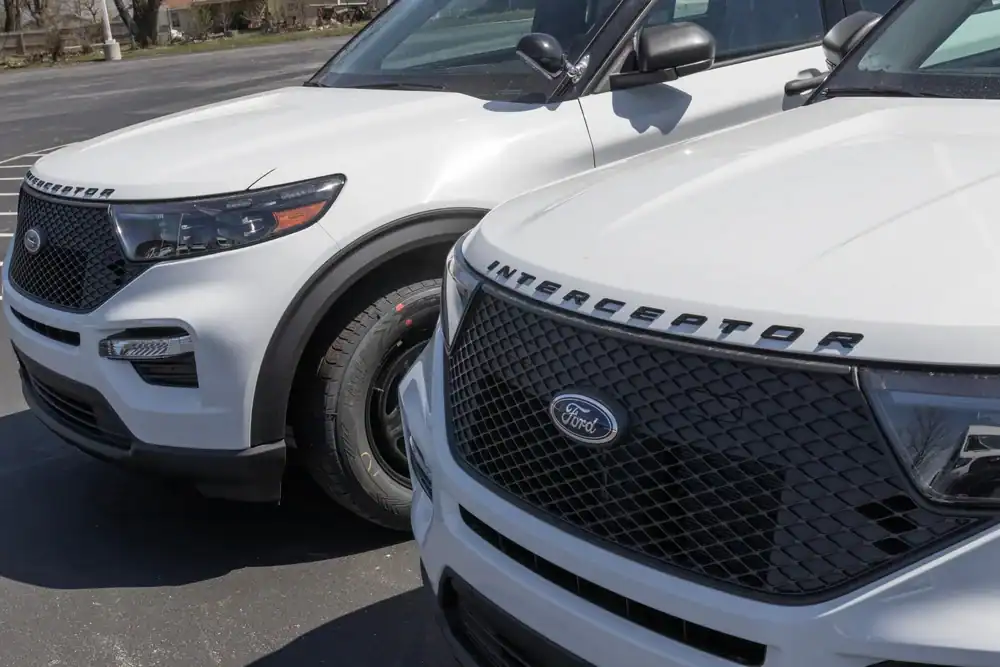
Ford captured about 60% of the U.S. police vehicle market for a reason. Their interceptors are the only vehicles in the world tested to a 75-MPH rear-impact crash standard. The frames are reinforced. The cooling systems are upgraded. The electrical systems are built to handle constant idling and heavy accessory loads.
In Hamburg and the surrounding Buffalo area, all-wheel drive isn’t optional—it’s necessary. Every Ford police interceptor utility we sell comes equipped with intelligent AWD that’s been proven in real-world patrol conditions. These systems have already handled Western New York winters for years.
You’ll find 18-inch high-strength steel wheels built for pursuit driving, not just commuting. The suspension is tuned for handling, not just comfort. The brakes are heavy-duty because they were designed to stop a fully-loaded vehicle at high speeds repeatedly.
Most police impound cars for sale come from departments that retired them based on age or mileage caps, not because something broke. Fleet replacement schedules are strict. That means you’re often buying a vehicle that still has plenty of life left but was simply rotated out of active service.
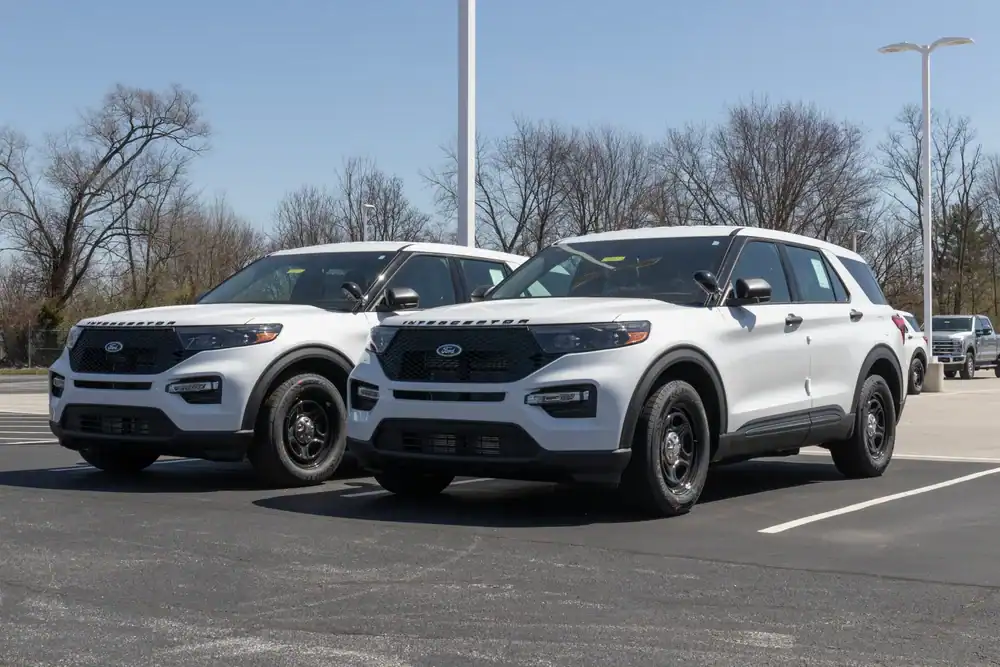
Yes, but the mileage number alone doesn’t tell the whole story. Police interceptors typically have higher mileage than civilian vehicles, but they’re maintained on much stricter schedules. Most departments require oil changes every 3,000 miles and follow manufacturer service intervals without exception.
The engines in these vehicles—especially the 3.7L V6 and 3.5L EcoBoost—are built for durability under stress. They’ve already proven they can handle constant idling, high-speed driving, and heavy loads. That’s more demanding than typical highway commuting.
What matters more than the odometer reading is the maintenance history. Fleet vehicles come with documented service records showing exactly what was done and when. You’re not guessing about whether the previous owner changed the oil on time—you can see the actual records from the department that used it.
Start with the service records. Any reputable seller should provide documentation showing the vehicle’s maintenance history. Look for consistent oil changes, brake replacements, and other routine work. This tells you the department took care of it.
Check the interior condition. Police vehicles get used hard, so expect some wear on the seats and interior panels. That’s normal. What you’re looking for is whether everything functions—windows, locks, climate control, gauges. The mechanical components matter more than cosmetic wear.
Ask about what’s been removed or modified. Most departments remove police equipment before selling, but some wiring or mounting hardware might remain. Make sure any modifications were done properly and won’t cause electrical issues down the road. Test drive it in conditions similar to how you’ll use it—highway driving, stop-and-go traffic, and if possible, in weather that lets you feel how the AWD system responds.
Police interceptors generally cost less than comparable civilian models with similar mileage. The national average for a used Ford Police Interceptor Sedan runs around $10,185, with some starting as low as $4,995 depending on year and condition. Ford Explorer police interceptors typically range from $6,000 to $25,000 based on mileage and features.
The price difference exists because these vehicles come from fleet auctions rather than retail channels. They’re also sold as-is regarding cosmetic condition, which lowers the price point. You’re paying less because you’re accepting higher mileage and some interior wear in exchange for a vehicle that’s mechanically stronger than the civilian version.
For Hamburg buyers, this means you can get a capable AWD vehicle with proven winter performance for thousands less than a similar civilian Explorer or SUV. The value proposition makes sense if you prioritize mechanical reliability and capability over having the newest model with perfect interior condition.
Yes, specifically because of the intelligent AWD system and heavy-duty components. Ford’s police interceptor utility comes standard with AWD that was designed for pursuit driving, which means it responds faster and more effectively than many civilian AWD systems. It automatically shifts power to the wheels with the most traction without any input from you.
The suspension and brakes are also upgraded from civilian models. You’re getting components designed to handle a fully-loaded vehicle in demanding conditions. That translates directly to better handling on snow-covered Hamburg roads and more confident stopping when conditions get slippery.
The ground clearance on the Explorer-based interceptors gives you an advantage in deeper snow compared to sedans. The cooling systems are upgraded to handle constant idling, which means your heater works efficiently even when you’re stuck in traffic on the 90 during a snowstorm. These vehicles were built for departments in climates just like Western New York—they’ve already proven they can handle what Buffalo winters throw at them.
Yes, most lenders will finance used police interceptors the same way they finance any used vehicle. The key is working with a lender who understands that higher mileage on a fleet vehicle doesn’t carry the same risk as higher mileage on a civilian car with unknown history.
Some buyers prefer to secure financing through their own bank or credit union before shopping. This gives you a clear budget and often better rates than dealer financing. Others work with financing options available through the dealership. Either approach works—it depends on your credit situation and what rates you can access.
Keep in mind that interest rates and loan terms will depend on the vehicle’s age and mileage, just like any used car purchase. Older vehicles with higher mileage might have slightly higher rates or shorter loan terms. But because police interceptors are priced lower than comparable civilian vehicles, your monthly payment often ends up lower even if the rate is slightly higher. The total amount you’re financing is less, which matters more than a small difference in interest rate.
You’re getting the vehicle with all standard equipment that came from the factory—engine, transmission, AWD system, safety features, and basic interior components. Most police-specific equipment like lights, sirens, radars, and computers are removed before sale, though some mounting brackets or wiring may remain.
We provide available service records from the law enforcement agency that used the vehicle. This documentation shows you the maintenance history so you know exactly how the vehicle was cared for during its service life. Not every department provides complete records, but we share whatever documentation we receive with the vehicle.
The title transfer and registration paperwork is handled as part of the purchase process. You’ll receive a clean title showing the vehicle is no longer government property. Some interceptors may still have spotlight mounts, partition mounting points, or other hardware that was part of the police package—these don’t affect functionality and some buyers actually prefer to keep them. What you see during your inspection is what you’re buying, and we’re straightforward about the condition and what’s included before you commit.
Other Services we provide in Hamburg