
Hear from Our Customers
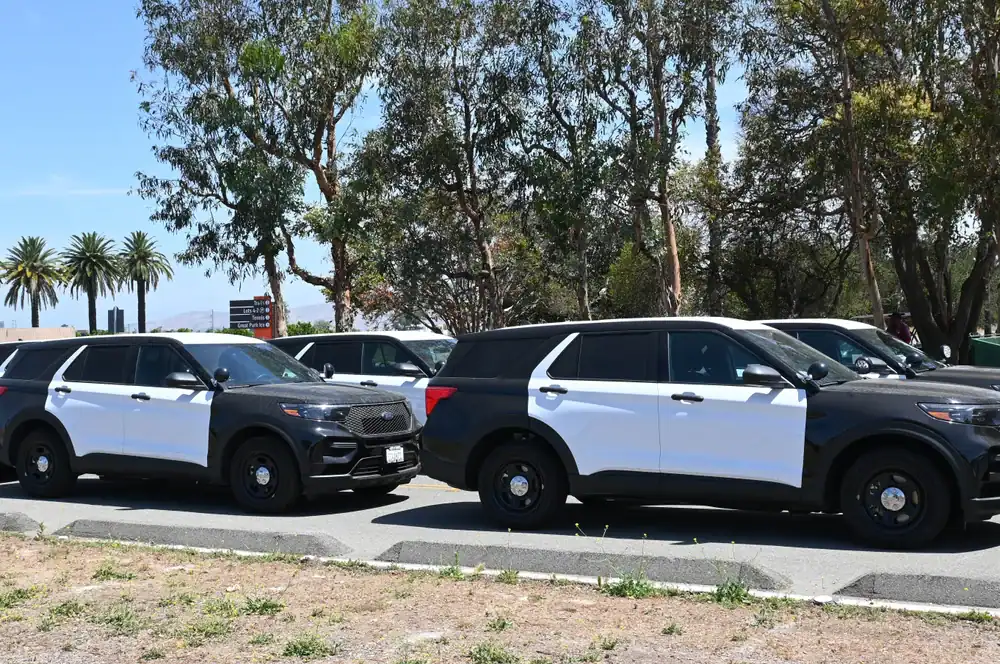
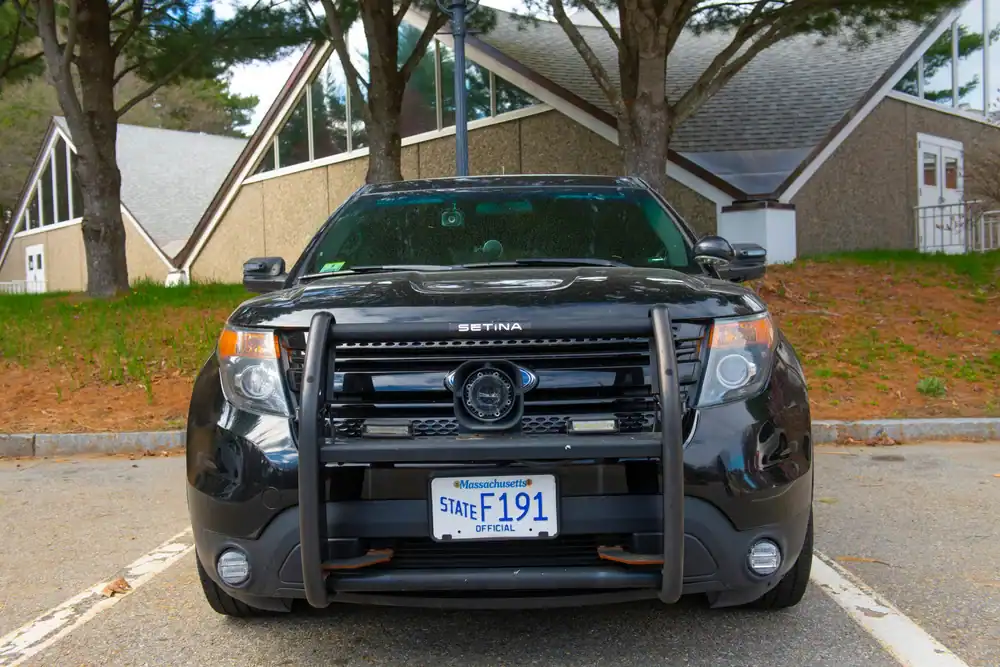
You’re not buying a stripped-down fleet vehicle. You’re getting a Ford Police Interceptor Utility or sedan that was built from the factory with reinforced frames, upgraded suspension, heavy-duty brakes, and performance specs that outpace most civilian vehicles on the road.
These aren’t cars that sat in a lot. They were maintained on strict government schedules with regular inspections and documented service records. That means when you buy a used cop car for sale from us, you’re getting a vehicle that was built to handle high-stress situations and kept running by agencies that couldn’t afford downtime.
The value is straightforward. Most Ford Explorer Police Interceptors for sale in our inventory are priced between $5,000 and $15,000. Comparable civilian SUVs with similar mileage and age start well above $20,000. You’re getting more vehicle for significantly less money, and that’s before you factor in the heavy-duty components that weren’t available on the showroom floor.
State Surplus Auto Sales was started by Carmen Yannuzzi, a career law enforcement officer with over twenty-five years in the field. He saw firsthand how well these vehicles held up under real-world conditions and recognized that they made excellent options for people who needed reliable transportation without the new-car price tag.
We’ve been doing this for over fifteen years now, operating out of Newark and serving buyers throughout the New York metro area, including New City. We’re not a high-pressure dealership. We’re a small operation that specializes in one thing: government surplus vehicles that deliver value you can’t find at traditional lots.
You won’t find us running ads with inflated promises. What you will find is a straightforward buying process, transparent vehicle history, and financing options that actually work for people with different credit situations—including zero interest financing that most dealers can’t offer.
Start by browsing our current inventory online. We post detailed photos and vehicle information for every Ford Interceptor for sale so you can see exactly what you’re considering, even if you’re coming from New City or elsewhere in the region.
When something catches your eye, reach out. We’ll walk you through the vehicle’s history, answer questions about mileage and condition, and give you a realistic picture of what you’re looking at. No sales scripts. If we don’t think a particular vehicle is right for what you need, we’ll tell you.
Come see it in person at our Newark location. Take your time looking it over. We encourage you to bring someone who knows vehicles if that gives you more confidence. Once you’re ready to move forward, we handle financing on-site with our zero percent interest option—yes, actually zero percent regardless of your credit score. Everyone gets approved. From there, it’s paperwork and you’re driving home in a vehicle that cost you thousands less than you’d spend anywhere else.
Ready to get started?
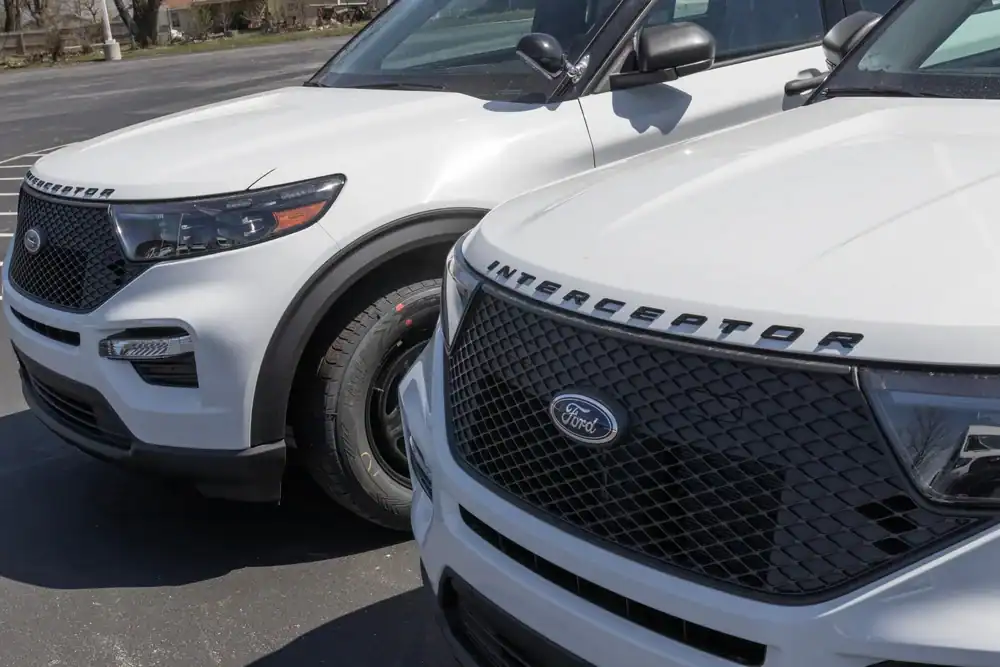
The Ford Police Interceptor Utility isn’t just a rebadged Explorer. It’s pursuit-rated, which means it passed tests that civilian vehicles never see. You’re looking at a vehicle with a more powerful engine, a transmission calibrated for performance, police-grade steel wheels, and a cooling system designed to handle extended idle time and high-speed operation.
The suspension is stiffer and the brakes are larger. The electrical system was built to support emergency equipment, which means it’s more robust than what you’d find in a standard SUV. The frame has additional reinforcement points. These aren’t cosmetic upgrades—they’re functional differences that affect how the vehicle handles, stops, and holds up over time.
For buyers in New City and surrounding areas, this matters because you’re dealing with varied driving conditions. You’ve got highway commutes, winter weather, and the kind of stop-and-go traffic that wears down lesser vehicles. A Ford Crown Interceptor or Police Interceptor Utility was built for exactly that kind of punishment. You’re also getting all-wheel drive on most units, which isn’t standard on every civilian model and makes a real difference when roads get slick.
Pricing is transparent. We’re typically thousands below market value because we’re buying directly from government auctions and passing that savings to you. Parts are easy to find—any auto parts store or salvage yard stocks components for these vehicles because they were produced in massive numbers for law enforcement fleets across the country.
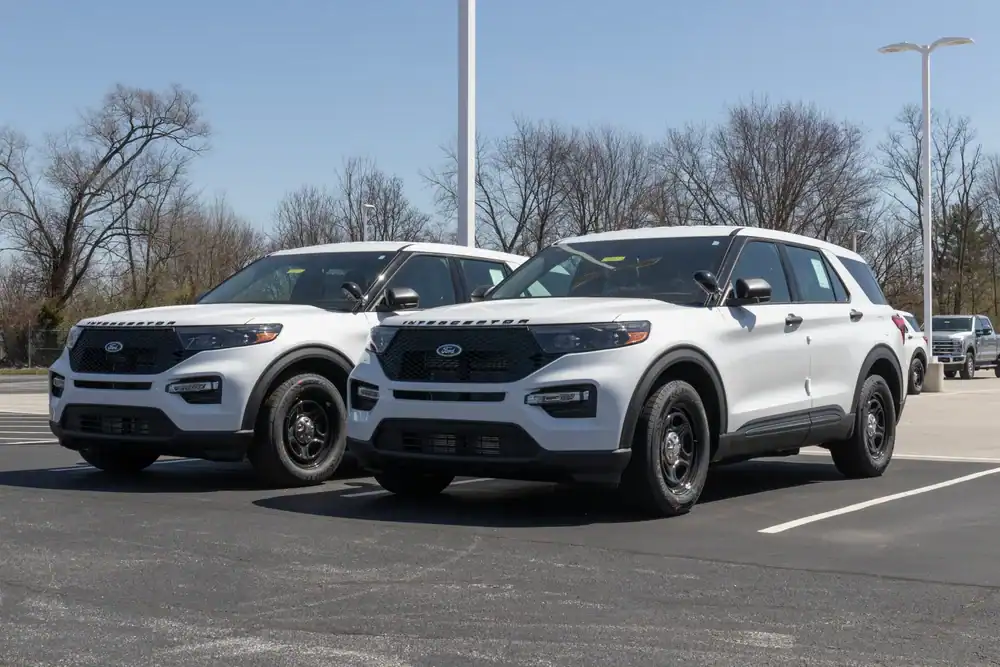
Most police vehicles come with higher mileage—typically between 100,000 and 150,000 miles. That’s expected given how these vehicles were used. But here’s what matters more than the odometer: how those miles were accumulated and how the vehicle was maintained.
Police Interceptors spend a lot of time idling, which doesn’t show up in mileage but does create wear on certain components. However, they’re also maintained on strict schedules with regular oil changes, brake inspections, and fluid services that most private owners skip. You’re getting a vehicle that was kept running because agencies couldn’t afford breakdowns.
High mileage on a well-maintained Interceptor is different than high mileage on a neglected civilian vehicle. The heavy-duty components—stronger transmission, reinforced suspension, upgraded cooling system—were designed to handle this kind of use. With routine upkeep, these vehicles regularly run well past 200,000 miles. You’ll likely need to replace some wear items like brakes or tires sooner rather than later, but the core drivetrain is built to last.
Most insurance companies will cover a used police car without issue, but it’s worth calling your provider before you buy. Some insurers have specific policies about former law enforcement vehicles, and a few may charge slightly higher premiums or require additional documentation.
The vehicle is titled as a standard civilian car once it leaves government service. It’s not classified any differently than a regular Ford Explorer or sedan in terms of registration. The VIN will show it was originally a police package vehicle, but that doesn’t automatically disqualify it from coverage.
What helps is that these vehicles often have better safety ratings than their civilian counterparts. They have reinforced frames, additional airbags in some cases, and braking systems that exceed standard specs. Some insurance companies actually view that as a plus. The key is transparency—let your insurer know upfront what you’re buying, confirm coverage, and get it in writing before you complete the purchase. We’re happy to provide any vehicle documentation your insurance company requests.
Parts are actually easier to find and often cheaper than you’d expect. Ford produced these vehicles in huge numbers for law enforcement agencies across the country, which means the parts supply is strong and widely available.
Most components are shared with civilian Ford models. A Police Interceptor Utility uses the same engine, transmission, and many suspension parts as a regular Ford Explorer. That means you can walk into any auto parts store or order online and find what you need without hunting down specialty police parts. Brake pads, filters, belts, sensors—all standard inventory.
Even the police-specific parts aren’t hard to source. There’s a robust market of salvage yards and online suppliers that specialize in decommissioned police vehicles. If you need a push bar, spotlight, or heavy-duty component that’s unique to the police package, you can find it. Labor costs are also standard because any mechanic who works on Fords can work on an Interceptor. You’re not paying premium shop rates for specialized knowledge. These are workhorses, and they were designed to be maintained affordably by municipal budgets.
Start with the interior. Police vehicles see a lot of equipment installations and removals, which can leave holes, wear marks, or damaged trim. Check the seats, door panels, and center console area. Some wear is normal and cosmetic, but you want to know what you’re getting into before you buy.
Look at the engine bay for signs of leaks or neglected maintenance. Check fluid levels and their condition. Oil should be relatively clean, coolant should be full, and there shouldn’t be any obvious leaks pooling under the vehicle. Pop the hood and look for any wiring that seems loose or disconnected—sometimes equipment removal leaves behind wiring that wasn’t properly secured.
Test drive it like you plan to use it. Get it up to highway speed. Brake hard from speed to test the stopping power. Listen for unusual noises from the suspension or drivetrain. Pay attention to how the transmission shifts—it should be firm but smooth, not clunky or delayed. Check that the all-wheel-drive system engages properly if the vehicle is equipped with it. These vehicles were built tough, but they were also used hard, so anything that feels off during the test drive is worth investigating further before you commit.
Yes. We offer zero percent interest financing to everyone, regardless of credit score. That’s not a promotional rate or a limited-time offer—it’s how we do business.
Traditional dealerships run your credit and offer financing based on your score, which usually means higher interest rates if your credit isn’t perfect. We don’t operate that way. Everyone gets approved and everyone gets the same zero percent interest rate. You’re not paying more because of past financial issues.
The process is straightforward. We work out a down payment and monthly payment structure that fits your budget. There’s no third-party lender involved, which means no credit checks, no waiting for approval, and no surprise rate increases. You’re financing directly through us, and we keep it simple. This is one of the biggest advantages of buying from a small, independently-owned dealer that specializes in government vehicles—we can offer terms that larger dealerships simply can’t match.
They’re built for it. Most Ford Police Interceptor Utility vehicles come with intelligent all-wheel drive, which provides better traction and stability in snow, ice, and wet conditions. The system automatically adjusts power distribution between the front and rear wheels based on what the road surface demands.
The weight distribution and suspension setup also help. These vehicles sit lower and more planted than typical SUVs, which reduces body roll and improves handling when roads get slippery. The heavy-duty tires that come standard on police packages have more aggressive tread patterns than civilian tires, giving you better grip in adverse conditions.
Ground clearance is sufficient for getting through snow without being so high that the vehicle feels unstable. The braking system is oversized compared to civilian models, which means better stopping power even when traction is limited. For drivers in New City dealing with winter weather, an Interceptor gives you confidence that you’re in a vehicle designed to perform when conditions get rough. Just make sure you’re running good winter tires if you’re facing regular snow and ice—that makes more difference than any other single factor.
Other Services we provide in New City