
Hear from Our Customers
You’re not buying someone’s neglected trade-in. These are purpose-built vehicles that were engineered for performance and built to last through conditions most civilian cars never see.
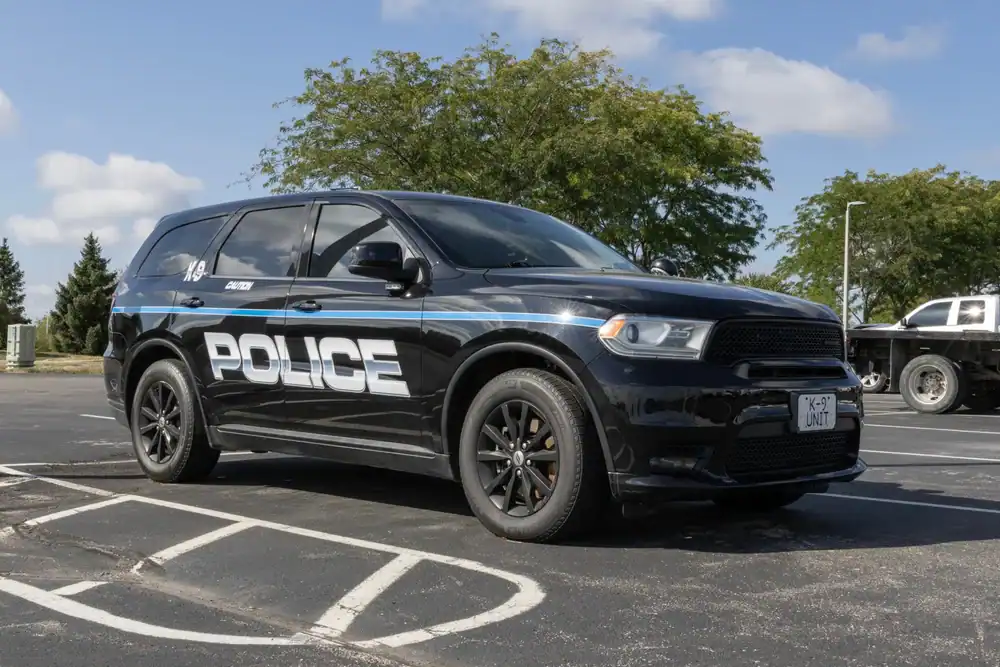
Used police cruisers for sale come with heavy-duty components that weren’t optional add-ons—they were standard. Upgraded suspension, reinforced brakes, high-output alternators, and engines designed for pursuit-rated performance. When Long Beach drivers need a vehicle that handles well in all weather and won’t quit after a few years, this is where they look.
The average household in Long Beach owns two cars, and with a median income over $130,000, you’re not shopping on desperation. You’re shopping with intention. You want something reliable that doesn’t drain your budget, and you’re smart enough to know that a well-maintained Ford interceptor for sale beats an overpriced SUV with a questionable history.
State Surplus Auto Sales is run by Carmen Yannuzzi, a career law enforcement officer with over 25 years in the field. He knows these vehicles inside and out because he worked with them, not just sold them.
We specialize in government vehicles exclusively. No sketchy trade-ins, no flooded cars with clean titles, no games. Our inventory includes Ford Police Interceptor Utilities, Dodge Chargers, Chevy Tahoes, and other pursuit-rated vehicles that agencies across the region have retired. Long Beach residents come to us because we’re transparent about what you’re buying, and we offer zero-interest financing regardless of your credit score.
You’re 30 minutes from Newark. That’s close enough to make the drive worth it when you’re saving thousands compared to retail pricing.
You start by browsing our current inventory online. We post photos and details for every vehicle so you know what’s available before you make the trip. If something catches your eye, give us a call or stop by our location at 833 Broadway in Newark.
When you arrive, you’ll see the vehicle in person. We’re not hiding anything. You can inspect it, ask questions, and take it for a test drive. Our team doesn’t use pressure tactics because we don’t need to—the value speaks for itself.
If you decide to move forward, we handle financing on-site. We offer 0% interest financing to everyone, regardless of credit history. No bank runaround, no waiting days for approval. You can drive off the same day if everything checks out. We also accept trade-ins and give fair value, which helps bring your out-of-pocket cost down even further.
Ready to get started?
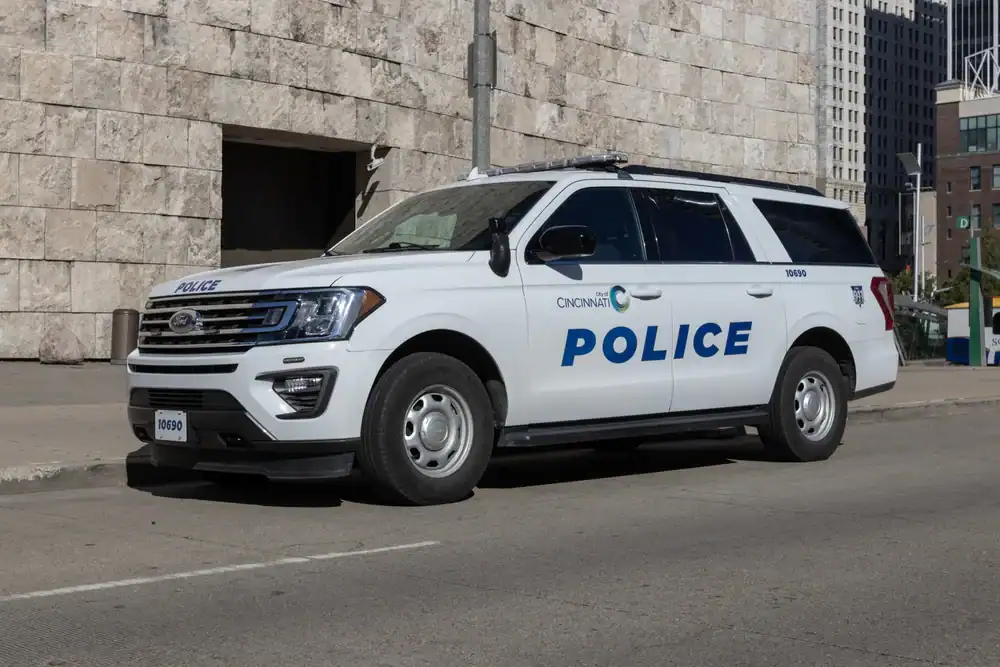
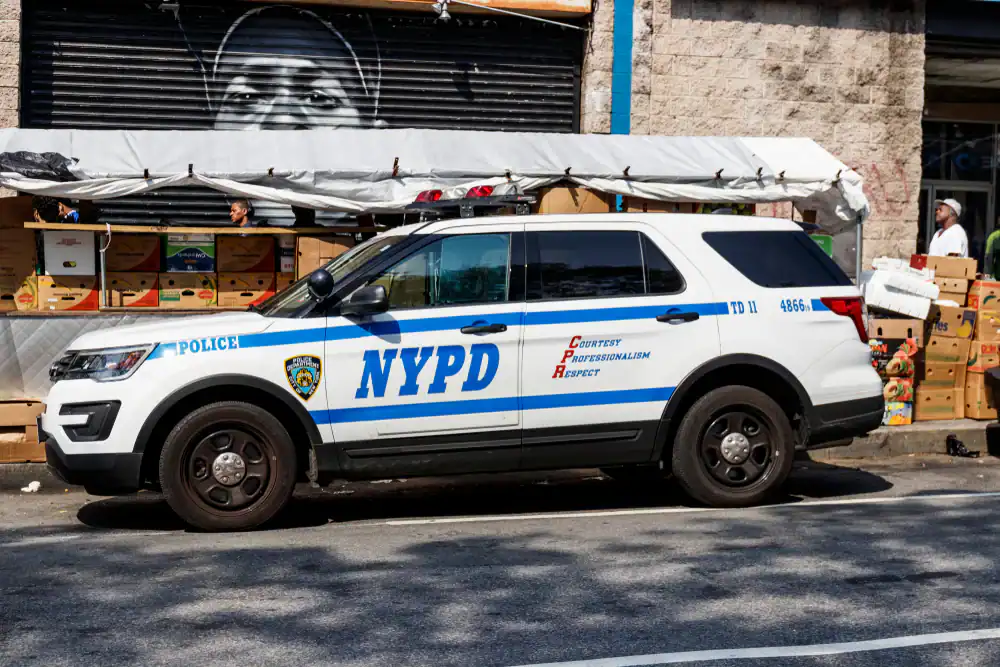
Our current selection includes Ford Police Interceptor Utilities, which are based on the Explorer platform and come standard with all-wheel drive. These vehicles were rated for 75-mph rear-impact crash tests and feature SPACE Architecture designed specifically for officer protection. You get 90 cubic feet of cargo space behind the first row and towing capacity over 5,000 pounds.
We also carry Dodge Charger Pursuit models—rear-wheel or all-wheel drive, V6 or V8 options. These are the vehicles you see in high-speed chases on the news, and they’re built to handle it. Chevy Tahoes show up in our inventory regularly too, especially popular with families who need three rows and serious towing capability.
Prices vary based on mileage and condition, but you’re typically looking at vehicles in the 75,000 to 100,000-mile range. Most agencies retire them around that point, even though these vehicles are built to go much longer. Nationwide, the average price for a used police interceptor for sale is around $15,400, but we’ve had units start as low as $3,500 depending on the model and year.
Long Beach families appreciate the combination of space, safety, and all-weather capability. With winter conditions along the coast, all-wheel drive isn’t a luxury—it’s a necessity. These vehicles handle snow and ice better than most civilian SUVs because they were designed for officers who can’t afford to get stuck.
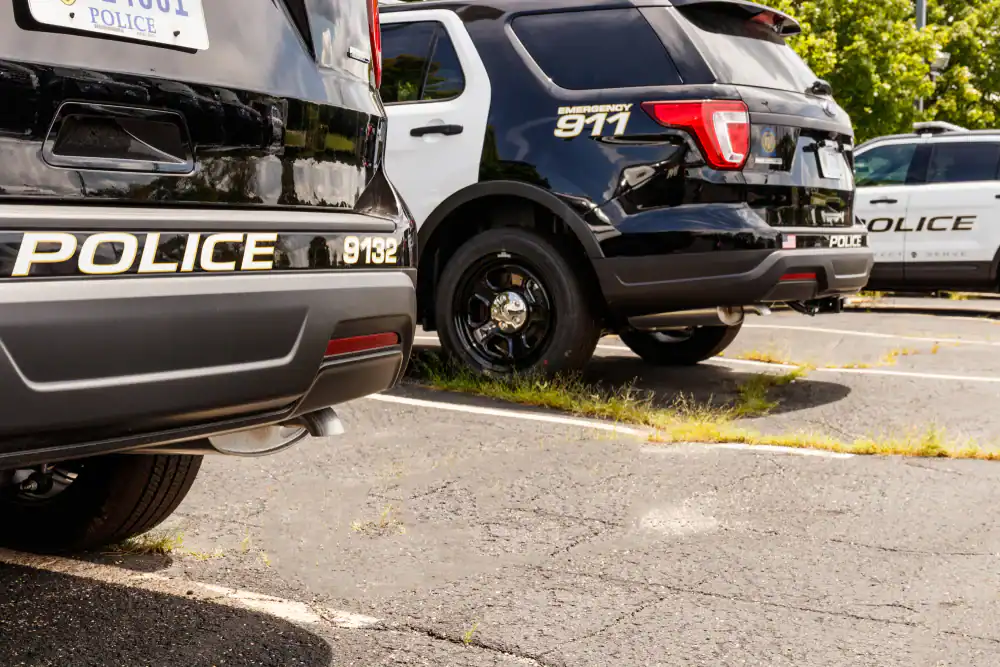
You’re buying a vehicle that was built to a higher standard than most civilian cars, but you need to go in with realistic expectations. These aren’t luxury vehicles. The interiors are basic, and depending on the agency, there may be holes from equipment mounts or wear from heavy use.
That said, police vehicles are manufactured with components designed for severe-duty cycles. Stronger suspension, heavy-duty brakes, reinforced frames, and high-output electrical systems. They’re also maintained on strict schedules because agencies can’t afford breakdowns during shifts. Some departments, like Texas Border Patrol, are known for exceptionally rigorous maintenance standards.
The biggest value is in the price. You’re getting a vehicle that would cost $40,000 or more new, and you’re paying a fraction of that. A Ford Police Interceptor Utility with 80,000 miles might sell for $12,000 to $15,000—half what you’d pay for a comparable civilian Explorer with similar mileage. That’s real savings, not marketing hype.
Most agencies retire vehicles between 75,000 and 100,000 miles, though some go longer depending on budget and fleet rotation schedules. The mileage itself isn’t the whole story—you also need to consider how those miles were accumulated.
Police vehicles spend a lot of time idling, which means the engine hours are often higher than the odometer suggests. They also see occasional high-speed use and frequent stop-and-go driving. On the flip side, they’re maintained regularly and driven by professionals who understand how to operate high-performance vehicles.
Cosmetically, expect some wear. The paint may have scratches or decal shadows. The interior will be basic, and there might be mounting holes from equipment removal. Some buyers repaint or refinish the interior, but many leave it as-is because the mechanical condition is what matters most. If you’re okay with a vehicle that looks like it worked for a living, you’ll get exceptional value.
We offer zero-interest financing to all customers, regardless of credit score. That’s not a promotional rate or a limited-time offer—it’s how we do business.
Most traditional lenders are hesitant to finance older vehicles or former police cars, which is why we handle it in-house. You’re not dealing with a bank that’s going to run your credit through multiple systems and come back with a rejection or a sky-high interest rate. We approve you on-site and get you into a vehicle the same day if everything checks out.
We also accept trade-ins, which can reduce your out-of-pocket cost. If you’re driving something with value, we’ll give you a fair number for it and apply that toward your purchase. The goal is to make this as straightforward as possible so you’re not stuck in financing limbo for days or weeks.
A Police Interceptor Utility is based on the Explorer platform, but it’s not the same vehicle you’d buy off a civilian lot. Ford builds these specifically for law enforcement with upgrades that aren’t available to the general public.
The suspension is heavy-duty and tuned for high-speed stability. The brakes are larger and designed for repeated hard stops. The cooling system is upgraded to handle extended idling and pursuit driving. The electrical system includes a high-output alternator to support emergency equipment. The steel wheels are stronger than the alloy wheels on civilian models.
Ford also tests these vehicles to pass a 75-mph rear-impact crash standard, which is significantly more rigorous than civilian safety testing. The SPACE Architecture includes reinforced pillars and crumple zones designed to protect officers in high-speed collisions. You’re getting a vehicle that was engineered for worst-case scenarios, which means it’s overbuilt for everyday driving.
Most major insurance companies will cover former police vehicles without issue, but you should call your provider before you buy to confirm. Some insurers have restrictions on modified vehicles or cars with certain histories, so it’s worth a five-minute phone call to avoid surprises.
In most cases, you’ll insure it the same way you’d insure any other used vehicle. The VIN will show it as a Police Interceptor, but that doesn’t automatically disqualify you from coverage. Some buyers have reported slightly higher premiums, while others pay the same rate they would for a civilian model.
If your current insurer gives you pushback, shop around. There are plenty of companies that cover these vehicles without hassle, especially if you have a clean driving record. The key is to ask upfront and get confirmation in writing before you finalize your purchase.
You’re buying from agencies that keep maintenance records because they’re required to. Most government fleets document every oil change, brake job, and inspection. We can provide those records when available so you know exactly what work was done and when.
Some agencies are known for stricter maintenance standards than others. Border Patrol and state police fleets, for example, tend to have rigorous schedules because their vehicles operate in demanding conditions. Municipal fleets vary more depending on budget and department policies, but even the most cash-strapped agencies understand that breakdowns cost more than preventive work.
The other advantage is that these vehicles were driven by professionals. Police officers are trained to operate high-performance vehicles safely, and they’re not beating on them for fun—they’re using them as tools. Compare that to a used car from an unknown private seller where you have no idea how it was driven or maintained. You’re taking a calculated risk either way, but with a former police car, you at least have documentation and a known history.
Other Services we provide in Long Beach