
Hear from Our Customers
Most people shopping for used cop cars aren’t doing it for the novelty. You’re doing it because you need something that can take a beating and keep running. These vehicles were built for 12-hour shifts, high-speed response, and constant idling with every system running at once.
That means heavy-duty alternators, reinforced suspension, upgraded cooling systems, and brakes designed for performance under pressure. When a police department retires a Ford Police Interceptor Utility or a Dodge Charger Pursuit, it’s usually because they hit a mileage cap, not because the vehicle failed. Most agencies pull cars at 75,000 to 100,000 miles, right when civilian vehicles are just getting broken in.
You’re not buying a pampered commuter car. You’re buying something that’s been tested in real-world conditions and maintained on a schedule most private owners would never follow. If you drive for rideshare, run deliveries, or just need a second vehicle that won’t leave you stranded, a retired police cruiser gives you that peace of mind without the new-car payment.
State Surplus Auto Sales doesn’t dabble in police cars as a side inventory. This is what we do. We source retired cop cars from municipal and state agencies, inspect what comes in, and sell them to buyers across West Seneca and the greater Buffalo area who know what they’re looking at.
We’re not a full-service shop. We don’t do repairs, maintenance, or inspections after the sale. What we do is give you access to vehicles that most people don’t know how to find, at prices that reflect real value, not hype.
West Seneca sits in a market where used car prices have climbed steadily, and inventory for reliable, affordable vehicles has tightened. If you’re trying to find something under $10,000 that won’t nickel-and-dime you to death, the options are slim unless you know where to look. That’s where we come in.
When a police department or state agency retires a vehicle, it usually goes to auction or gets sold through a surplus dealer like us. We acquire these vehicles directly, which means you’re not bidding against flippers or dealers with deeper pockets. You’re buying from inventory that’s already here.
You can browse what’s available, ask questions about mileage and condition, and come see the vehicle in person. We’ll tell you what we know about its service history. Most of these cars come with maintenance logs because agencies are required to keep them. That’s not something you get with a typical Craigslist find.
Once you decide on a vehicle, the transaction is simple. You arrange payment, handle your own financing if needed, and the car is yours. We’re not here to upsell you on extended warranties or back-end products. You’re buying the vehicle as-is, which is standard for any used police car sale.
After that, it’s on you. Some buyers drive them as-is. Others repaint, replace the spotlight, or pull out the partition if there’s one still installed. Because these are based on common platforms like the Ford Explorer or Dodge Charger, parts are easy to find and affordable when something does need attention.
Ready to get started?
Our lot rotates based on what agencies are retiring, but the most common vehicles you’ll see are Ford Police Interceptor Utilities, Dodge Charger Pursuits, and Chevrolet Impala Police Packages. These aren’t luxury cars. They’re work vehicles. Expect cloth seats, basic interiors, and some cosmetic wear.
What you won’t see is rust-bucket clunkers or vehicles that barely run. We’re selective about what we bring in because our reputation depends on people driving away in something functional. High mileage doesn’t scare us, and it shouldn’t scare you if the vehicle was maintained correctly.
In Western New York, where road salt and potholes are part of life, a used police cruiser holds up better than most civilian cars. The undercarriage is often treated for corrosion, the suspension is reinforced, and the frame is built to handle curbs, rough roads, and constant stop-and-go driving. That’s why small business owners, delivery drivers, and mechanics looking for a flip tend to gravitate toward these vehicles.
You’ll also find that insurance and registration are no different than any other used car, despite what some people assume. A retired police car is just a used car in the eyes of the DMV. Some insurance companies ask questions, but most don’t care as long as the lights and decals are removed, which they will be.
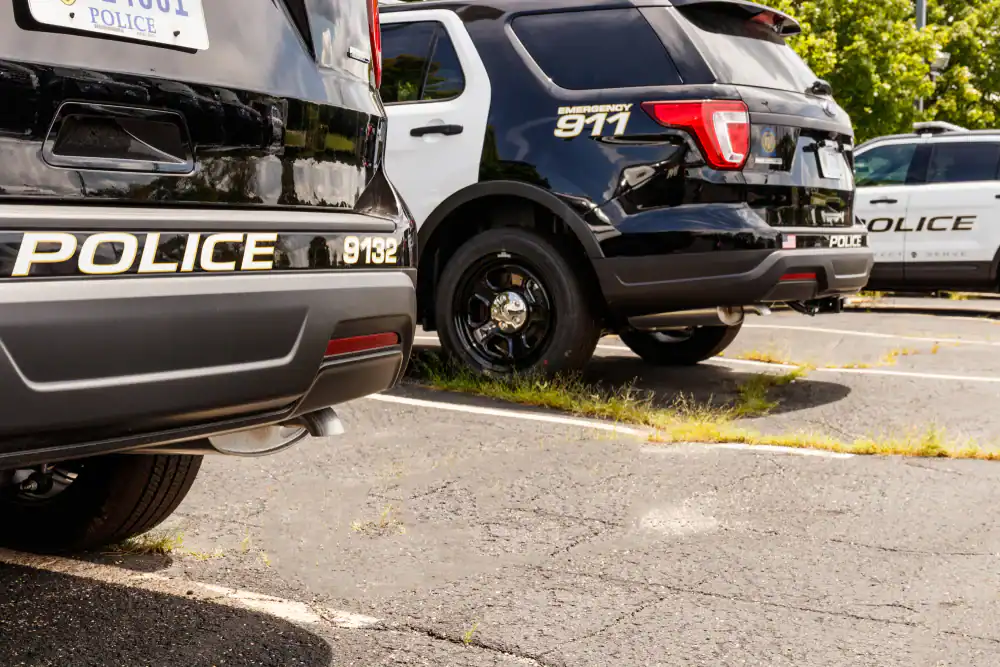
This is the first thing most people ask, and it’s fair. Yes, these cars have high mileage. Yes, they’ve been driven hard. But they’ve also been maintained like clockwork, which is more than you can say for most used cars on the market.
Police departments follow strict maintenance schedules because a breakdown in the field isn’t just inconvenient, it’s a liability. Oil changes, brake inspections, fluid top-offs, and tire rotations happen on time, every time. When something breaks, it gets fixed immediately. That’s a level of care most private owners never come close to.
The wear you’ll see is mostly cosmetic. Seats might be worn from officers getting in and out all day. There might be holes in the dash from where equipment was mounted. The paint could be faded or scratched. But mechanically, these vehicles are often in better shape than a comparable civilian car with the same mileage. If you’re handy or know a good mechanic, the cosmetic stuff is easy to address. What matters is what’s under the hood, and that’s where these cars hold up.
Prices vary depending on the model, mileage, and condition, but you’re generally looking at $3,000 to $10,000 for most vehicles in our inventory. That’s significantly less than what you’d pay for the civilian version of the same car, even with similar mileage.
A used Ford Explorer in decent shape can easily run $15,000 or more on the retail market. A retired Ford Police Interceptor Utility, which is based on the same platform but built tougher, might cost you half that. The difference comes down to perception and cosmetics, not capability.
If you’re working with a tight budget and need something that won’t leave you stranded, this is one of the smartest ways to stretch your dollar. You’re not getting a beater. You’re getting a vehicle that was built for performance and maintained by professionals. The trade-off is that it’s not going to look showroom-ready, and you’ll need to accept that it’s been used hard. But if reliability and value matter more than appearance, the math makes sense.
Financing is possible, but it depends on your lender. Some banks and credit unions will finance a used police car just like any other used vehicle. Others are more hesitant, especially if the car is older or has higher mileage.
Your best bet is to check with your bank or credit union before you come in. If you’ve got decent credit and the vehicle is within their age and mileage limits, you shouldn’t have a problem. Some buyers also use personal loans, which tend to have fewer restrictions than auto loans.
We don’t offer in-house financing, so you’ll need to arrange that on your own. Cash is always the simplest route, and it’s what most of our buyers use. If you’re planning to finance, just make sure you’ve got approval lined up before you commit to a vehicle. We’re happy to provide any paperwork your lender needs, including the VIN and whatever service history we have on file.
Not usually, but it’s worth calling your insurance company before you buy. Most insurers treat a retired police car like any other used car once the decals and emergency equipment are removed. A few companies have policies against modified vehicles or former fleet cars, but that’s the exception, not the rule.
If your current insurer gives you pushback, shop around. There are plenty of companies that don’t care what the car used to be, as long as it’s street-legal now. The key is making sure all the police markings are gone and any holes from equipment mounts are patched or covered.
Some buyers worry that driving a former cop car will affect their rates, but that’s not how it works. Your rate is based on the vehicle’s make, model, year, and your driving history. A Ford Police Interceptor Utility is still just a Ford Explorer to the insurance company. Same with a Dodge Charger Pursuit. The “police” part doesn’t show up on your policy. If you’re still unsure, get a quote before you buy. It takes five minutes and saves you a headache later.
Most of the vehicles we sell have between 75,000 and 120,000 miles on them. That’s higher than what you’d see on a typical used car lot, but it’s not the whole story. Police cars rack up a lot of idle hours, which don’t show up on the odometer but do add wear to the engine.
That said, idle wear is predictable and manageable. Departments account for it in their maintenance schedules, which is why these vehicles get more frequent oil changes and inspections than civilian cars. If an engine or transmission was going to fail, it usually would have happened before the car was retired.
High mileage on a police car is different than high mileage on a neglected commuter vehicle. These cars were built for endurance, and they’ve been maintained to match. If you’re used to buying cars with under 50,000 miles, the numbers might feel uncomfortable at first. But if you’re comparing value, a 100,000-mile police car that’s been serviced every 3,000 miles is a safer bet than a 60,000-mile car with no maintenance records and an unknown history.
No. These are sold as-is, which is standard for any used police vehicle. There’s no manufacturer warranty left, and we don’t offer any kind of dealer warranty or guarantee. What you see is what you get.
That might sound risky, but it’s actually more honest than a lot of used car sales. We’re not hiding anything or trying to offload problem vehicles. We’ll tell you what we know about the car’s history, show you the maintenance records if we have them, and let you inspect it as much as you want before you buy.
If you’re not comfortable buying a car without a warranty, you can always purchase an extended warranty from a third party after the sale. Some buyers do that for peace of mind, especially if they’re not mechanically inclined. Just make sure the warranty company covers high-mileage vehicles and former fleet cars, because not all of them do. Most people skip the warranty and either handle repairs themselves or budget for occasional fixes. These cars are tough, and parts are cheap and easy to find. That’s part of why they make sense for buyers who want something dependable without the dealership markup.
Other Services we provide in West Seneca