
Hear from Our Customers
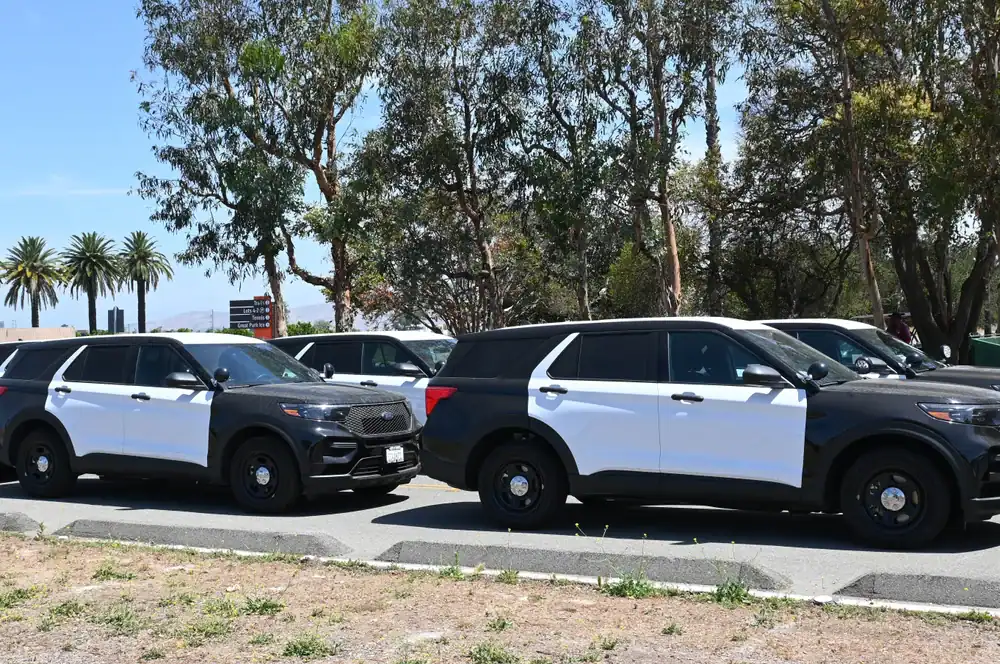
You’re not buying a regular SUV. You’re getting a vehicle engineered to handle extreme conditions most civilian models will never see.
Ford police interceptors come factory-equipped with heavy-duty components that cost thousands extra on civilian models. Police-rated steel wheels, upgraded suspension, enhanced cooling systems, and bigger alternators aren’t add-ons here. They’re standard.
The all-wheel drive system isn’t just checked on an options list. It’s calibrated specifically for law enforcement use, giving you better traction and faster acceleration than the standard Explorer sitting on a Ford lot. You get more cargo space too, since the two-row configuration opens up the back in ways a three-row family SUV can’t match.
These aren’t vehicles that sat in driveways. They were built to perform under pressure, and that engineering doesn’t disappear when the decals come off.
We don’t dabble in police vehicles. We specialize in them exclusively. No civilian trade-ins, no side hustles with repairs or emergency equipment. Just used cop cars for sale.
We’re independently owned and operated right here in the Newark metro area, serving Bloomfield and surrounding communities. Our focus stays narrow because that’s how you build real expertise. When you only sell Ford interceptors and retired police vehicles, you learn what matters and what doesn’t.
You won’t find us overselling or making promises we can’t keep. We’re here because we’re enthusiasts first, and we know the buyers walking through our doors have done their homework. You deserve straight answers about what you’re buying.
You start by looking at what’s actually available. Our inventory changes as vehicles come in from police and municipal fleets, so what you see is what we have right now.
When you find a Ford Explorer police interceptor that fits what you’re after, you can inspect it yourself. Look at the interior condition, check for equipment removal holes, ask about the maintenance history. We’re not hiding anything because there’s no point. These are used police cars, and they look like it.
Once you’ve decided, the buying process is straightforward. We handle the paperwork, you arrange financing if needed, and you drive off in a vehicle that was built to a higher standard than most SUVs on the road.
No extended sales pitch. No upselling on extras you don’t need. You’re buying a retired police vehicle, and we treat the transaction exactly like that.
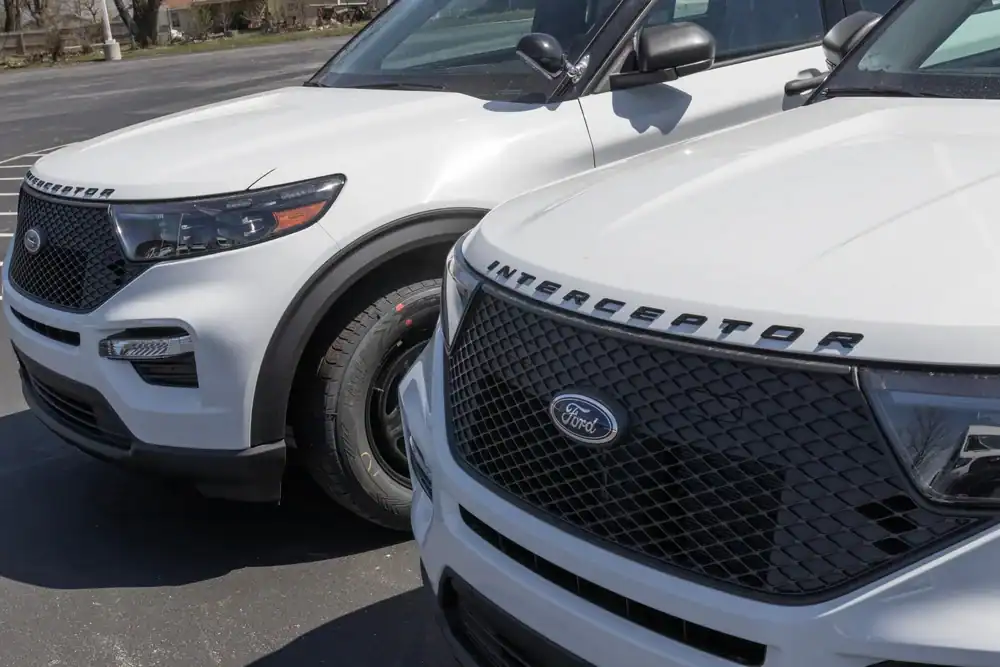
Ready to get started?
Most Ford interceptors we sell come with either the 3.3L V6 pushing 285 horsepower or the EcoBoost options that hit 60 mph in under six seconds. These aren’t sluggish family haulers. Owners describe them as sports cars in Explorer bodies, and the performance backs that up.
You’re looking at vehicles that passed Ford’s 75-mph rear-impact crash test, a standard no other vehicle in the world meets. The engineering that goes into protecting officers doesn’t vanish when the car leaves the fleet. You benefit from that same structural integrity.
In Bloomfield and across New Jersey, buyers choose police interceptors for the value equation. You’re getting factory upgrades worth over $10,000 compared to civilian models, often at prices starting well below $15,000. The durability comes from components designed for high-stress use, and the maintenance histories are typically more detailed than anything you’d find on a used car lot.
The fuel economy isn’t spectacular, and the interiors are basic. But if you want a powerful, reliable SUV that won’t quit, impound cars for sale from police fleets deliver exactly that.
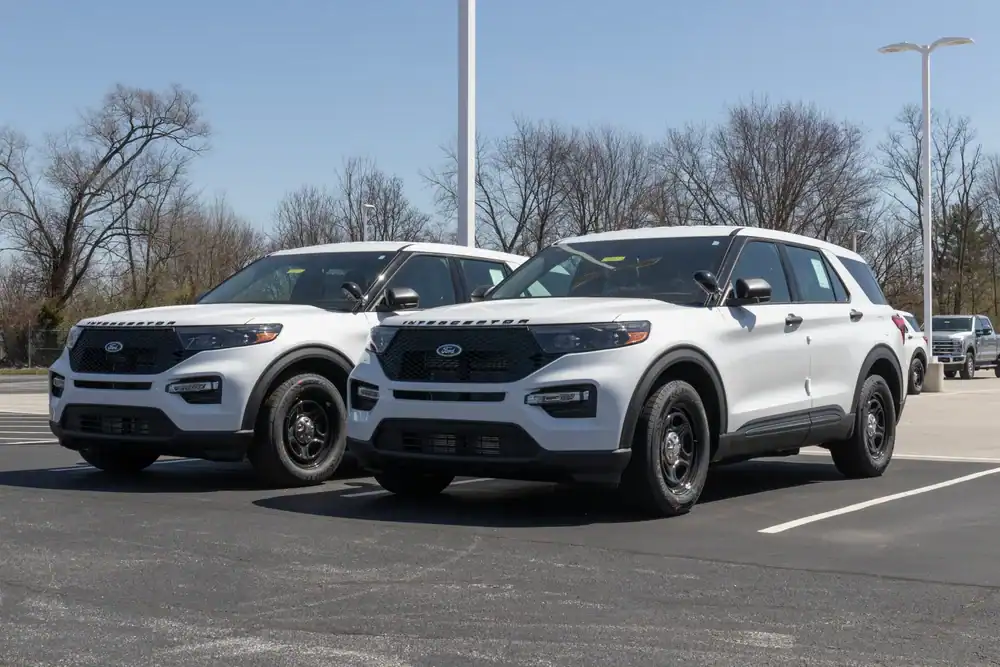
Here’s the reality: these vehicles saw more idling hours and harder stops than civilian SUVs. But they also received professional fleet maintenance on strict schedules, not whenever someone remembered to go to Jiffy Lube.
Police departments don’t skip oil changes or ignore warning lights. The maintenance logs are detailed, and the work gets done by certified techs who know these vehicles inside and out. You’re buying something that was maintained as a tool, not a personal vehicle someone might’ve neglected.
The components themselves are built tougher from the factory. Upgraded cooling systems, heavy-duty suspension, and police-calibrated drivetrains aren’t just marketing terms. They’re engineered to handle sustained high-speed pursuits and constant stop-and-go work. That engineering doesn’t wear out just because the department sold the vehicle.
Will you eventually need repairs? Of course. It’s a used vehicle. But you’re starting from a platform that was built to take abuse and maintained by people who had no reason to cut corners.
Check the interior first. You’ll see holes from where equipment was mounted, and the seats might show wear from duty belts and gear. That’s normal. What you’re looking for is whether those holes were patched cleanly and if the overall condition matches what you’d expect from the mileage.
Ask about idle hours if that data is available. High idle time isn’t a dealbreaker, but it gives you context about how the vehicle was used. Some departments run vehicles hard, others use them mostly for patrol work with moderate demands.
Look at the maintenance records. Fleet vehicles usually come with detailed service histories showing what was done and when. You want to see consistent maintenance, not a bunch of deferred work that piled up before the sale.
Test drive it like you’d actually use it. These vehicles handle differently than civilian Explorers because of the police-calibrated suspension and AWD system. Make sure the performance matches what you’re expecting, and listen for anything unusual. If it drives tight and responsive, that’s a good sign the vehicle was maintained properly.
Pricing varies based on model year, mileage, and condition, but you’re typically looking at a range between $10,000 and $18,000 for newer models. Older units or those with higher mileage can start as low as $3,500.
Compare that to a used civilian Explorer with similar miles, and you’ll usually save several thousand dollars. But the bigger value isn’t just the lower price. It’s what you’re getting for that money: factory upgrades that would cost over $10,000 if you tried to add them to a standard model.
In the Bloomfield area, demand for these vehicles stays steady because buyers recognize the performance-to-price ratio. You’re not paying for leather seats and a third row. You’re paying for a vehicle that was built to perform under conditions most SUVs never see.
The market for police impound cars for sale fluctuates based on what’s available from local and state fleets. When departments upgrade their vehicles, that’s when inventory opens up. Prices reflect real-world condition and history, not inflated dealer markups.
Yes, because underneath the police package, it’s still a Ford Explorer. Any Ford dealer or qualified mechanic can work on these vehicles, and parts availability is the same as it would be for civilian models.
The police-specific components like heavy-duty suspension or upgraded cooling systems use parts that are readily available through Ford’s fleet and commercial divisions. You’re not hunting down rare components or waiting weeks for special orders.
Some owners prefer to work with mechanics who have experience with police vehicles, simply because they’re familiar with the specific configurations. But that’s a preference, not a requirement. Your local shop can handle routine maintenance and repairs without issue.
The one area where you might see differences is in programming or diagnostics if any police-specific calibrations remain in the vehicle’s computer. Most of those get reset before sale, but if something comes up, a Ford dealer can address it. You’re not stuck with an unsupported vehicle.
The engine options overlap, but the police interceptor utility gets performance tuning that civilian models don’t. The AWD system is calibrated differently for faster response and better traction. The suspension is stiffer and more responsive, which is why owners say these vehicles handle like they’re on rails.
You get police-rated steel wheels instead of alloys, a bigger alternator to handle electrical loads, and an enhanced cooling system designed for extended high-speed operation. The brakes are more aggressive, and the overall build is meant to take sustained hard use without falling apart.
The interior is stripped down. No fancy infotainment, no premium materials. You get durable surfaces that can be cleaned easily and a layout designed for function over comfort. The two-row seating configuration opens up cargo space that three-row models sacrifice for extra passengers.
Safety engineering is where the biggest difference shows up. Police interceptors meet Ford’s 75-mph rear-impact crash standard, something civilian vehicles aren’t tested against. The structural reinforcements and safety systems reflect the higher demands placed on law enforcement vehicles. When you buy a used police car, you’re getting that engineering at a fraction of the original cost.
Completely legal. Once a police department sells a vehicle, it’s just a used car. You can own it, register it, and drive it like any other vehicle you’d buy.
The equipment that made it a police car gets removed before sale. Light bars, sirens, radios, and any law enforcement-specific gear come off. What you’re buying is the vehicle itself with the performance upgrades intact but none of the emergency equipment.
Some states have laws about possessing or installing emergency lighting, but that’s about adding equipment back on, not about owning the vehicle. As long as you’re not trying to impersonate law enforcement, there’s no legal issue with driving a former police interceptor.
You’ll register it with the DMV just like any other used vehicle purchase. The title will be clean, and there’s no special process or restriction. People buy these vehicles every day across New Jersey and the rest of the country. It’s a normal transaction for a vehicle that happens to have a more interesting history than most.
Other Services we provide in Bloomfield