
Hear from Our Customers
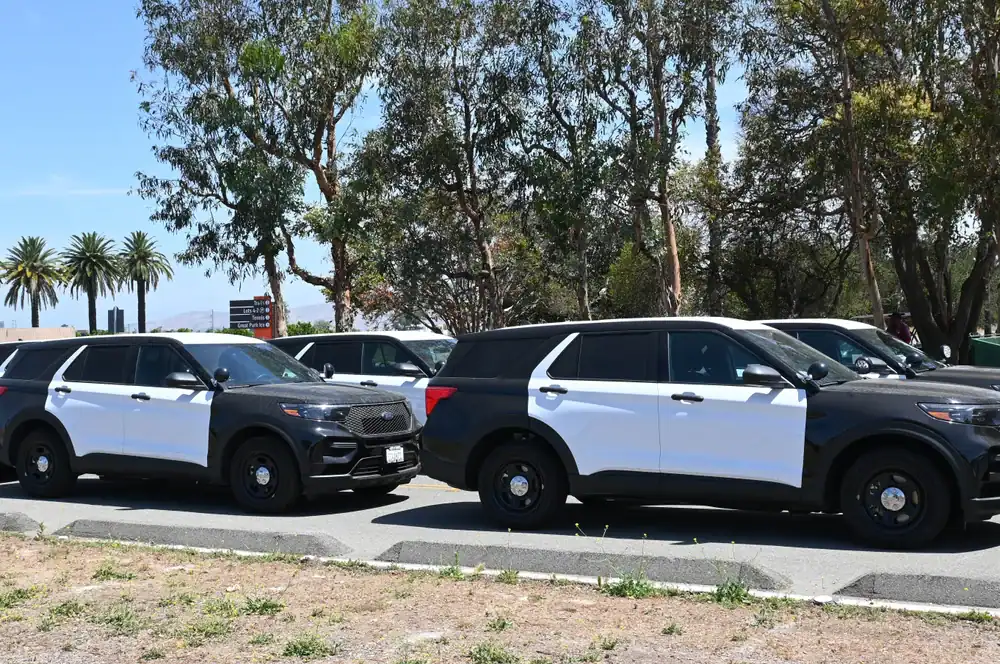
The Ford Police Interceptor Utility isn’t just a rebadged Explorer. It’s pursuit-rated, which means it passed tests your average SUV never sees. We’re talking 75-mph rear-impact crash standards, upgraded cooling systems, reinforced suspension, and calibrated AWD that actually works when you need it.
The 3.0-liter EcoBoost hits 60 mph in 5.8 seconds. That’s faster than most sedans and quicker than anything else Michigan State Police tested. You get 90.3 cubic feet of cargo space behind the first row—more than the civilian version—and towing capacity over 5,000 pounds.
These vehicles were built for departments that couldn’t afford downtime. Heavy-duty brakes. Police-rated steel wheels. Structural reinforcements. You’re not buying a retired fleet car that barely held together. You’re buying the vehicle that had to outlast everything else on the road.
We’ve been in Newark since 2003, and we only sell one thing: used police interceptors. Not regular trade-ins. Not auction junk. Just Ford Interceptors and other law enforcement vehicles that were built to a higher standard.
Bridgewater sits in Somerset County, where the median household income tops $170,000. People here don’t buy cars on impulse—they research, compare, and expect value. That’s why we offer 0% interest financing to everyone. No credit score requirements. No games.
We’re 20 minutes from Bridgewater off Route 22. You can browse online, call with questions, or come see the inventory in person. We don’t do high-pressure sales because we don’t need to. These vehicles sell themselves once you understand what you’re actually getting.
Start by browsing our current inventory online or giving us a call. We’ll walk you through what’s available, answer questions about mileage and condition, and explain exactly what makes each vehicle different. No runaround.
Once you find something that fits, we handle financing on-site. Zero percent interest, regardless of your credit history. We work with your budget, not against it. If you have a trade-in, we’ll give you a fair number—no lowball offers to pad our margin.
Before you drive off, we make sure you understand what you’re getting. These are used police vehicles, so they’ve been driven hard in some cases. But they’ve also been maintained by departments that couldn’t afford breakdowns. You’ll see the difference the first time you accelerate onto the highway or take a corner at speed.
Ready to get started?
The Ford Explorer Police Interceptor comes standard with all-wheel drive and a police-calibrated powertrain. That means better traction, quicker acceleration, and handling that feels more like a sport sedan than a 5,000-pound SUV. The suspension is stiffer, the brakes are larger, and the cooling system is designed for extended idling and high-speed pursuits.
You’ll find more cargo space than the civilian Explorer because the rear seats are positioned differently. Towing capacity exceeds 5,000 pounds, so you can haul a boat, trailer, or equipment without worrying about strain. The frame and body are reinforced in areas that take the most abuse during aggressive driving.
In Bridgewater and surrounding Somerset County, where congestion on Route 287 and Route 78 is a daily reality, you want a vehicle that can handle stop-and-go traffic and still have power when you need to merge or pass. The Interceptor does both without hesitation. It’s also one of the few SUVs tested to survive a 75-mph rear-end collision, which matters more than most people realize until they need it.
Pricing averages around $13,978 nationwide for used police interceptors, but you’re looking at vehicles that sold new for over $42,000. You’re not sacrificing quality to save money—you’re buying a commercial-grade vehicle at a used-car price.
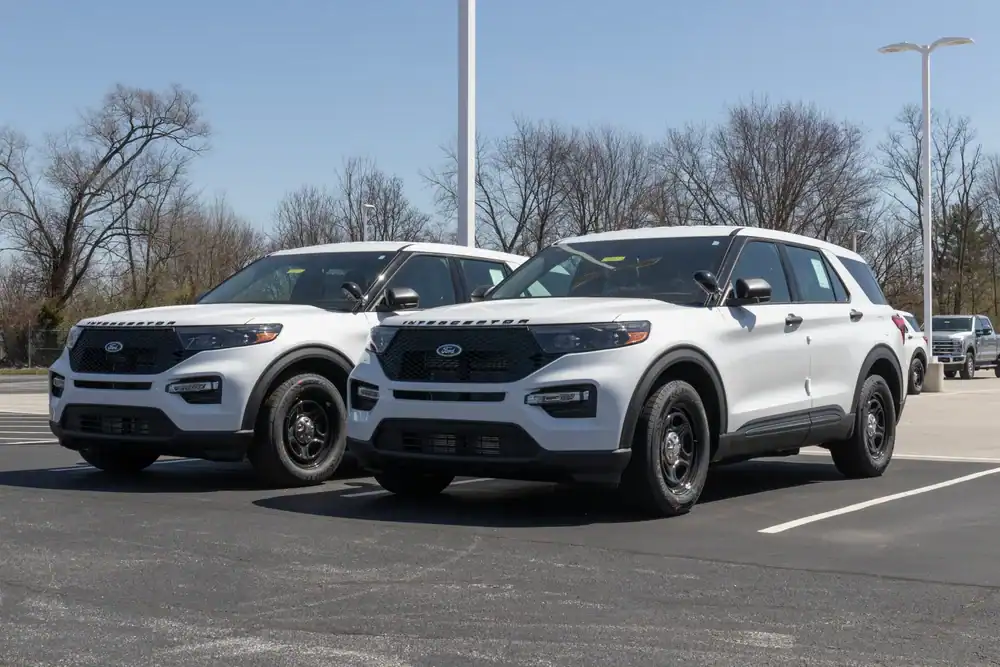
The Police Interceptor Utility is built on the same platform as the Explorer, but it’s not the same vehicle. Ford adds pursuit-rated components that aren’t available on civilian models. That includes a recalibrated AWD system for better acceleration and traction, a reinforced suspension designed for high-speed driving, and upgraded brakes that handle repeated hard stops without fading.
The cooling system is also different. Police vehicles idle for hours during shifts, so Ford installs heavy-duty radiators and transmission coolers to prevent overheating. The body structure is reinforced in key areas to handle the stress of aggressive driving, and the rear-impact crash rating is significantly higher than standard SUVs.
You also get more cargo space because the rear seat configuration is different. The Police Interceptor was designed to carry equipment, so there’s about 90.3 cubic feet behind the first row compared to less in the civilian version. It’s a purpose-built vehicle, not a cosmetic package.
Police vehicles are driven hard, but they’re also maintained on strict schedules because departments can’t afford breakdowns. Most agencies follow manufacturer service intervals religiously and address issues immediately. You’re not buying a car that was neglected—you’re buying one that was serviced more frequently than most privately-owned vehicles.
The wear you’ll see is different than typical consumer use. There may be more idle hours on the engine, but that’s less damaging than people assume. Modern engines handle idling well, especially with the upgraded cooling systems Ford installs in Interceptors. What matters more is how the vehicle was driven overall, and most departments rotate vehicles to distribute mileage evenly across their fleets.
That said, you should expect some cosmetic issues. There may be holes in the interior from removed equipment, minor exterior scratches, or wear on the driver’s seat. But mechanically, these vehicles are often in better shape than a comparable used SUV from a private seller who skipped oil changes or ignored warning lights.
Yes. We offer 0% interest financing to all buyers, regardless of credit score. That’s not a promotional rate or a limited-time offer—it’s how we do business. No credit checks, no interest charges, no hidden fees.
We work with your budget to structure payments that make sense. If you’re putting money down, great. If not, we’ll figure it out. The goal is to get you into a vehicle without the stress of dealing with banks or third-party lenders who treat bad credit like a disqualifier.
This is especially useful in the Bridgewater area, where the cost of living is high and traditional financing can be a barrier. You’re not penalized for past financial issues, and you’re not paying extra in interest to offset our risk. It’s straightforward: pick the vehicle, agree on a payment plan, and drive it home.
The Police Interceptor Utility with the 3.0-liter EcoBoost V6 hits 60 mph in 5.8 seconds. That makes it the fastest vehicle Michigan State Police tested in their annual evaluations, beating out other pursuit-rated SUVs and sedans. For context, a standard Ford Explorer takes over 7 seconds to reach 60 mph.
The difference isn’t just straight-line speed. The Interceptor handles better because of the upgraded suspension and recalibrated steering. It feels more planted in corners and more responsive during quick lane changes. If you’ve ever driven a performance sedan, that’s closer to what this feels like than a typical SUV.
That speed matters if you’re merging onto highways like Route 287 or passing slower traffic on two-lane roads. You don’t have to floor it and hope—you have power on demand. It’s also useful for towing, where extra horsepower makes a noticeable difference when you’re hauling a loaded trailer up an incline.
Start with mileage and service records. Most police vehicles have higher mileage than typical used cars, often between 80,000 and 120,000 miles, but that’s not automatically a red flag. What matters more is whether the department kept up with oil changes, brake replacements, and other routine work. Ask for maintenance logs if available.
Check the interior for damage from removed equipment. Police Interceptors have holes drilled for radios, computers, and light bars. Some sellers patch these, others don’t. It’s cosmetic, but it affects resale value if you plan to sell later. Also inspect the seats and door panels for excessive wear.
Test drive it like you’d drive it normally. Accelerate hard, brake hard, take corners at speed. The Interceptor should feel tight and responsive, not loose or sloppy. Listen for unusual noises from the suspension or drivetrain. If something feels off, it probably is. These vehicles are tough, but they’re not indestructible, and some departments run them harder than others.
Police vehicles depreciate faster because buyers assume they’re beat up or unreliable. That perception creates a pricing gap that benefits informed buyers. You’re getting a vehicle that was built to higher standards and maintained more carefully than most consumer SUVs, but you’re paying less because of the “used cop car” stigma.
Departments also sell vehicles in bulk when they refresh their fleets, which floods the market and drives prices down. A Police Interceptor Utility that sold new for over $42,000 might retail for $13,000 to $18,000 used, depending on mileage and condition. Compare that to a civilian Explorer with similar miles, which often sells for $20,000 or more.
The lower price doesn’t mean lower quality. It means you’re buying a commercial vehicle in a consumer market. Most people don’t want a car that looks like it came from a police auction, even if it’s mechanically superior. If you’re willing to overlook the cosmetic quirks, you’re getting a better vehicle for less money than almost any other option in the used SUV market.
Other Services we provide in Bridgewater