
Hear from Our Customers
You get a vehicle that was built different from day one. Ford Police Interceptor Utilities come standard with all-wheel drive, heavy-duty alternators, upgraded cooling systems, and reinforced suspensions designed for pursuit duty. The Dodge Charger police package includes a 5.7-liter Hemi V8 pushing 370 horsepower—not the base engine you’d find on a civilian model.
These aren’t hand-me-downs. They’re purpose-built machines that happened to have a first career in law enforcement. The steel is thicker. The brakes are bigger. The transmission is calibrated for performance, not just fuel economy.
What that means for you: a vehicle that handles better in bad weather, accelerates harder when you need it, and was engineered to take a beating without falling apart. You’re not buying someone’s neglected trade-in. You’re buying a vehicle that was maintained on a schedule, not when the check engine light came on.
We’ve spent over 30 years sourcing used police cars directly from government agencies and law enforcement fleets. We don’t take trade-ins. We don’t buy from auctions where nobody knows the history. Every vehicle in our Levittown inventory comes from a verified government source with documented service records.
Levittown drivers know what matters: reliability, value, and straight answers. You’re not dealing with a typical used car lot where the salesperson doesn’t know what’s under the hood. We know these vehicles inside and out because we specialize in them exclusively.
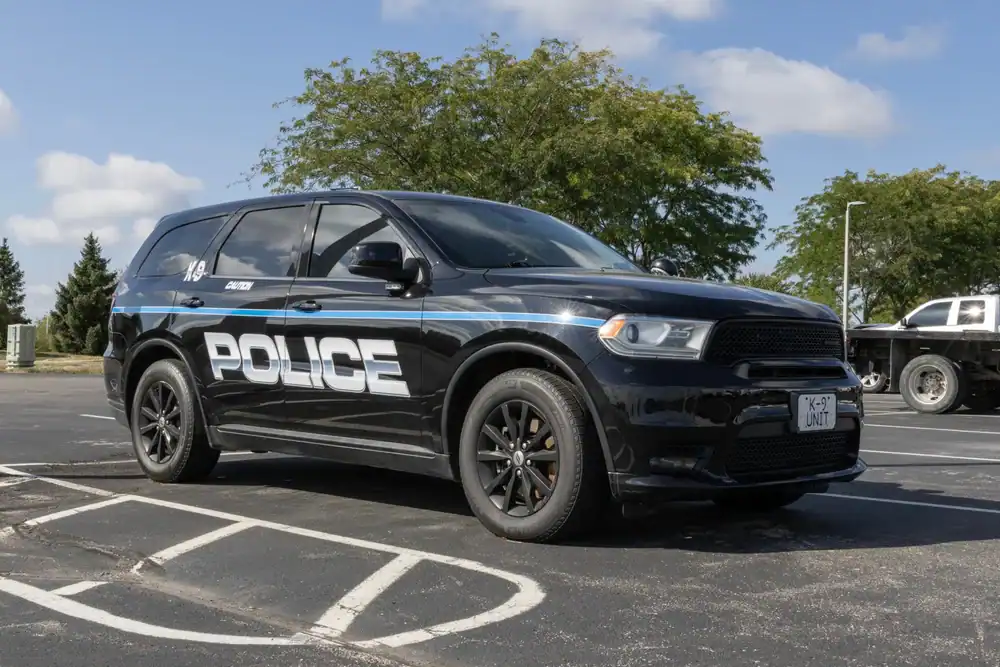
You’ll find over 200 pre owned police cars for sale on our lot at any given time—Ford Interceptors, Dodge Chargers, SUVs, and cruisers that were decommissioned after years of professional use, not abuse.
You start by browsing our current inventory. Every listing includes mileage, model year, and whatever service history we have available. Most vehicles range between 120,000 and 160,000 miles—high numbers, but remember these are highway miles and idle time, not city stop-and-go wear.
Once you find something that fits your needs, come see it in person. You can inspect it yourself or bring your own mechanic. We’re not hiding anything. You’ll see exactly what you’re getting, including any cosmetic issues from equipment removal—holes in the dash, mounting brackets, that kind of thing.
When you’re ready to move forward, we handle the paperwork and get you on the road. No extended negotiations. No pressure tactics. Just a straightforward transaction for a vehicle that’s priced fairly from the start.
Keep in mind: these vehicles are sold as-is with no warranty. That’s standard for police car sales. You’re trading warranty coverage for a significantly lower purchase price and a vehicle with commercial-grade components.
Ready to get started?
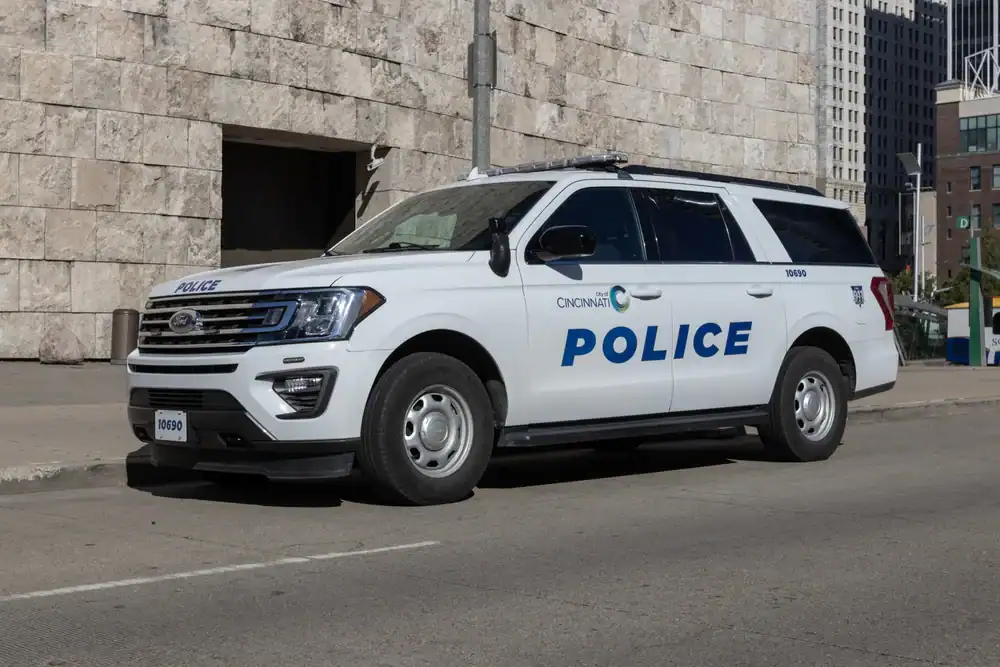
Our inventory rotates, but you’ll consistently find Ford Police Interceptor Utilities—still America’s best-selling police vehicle and one of the most reliable options on the market. These come with the 3.5L EcoBoost V6 or the 3.3L hybrid powertrain, both built specifically for law enforcement duty cycles.
We also carry Dodge Charger Pursuit models when available. These are getting harder to find since Dodge discontinued them, but when we have them, they move fast. The 5.7L Hemi is a favorite among performance buyers who want rear-wheel-drive power and that unmistakable V8 sound.
For Levittown buyers looking for work vehicles, we stock Chevy Tahoes and older Crown Victorias that work well for commercial use—taxi companies, security firms, and contractors who need something tough that won’t break the bank. Long Island winters are rough on vehicles, and these police packages were built to handle worse.
Every vehicle gets a basic safety check before it hits our lot, but you’re buying the vehicle in its current condition. Some still have spotlights. Some have been stripped down to civilian spec. We’ll tell you exactly what’s there and what’s not.
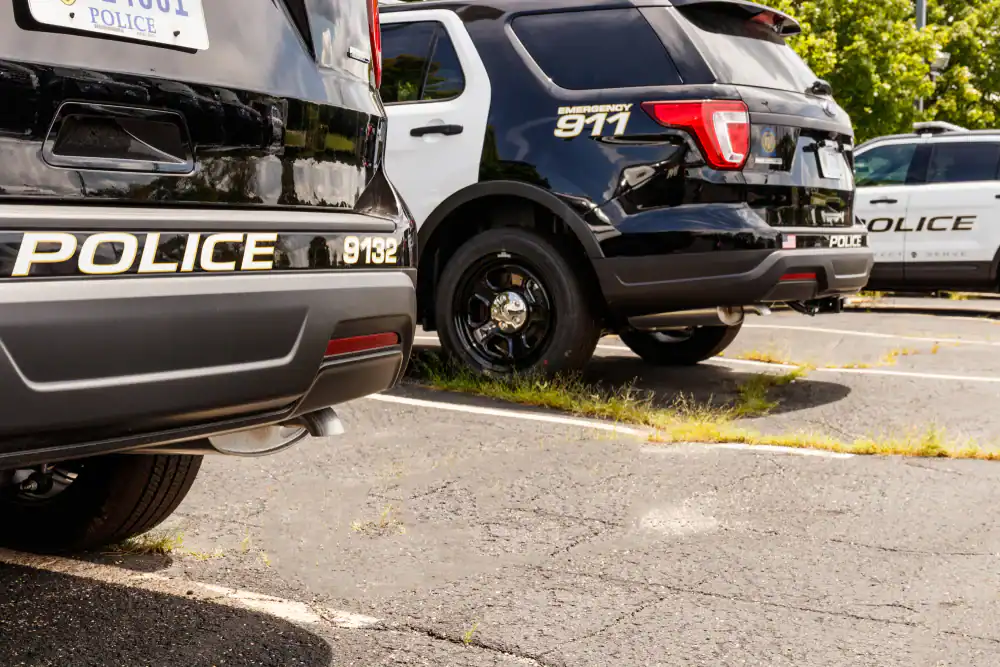
The reliability question comes down to maintenance history, not mileage. Police departments follow strict maintenance schedules because a broken-down cruiser isn’t just an inconvenience—it’s a liability. These vehicles get oil changes, brake jobs, and fluid services at regular intervals, documented in fleet records.
That said, they’ve lived hard lives. Lots of idling, which doesn’t show on the odometer but does put hours on the engine. Quick acceleration, hard braking, and extended periods of operation. The difference is they were built for it. Heavy-duty cooling systems, reinforced frames, upgraded electrical systems—these aren’t standard consumer features.
You’re not buying a cream puff. You’re buying a vehicle that was engineered for severe duty and maintained by professionals who had a budget and a schedule to follow. That’s a better bet than a civilian car with 80,000 miles and no service records.
Prices vary based on model year, mileage, and condition, but you’re typically looking at $8,000 to $18,000 for most of our inventory. A Ford Police Interceptor Utility with 130,000 miles might run $12,000 to $15,000. A Dodge Charger Pursuit with similar mileage could be slightly less, depending on the year.
Compare that to a civilian-spec Ford Explorer or Dodge Charger with the same mileage, and you’re saving $3,000 to $7,000—sometimes more. You’re getting better components for less money because the “former police car” label scares off buyers who don’t understand what they’re looking at.
For Levittown buyers on a budget, this is one of the few ways to get a reliable, American-made vehicle with all-wheel drive and real power for under $15,000. You won’t find that at a franchise dealership.
Not for common models like the Ford Police Interceptor Utility or Dodge Charger Pursuit. These share most of their parts with civilian versions. Your local auto parts store will have brake pads, filters, belts, and routine maintenance items in stock.
The police-specific components—upgraded alternators, heavy-duty suspension pieces, calibrated computers—are available through Ford or Dodge dealers and aftermarket suppliers. They’re not exotic. They’re just commercial-grade versions of standard parts.
Older models like the Crown Victoria are even easier. Those things ran for decades, and parts are everywhere. The only items you might struggle with are cosmetic pieces if you want to replace a damaged dash panel or interior trim, but mechanically, you’re fine. Any competent mechanic in Levittown can work on these vehicles without special training.
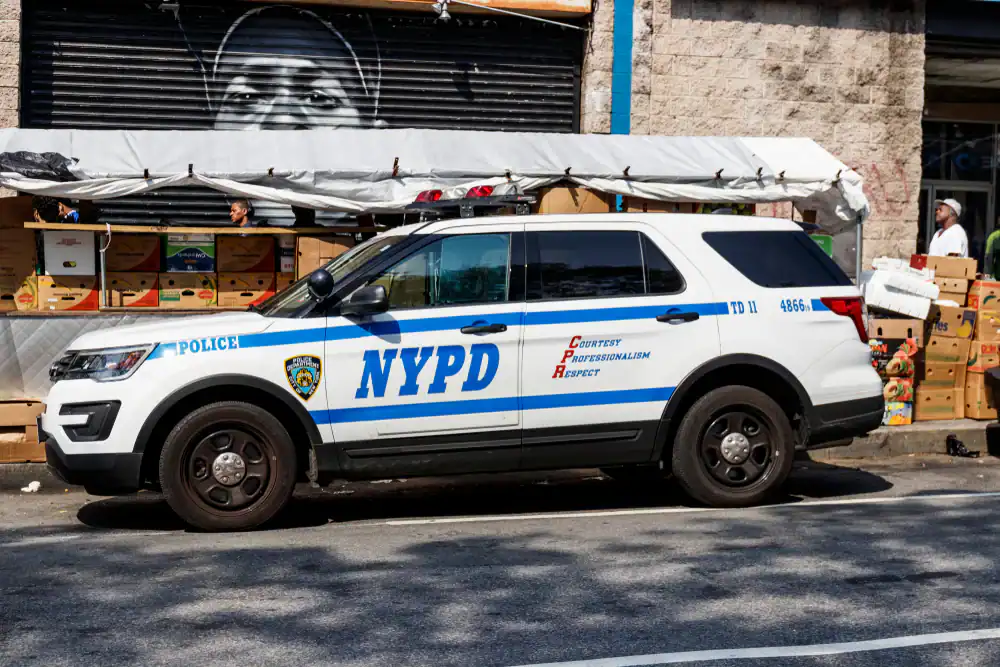
It depends on the vehicle and how much equipment was removed before decommissioning. Some still have spotlights, push bumpers, and mounting holes in the dash. Others have been stripped down and look almost civilian, aside from maybe some extra antennas or a heavy-duty steel wheel setup.
We sell them as-is, so what you see is what you get. If cosmetic issues bother you, factor in a few hundred dollars to patch holes, replace trim, or swap out wheels. Most buyers don’t care—they’re here for the performance and the price, not the showroom look.
The exterior paint is usually black, white, or dark blue, and some still have ghost outlines where decals used to be. You can wrap or repaint if you want, but plenty of people drive them as-is. It’s not illegal to own a former police car. Just don’t add lights, sirens, or anything that could be mistaken for impersonation.
Mileage on a police vehicle doesn’t tell the whole story. A cruiser with 140,000 miles might have 8,000 idle hours on top of that—time spent running at a standstill, which doesn’t register on the odometer but does count as engine time.
That sounds bad until you realize these engines were built for it. Upgraded cooling, heavy-duty oil pumps, and reinforced internals mean they handle idle time better than a civilian engine would. A taxi with 140,000 city miles is a harder life than a highway patrol car with the same odometer reading.
What matters more is how the vehicle was maintained. A police car with 150,000 miles and full service records is a safer buy than a civilian car with 90,000 miles and no history. You know what you’re getting. That’s worth something, especially in the used car market where most people are guessing.
Financing is available, but it’s not always easy. Some lenders won’t touch former police vehicles because they’re sold as-is with no warranty. Others will finance them but at higher interest rates or with larger down payments.
Your best bet is to get pre-approved through your bank or credit union before you come in. If you’ve got decent credit and a down payment, you’ll have options. If your credit is rough, you might be looking at cash or a personal loan.
We work with a few local lenders who understand these vehicles and are willing to finance them for qualified buyers. It’s not a dealership financing setup where everyone gets approved—it’s real lending based on your actual credit. Come in with realistic expectations, and we’ll help you figure out what’s possible.
Other Services we provide in Levittown