
Hear from Our Customers
You’re getting a vehicle that was built different from the factory. Heavy-duty alternators, reinforced suspensions, upgraded cooling systems, and brakes designed for pursuit driving. These aren’t cosmetic upgrades—they’re functional differences that affect how the vehicle performs under stress.
The maintenance history matters more than the mileage. Police departments follow strict service schedules because downtime costs them operational capacity. Oil changes happen on time, fluid levels get checked regularly, and problems get addressed before they become failures.
You’ll pay significantly less than the civilian equivalent. A used Ford Police Interceptor Utility averages around $15,400 nationwide, while a comparable civilian Explorer with similar age and condition runs thousands more. You’re getting the same platform with better components at a lower entry point.
We specialize in one thing: used cop cars for sale in Schenectady, NY. We’re not a general used car lot trying to move whatever inventory comes through. Our entire focus is on sourcing and selling retired law enforcement vehicles.
That specialization means we know these vehicles inside and out. We understand what to look for in maintenance records, which agencies take better care of their fleets, and what questions you should be asking before you buy.
Schenectady buyers have access to vehicles from New York State’s surplus program, which opened public bidding on retired state fleet vehicles in May 2024. We work within that system to bring you options that meet real standards, not just whatever’s available.
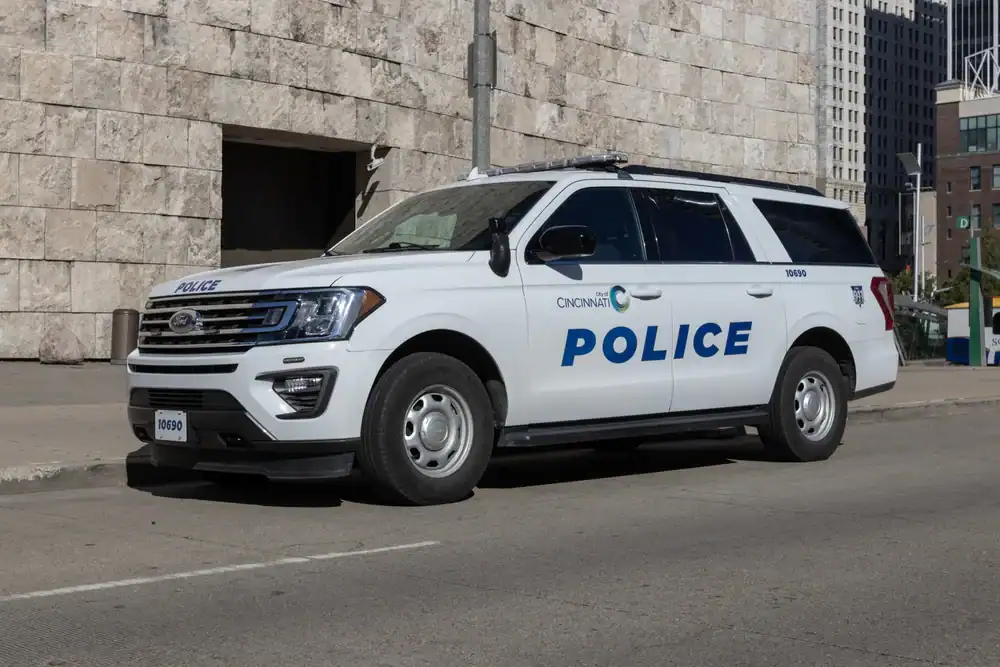
You start by looking at what’s actually in our inventory. We carry Ford Police Interceptor Utilities, which account for half of all new police vehicles sold in America, along with other retired cruisers that meet our standards. Each listing shows the vehicle’s history, mileage, and any relevant details about its service life.
When you find something that fits what you’re looking for, you can come see it in person. You’ll notice the vehicle looks different from a civilian model—basic interior, possible mounting holes from removed equipment, fleet paint. That’s normal. What matters is what’s under the hood and how the vehicle was maintained during its service life.
Once you decide, the buying process is straightforward. We handle the paperwork, you arrange financing if needed, and you drive off in a vehicle that was built to perform. No extended sales pitch, no pressure to add extras you don’t need.
Ready to get started?
Ford Police Interceptors come with the Police Engine Idle feature, which allows extended idling without the wear you’d see in a civilian vehicle. They have upgraded electrical systems to handle additional equipment load, even after that equipment is removed. The suspension is reinforced to handle pursuit driving and rough road conditions.
The braking system uses larger rotors and more aggressive pads than the civilian version. The cooling system is built to handle extended high-speed operation without overheating. These aren’t minor tweaks—they’re engineering differences that affect long-term reliability and performance capability.
In Schenectady’s winter conditions, you’ll appreciate that most interceptors come with all-wheel drive as standard equipment. The traction control and stability systems are calibrated for emergency response driving, which means they’re more capable than what you’d find in a standard SUV or sedan.
You’re buying a vehicle that was tested to pass Ford’s 75 mph rear-impact crash standard. That’s not a legal requirement—it’s a design choice based on how these vehicles get used in the field.
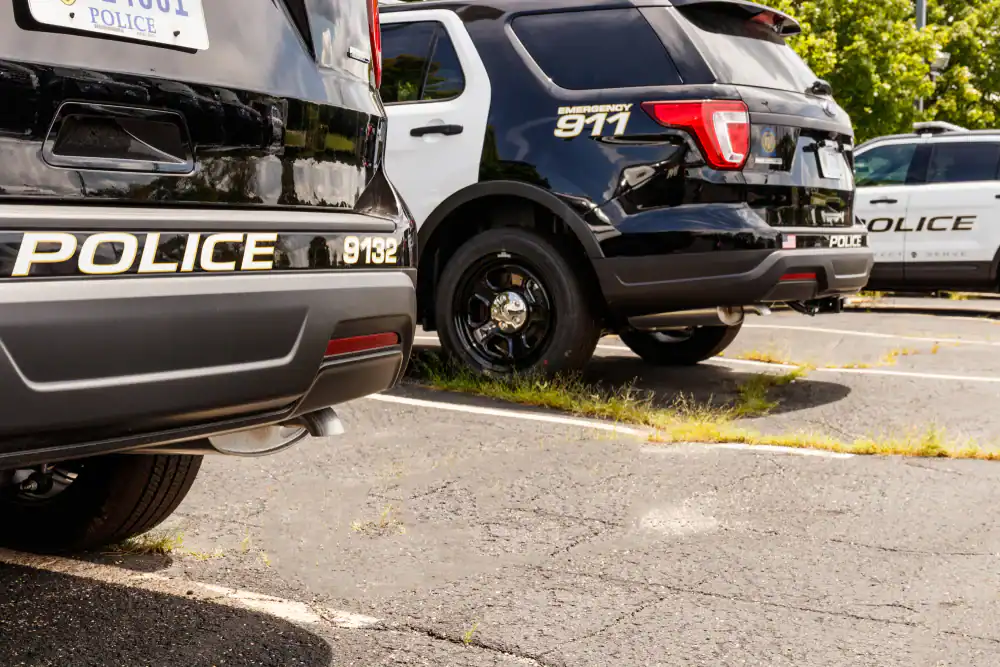
Police vehicles sell for less because of how they look and what buyers assume about their condition. The cosmetic issues are real—basic interiors, mounting holes, fleet paint, high mileage. Those things hurt resale value even though they don’t affect mechanical performance.
Buyers also worry about how hard these vehicles were driven. That concern isn’t entirely unfounded, but it misses the other side of the equation. Yes, police vehicles see pursuit driving and extended idling. They also see professional maintenance on a schedule that most civilian owners never follow.
The price difference comes down to perception versus reality. The market discounts these vehicles because of visible wear and assumed abuse. You benefit from that discount if you’re willing to look past cosmetic issues and focus on mechanical condition and maintenance history.
Mileage tells part of the story, but idle hours matter more. Police vehicles spend significant time idling—running radar, working scenes, sitting in parking lots with lights on. That idle time wears the engine but doesn’t show up on the odometer the same way highway miles would.
A vehicle with 80,000 miles might have 3,000 idle hours, which translates to additional engine wear equivalent to another 20,000-30,000 miles of driving. That’s why maintenance records matter more than the odometer reading. You want to see that oil changes happened frequently and that the department monitored engine hours, not just mileage.
Higher mileage isn’t automatically a deal-breaker if the maintenance was consistent. These engines are built to handle it. What you’re really evaluating is whether the agency took care of the vehicle throughout its service life. Good records indicate good care, regardless of what the odometer shows.
The Police Interceptor Utility uses the same basic platform as the civilian Explorer, but with heavy-duty components throughout. The alternator is larger, the transmission cooler is upgraded, the suspension is reinforced, and the brakes are more aggressive. Those upgrades improve durability under stress.
Reliability comes down to how the vehicle was maintained, not just how it was built. A well-maintained Interceptor will outlast a neglected civilian Explorer every time. The advantage you have with police vehicles is that maintenance usually happened on schedule because departments can’t afford downtime.
Independent testing by Michigan State Police shows Interceptor Utilities outperform other police vehicles in acceleration, handling, and braking. That performance capability doesn’t disappear when the vehicle leaves service. You’re getting the same engineering that made it the best-selling police vehicle in America.
Agencies remove all law enforcement equipment before selling vehicles. Lights, sirens, radios, computers, push bars, and partition cages all come out. What’s left are the mounting holes and wiring that supported that equipment.
You’ll see holes in the roof where light bars were mounted, holes in the dash where equipment was installed, and possibly holes in the trunk area. Some buyers patch and repaint these areas, others leave them as-is. It’s a cosmetic issue that affects appearance but not function.
The wiring for removed equipment usually gets capped off or removed entirely. The upgraded electrical system remains—the heavy-duty alternator and battery don’t get downgraded just because the police equipment is gone. That means you have extra electrical capacity if you ever need it for aftermarket accessories or equipment.
Most major insurance companies will cover former police vehicles without issue. You’re insuring a Ford Explorer or Dodge Charger—the fact that it used to be a police vehicle doesn’t automatically disqualify it from coverage.
Some insurers ask additional questions about modifications or want to see photos before providing a quote. That’s normal for any vehicle with a non-standard history. As long as all police equipment has been removed and the vehicle is registered for civilian use, you shouldn’t face major obstacles.
The insurance cost typically reflects the vehicle’s current market value, not its original purchase price or police history. A used Interceptor valued at $15,000 will cost roughly the same to insure as any other $15,000 SUV with similar age and mileage. Get quotes from multiple insurers if one gives you pushback—plenty of companies insure former police vehicles without drama.
The Ford Police Interceptor Utility (Explorer-based) became the best-selling police vehicle in America for good reason. It offers all-wheel drive, strong acceleration, and better handling than the sedan versions. If you’re choosing between body styles, the Utility gives you more versatility.
Model year matters less than maintenance history and mileage. A well-maintained 2016 with complete service records beats a neglected 2019 every time. Focus on finding a vehicle where the agency clearly took care of it, regardless of whether it’s two years old or six.
Avoid the oldest vehicles in any lineup unless the price reflects the additional wear. A 2013-2014 Interceptor might seem like a deal, but you’re buying a vehicle that’s been in service for a decade. Parts wear out, systems age, and problems become more frequent. The sweet spot is usually 3-5 years out of service with mileage under 100,000 if the maintenance records support it.
Other Services we provide in Schenectady