
Hear from Our Customers
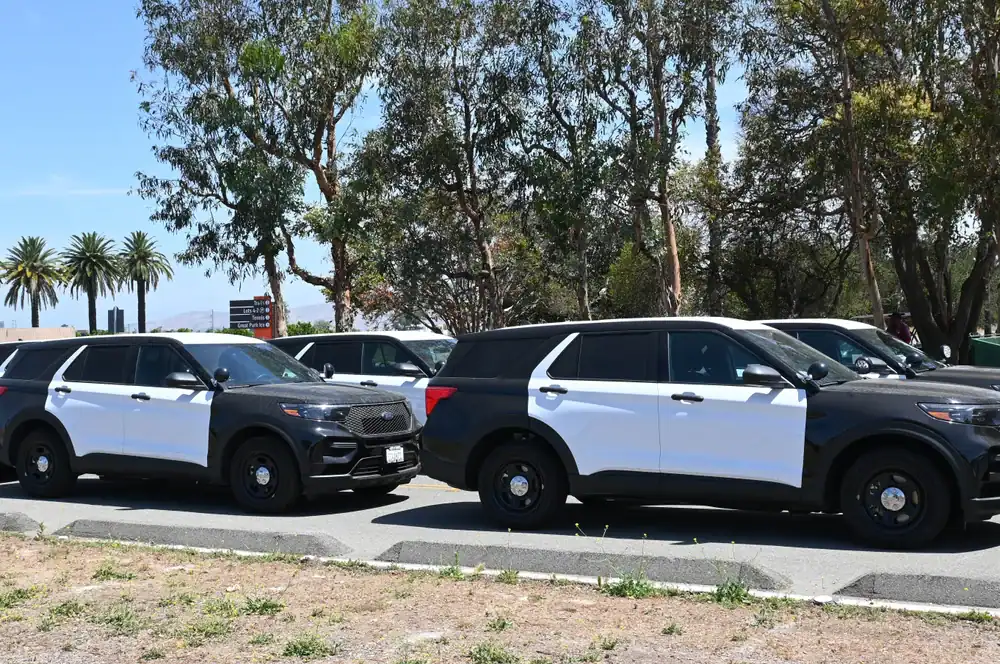
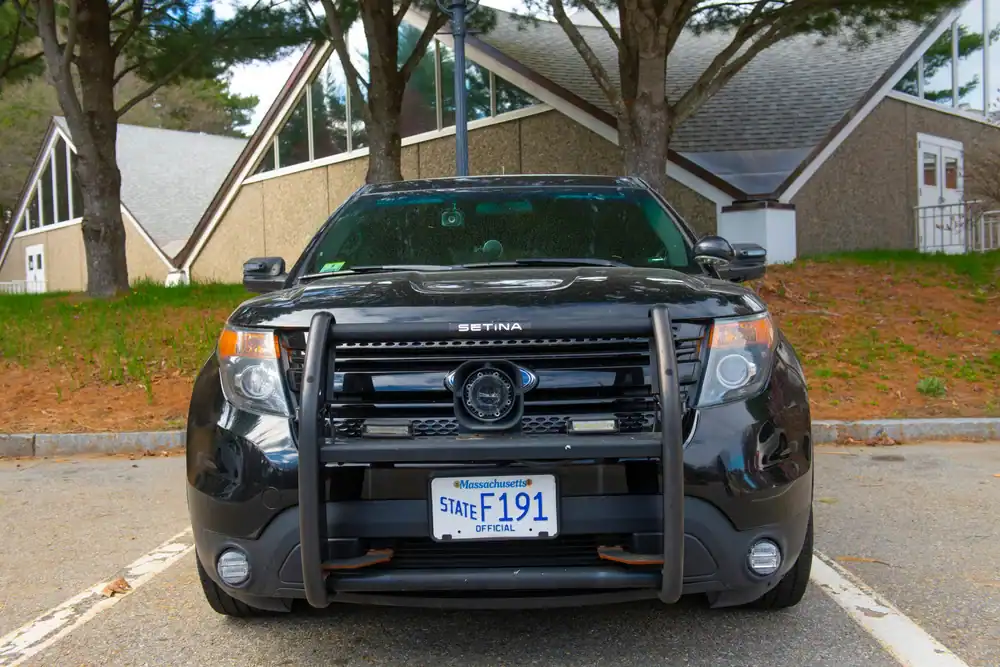
You’re not buying someone’s neglected trade-in. These Ford police interceptor utility vehicles were maintained by fleet professionals who documented every oil change, every brake job, every system check. That’s not luck—that’s how government fleets operate.
The pursuit-rated construction means heavy-duty suspension, reinforced frames, upgraded cooling systems, and components designed to handle high-stress duty cycles. You’re getting a vehicle engineered for performance that civilian models never see. All-wheel drive comes standard. The 3.0L EcoBoost in newer models pushes 400 horsepower—more than most V8s you’ll find at twice the price.
Lebanon County households average two cars per family, and the median income sits around $76,350 for the county. That means most buyers here understand value. A used cop car for sale isn’t about cutting corners. It’s about getting more vehicle for less money, and these interceptors prove it every time someone takes one home.
We focus exclusively on used police cars for sale. No civilian trade-ins. No questionable histories. Just decommissioned law enforcement vehicles that were built tougher than anything you’ll find on a standard dealer lot.
We’re based in Lebanon, PA, where buyers expect straight answers and fair prices. The city’s median household income is $47,439, which means people here work hard for their money and won’t waste it on something that doesn’t deliver. We get that.
Every Ford interceptor for sale on our lot comes from verified government surplus. You’re buying vehicles that municipalities trusted for high-speed pursuits and daily patrol work. That kind of durability doesn’t happen by accident.
You browse what’s available. Most of our inventory includes Ford Explorer police interceptors and Crown Victoria Police Interceptors, depending on what’s come through recent surplus auctions. Mileage typically ranges from 80,000 to 160,000 miles—higher than civilian vehicles, but these were maintained on strict fleet schedules.
You ask questions. We’ll tell you what we know about each vehicle’s history, what’s been done to it, and what you should expect. Some units come with service records. Others don’t. We’re upfront about that.
You decide if it fits your needs. If you want a reliable second vehicle, something with serious towing capacity, or just a high-performance ride that won’t cost you luxury-car money, a police interceptor for sale makes sense. If you need low mileage and showroom shine, it probably doesn’t.
Once you’re ready, the transaction is straightforward. You’ll need to handle the legal requirements—repainting if necessary, removing any remaining police markings, confirming your insurance will cover it. We can point you in the right direction, but those steps are on you.
Ready to get started?
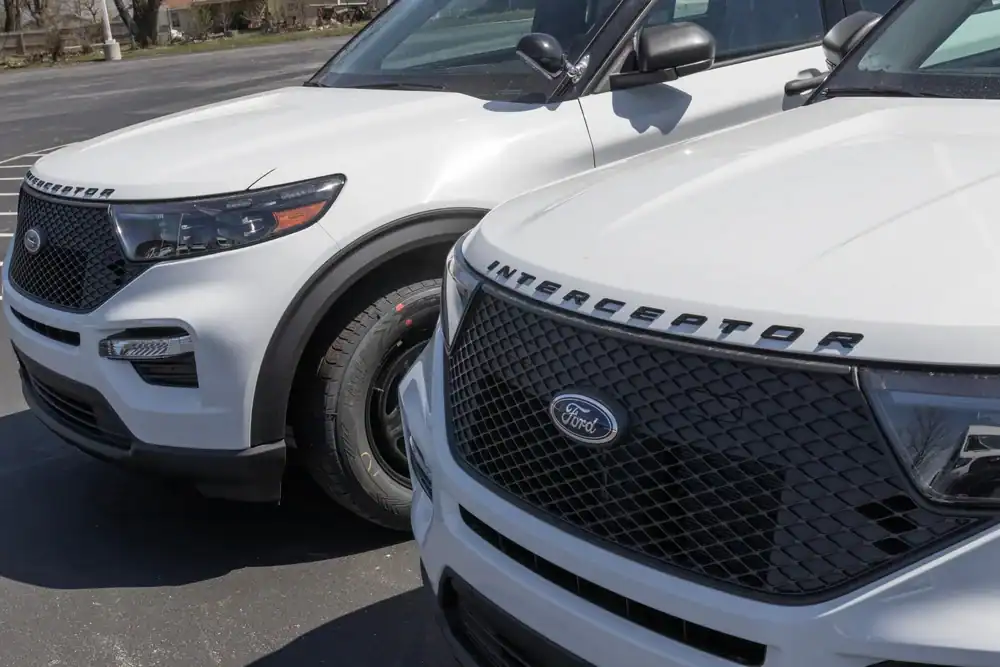
The Ford police interceptor utility isn’t just a rebadged Explorer. It’s pursuit-rated, which means it passed tests that civilian vehicles never face. Ford tests these to withstand 75-mph rear impacts—the only vehicles in the world built to that standard.
You get upgraded cooling systems designed for extended idling and high-speed chases. Larger radiators, transmission coolers, additional oil coolers—all standard. The suspension is reinforced. The alternator is heavy-duty. The steel wheels are stronger. These aren’t cosmetic upgrades. They’re functional differences that matter when you’re putting miles on a vehicle.
In Lebanon, PA, where winters bring snow and roads take a beating, that all-wheel-drive system and heavy-duty construction handle conditions better than most civilian SUVs. Potholes, curbs, rough driving—former police vehicles were built for worse.
Pricing varies based on model year and mileage, but you’re typically looking at $7,000 to $15,000 for a solid Ford Explorer police interceptor for sale. Compare that to $42,000+ for a civilian equivalent, and the value becomes obvious. You’re not getting luxury features or perfect paint. You’re getting a vehicle that works.
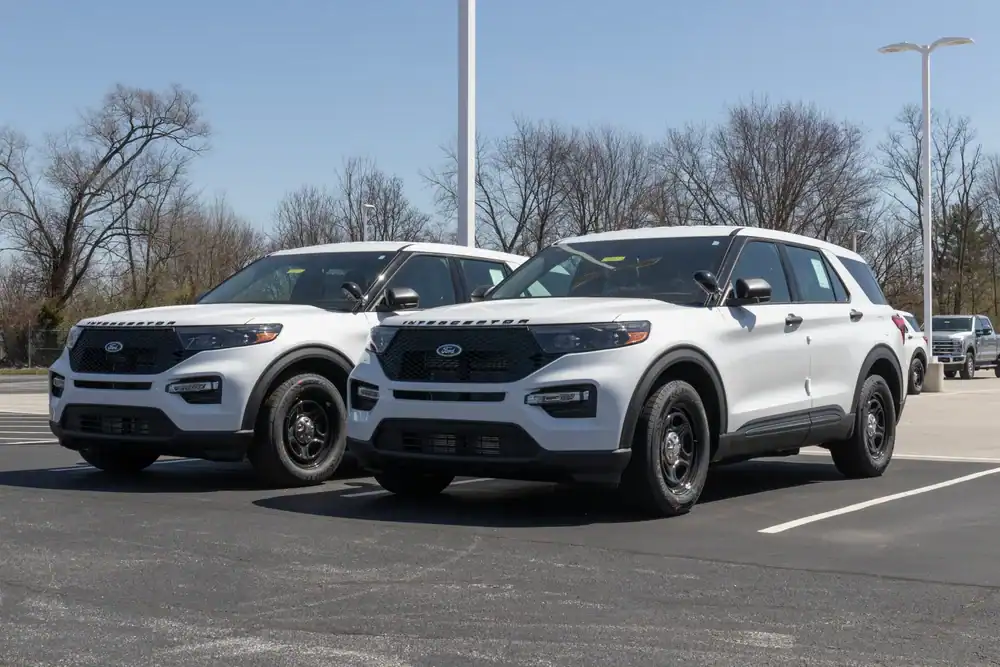
Most police impound cars for sale will have between 80,000 and 160,000 miles. That sounds high compared to civilian vehicles, but context matters.
These miles were accumulated under professional fleet management. Oil changes happened on schedule. Brakes were inspected regularly. Systems were monitored. Compare that to a civilian vehicle with 60,000 miles that might have missed half its scheduled services, and the higher mileage starts to make more sense.
The bigger question is how the vehicle was used. Highway patrol units accumulate miles differently than city units that idle for hours. Ask about the vehicle’s assignment if that information is available. Either way, these engines and drivetrains were built for the abuse, so higher mileage doesn’t automatically mean you’re buying someone else’s problem.
Yes, but they’re manageable. You cannot legally drive a retired cop car that still looks like a police vehicle. That means no traditional black-and-white paint schemes, no police logos or markings, and absolutely no red-and-blue lights or light bars.
Most buyers repaint the vehicle. Solid colors work fine. Some people get creative. The key is making sure it’s clearly not a law enforcement vehicle anymore.
You’ll also want to check with your insurance company before you buy. Some insurers hesitate to cover former police vehicles, or they might have specific requirements. Call ahead, explain what you’re buying, and confirm coverage. It’s easier to handle that conversation before you own the vehicle than after.
Ford dominates police vehicle sales in the U.S. and Canada, so you’ll see more inventory and generally better pricing. The Ford police interceptor utility outsells competitors for a reason—departments trust them.
The Charger Pursuit offers rear-wheel-drive performance and a more aggressive stance, but it’s a sedan. If you need cargo space or all-wheel drive, the Ford Explorer-based interceptor makes more sense. The Tahoe PPV is larger and offers more towing capacity, but it’s also thirstier and typically commands higher prices on the used market.
For most buyers in Lebanon, PA, the Ford interceptor hits the sweet spot. You get AWD for winter weather, enough space for family or work use, and pricing that doesn’t require a second mortgage. The 3.0L EcoBoost in newer models delivers serious power—400 horsepower and 415 lb-ft of torque. That’s more than enough for anything you’ll realistically need.
Sometimes yes, sometimes no. It depends on the agency that surplused the vehicle and how they handle records. Some departments provide full maintenance logs. Others provide nothing.
When records are available, you’ll see documented oil changes, brake replacements, system inspections—everything the fleet manager tracked. That’s valuable information and gives you a clear picture of what’s been done.
When records aren’t available, you’re buying based on the vehicle’s overall condition and your own inspection. That’s not ideal, but it’s also not a dealbreaker. These vehicles were maintained whether or not the paperwork followed them to surplus. The absence of records doesn’t mean the work wasn’t done—it just means you don’t have proof.
If service history matters to you, ask before you commit. We’ll tell you what we have. If that’s not enough, you can walk away. No pressure.
Basic. These aren’t luxury vehicles. Interiors are functional, not fancy. You’ll likely see holes where equipment was mounted—radios, computers, lights. Some sellers patch and cover those. We do what we can with what we receive.
Seats might show wear. Trim might be scuffed. The carpet has seen boots, gear, and long shifts. If you’re expecting showroom condition, you’ll be disappointed. If you’re okay with a vehicle that looks like it worked for a living, you’ll be fine.
Some buyers replace seats or add covers. Others don’t care. It depends on what you’re using the vehicle for. If it’s a work truck, a second car, or something you’re buying for performance rather than appearance, the interior condition probably won’t bother you. If you want something you can show off, a used cop car for sale might not be your best move.
Mileage, appearance, and market perception. A Ford Explorer police interceptor with 120,000 miles and a basic interior doesn’t command the same price as a civilian Explorer with 40,000 miles and leather seats. That’s just reality.
But you’re also getting features the civilian model doesn’t have. Pursuit-rated construction, heavy-duty components, upgraded cooling, reinforced suspension—none of that shows up on a window sticker, but it’s all there. Government fleets don’t buy vehicles based on comfort. They buy based on performance and durability.
The pricing reflects what the market will pay for a high-mileage vehicle with a utilitarian interior. For buyers who understand what they’re getting, that’s a bargain. You’re paying less and getting more vehicle in the ways that actually matter for long-term reliability and capability. For buyers who prioritize appearance and low mileage, it’s not a fit. That’s fine. These vehicles aren’t for everyone—just for people who know what they’re worth.
Other Services we provide in Lebanon