
Hear from Our Customers
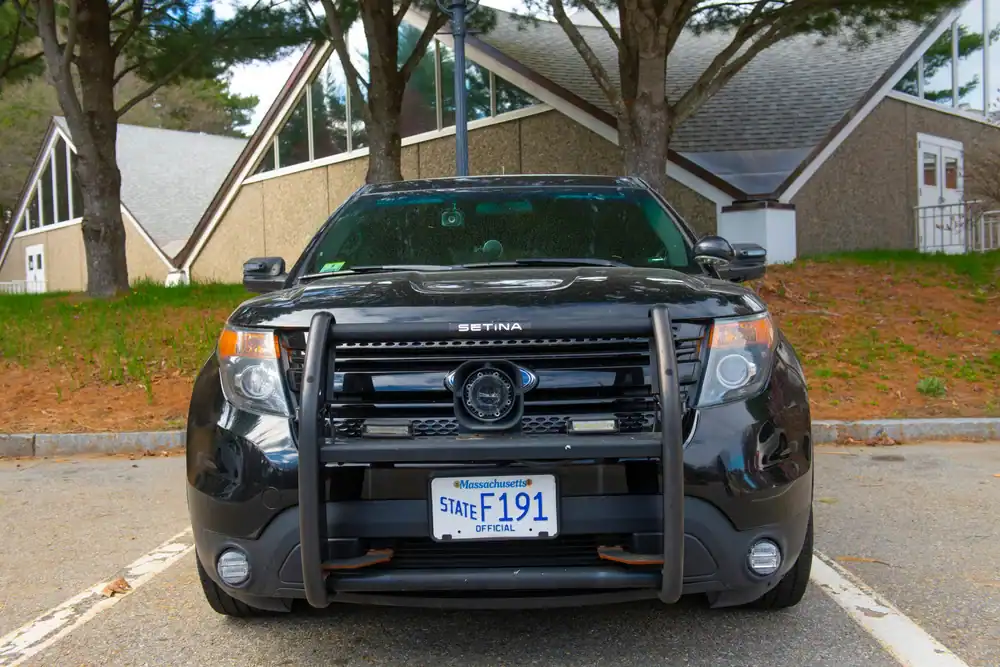
Most civilian vehicles are built for comfort and fuel economy. A Ford police interceptor utility was built for something completely different: high-speed pursuits, constant idling, rough roads, and split-second response times.
That means heavy-duty suspension that doesn’t bottom out. Reinforced frames designed to take a hit. Upgraded alternators and cooling systems that handle extreme conditions. These aren’t luxury features—they’re the baseline.
And here’s what matters for your wallet: these vehicles typically sell between $5,000 and $15,000. Compare that to a similar civilian Ford Explorer starting north of $30,000, and you’re looking at real savings for a vehicle that was over-engineered from day one. You’re not buying someone’s neglected trade-in. You’re buying a vehicle that had to meet standards most cars never see.
State Surplus Auto Sales doesn’t dabble in used police cars as a side business. It’s the only business. For over three decades, we’ve sold more than 35,000 retired law enforcement vehicles to buyers across Pennsylvania and beyond.
Reading and the surrounding Berks County area have a practical mindset when it comes to vehicles. People here aren’t chasing status symbols—they want something reliable that won’t drain their bank account. That’s why used cop cars make sense in this market. Pennsylvania’s average vehicle age sits at 11.6 years, and with new car prices completely out of reach for most households earning under $60,000, the demand for durable used vehicles has never been stronger.
We’re not here to upsell you into something you don’t need. You’ll find Ford Crown Interceptors, Ford Explorer police interceptors, and other models that were actually used by real departments, maintained on strict schedules, and retired when they still had plenty of life left.
You start by browsing what’s actually in stock. Our inventory changes regularly because these vehicles come from government auctions and municipal fleets, not factory orders. When you see a Ford Interceptor for sale that fits your budget and needs, you can come see it in person at our Reading location.
These aren’t showroom vehicles. They’ve been in service. You’ll see higher mileage than a typical used car, and the interior won’t have leather seats or fancy trim. What you will see is a vehicle built with components designed to last under conditions that would destroy a normal car.
Once you’ve looked it over and decided it’s the right fit, the buying process is simple. No haggling over add-ons you don’t want. No pressure to finance through a specific lender. You’re buying a straightforward vehicle at a straightforward price, and you can drive it off the lot the same day in most cases.
Ready to get started?
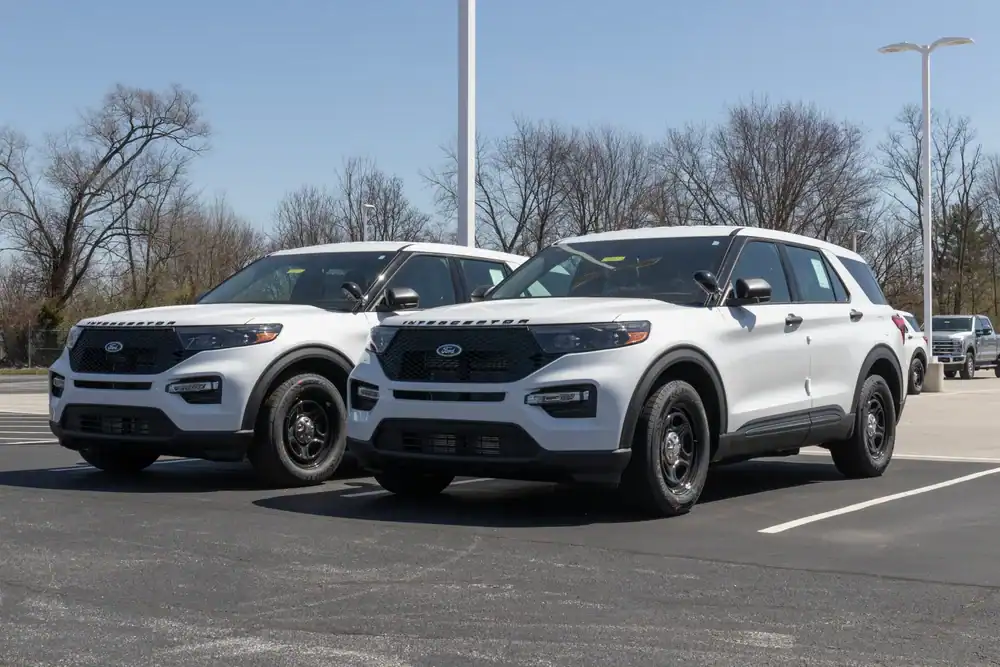
When you buy a used cop car, you’re getting a vehicle that was spec’d differently from the start. Ford’s police interceptor utility models come with all-wheel drive as standard, not an option. The 3.5L EcoBoost engine in many of these vehicles outperforms V8 engines from competitors in independent testing, and it’s been the top choice for law enforcement agencies across the U.S. and Canada for years.
The braking systems are upgraded. The cooling systems are built for constant idling. The electrical systems are designed to handle the load of radios, computers, and emergency equipment running simultaneously. Even after that equipment is removed, you’re left with a vehicle that has more electrical capacity than you’ll ever need.
In the Reading area, where winter weather and rough roads are a fact of life, that all-wheel drive and heavy-duty suspension aren’t just nice to have—they’re practical. You’re not buying a vehicle that was babied in a garage. You’re buying one that was tested in real-world conditions and came out the other side still running. Most of these vehicles have service records available, so you can see exactly how they were maintained during their time in service.
No, and the difference matters. Police impound cars for sale are civilian vehicles that were towed and seized—often because of unpaid tickets, DUIs, or other legal issues. You have no idea how those vehicles were treated, and their history is usually a mess.
Retired police vehicles are completely different. These are Ford Interceptors and other models that were purchased new by law enforcement agencies, used in active service, and then sold off when the department upgraded their fleet. They come with maintenance records, known history, and a clear purpose from day one.
When you’re looking at a used cop car from us, you’re not buying someone’s impounded Civic with mystery problems. You’re buying a vehicle that was built to police specifications and maintained on a schedule because departments can’t afford to have their fleet break down mid-shift.
Most of these vehicles will have higher mileage than a typical used car—often between 80,000 and 120,000 miles, sometimes more. But here’s the context that matters: a significant portion of those miles are idling hours, not highway miles.
Police vehicles spend a lot of time sitting with the engine running. That’s easier on the drivetrain than stop-and-go city driving or constant acceleration. The engines and transmissions in these vehicles are also built heavier than civilian models specifically because they’re expected to idle for extended periods.
What you’re really looking at is how the vehicle was maintained during those miles. Departments run these on strict schedules—oil changes, brake inspections, fluid checks—because a breakdown isn’t just an inconvenience, it’s a safety issue. You’ll often find service records that show exactly what was done and when, which is more than you can say for most used cars on a regular lot.
Two reasons: durability and price. A Ford police interceptor utility was built with components that don’t exist in the civilian version. Heavier suspension, reinforced body, upgraded electrical, better braking—these aren’t options you can add later. They’re baked into the vehicle from the factory.
And you’re getting all of that for significantly less money. While a used civilian Ford Explorer in decent shape might run you $25,000 to $35,000, a retired police interceptor with similar age typically sells for $5,000 to $15,000. Yes, it’ll have higher mileage and a more basic interior, but the core of the vehicle—the parts that actually matter for reliability and safety—are stronger.
If you need a vehicle that can handle tough conditions, last for years, and not destroy your budget, a used cop car makes sense. If you want heated leather seats and a premium sound system, buy something else.
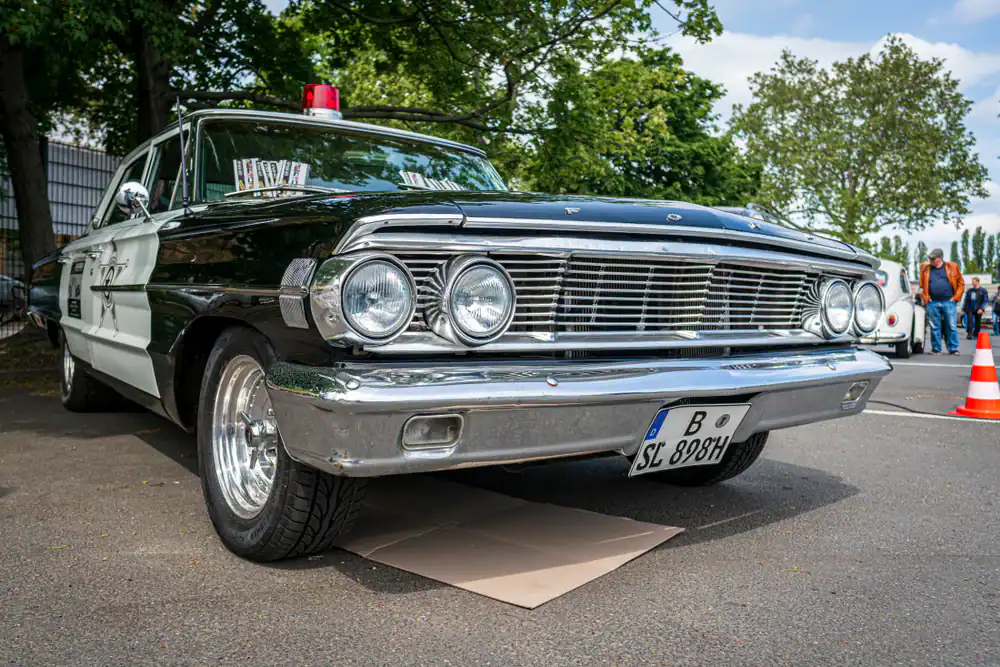
The Ford Crown Victoria Police Interceptor (often called the Crown Interceptor) is the sedan that dominated police fleets for decades. It’s rear-wheel drive, body-on-frame construction, and powered by a V8. Production ended in 2011, so any Crown Vic you find today is at least 13 years old. They’re known for being nearly indestructible, easy to work on, and cheap to maintain.
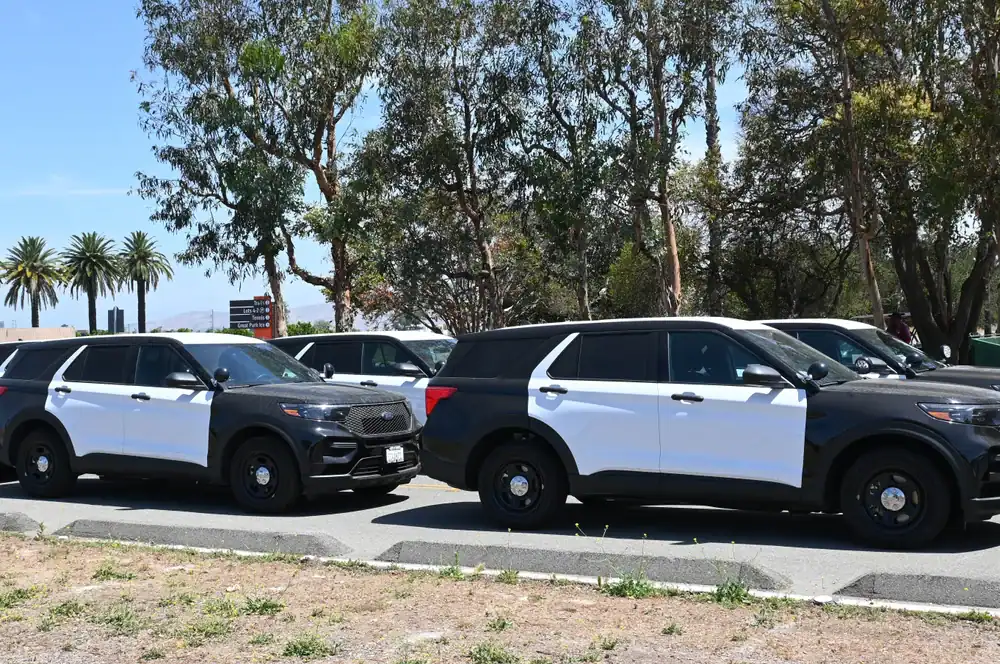
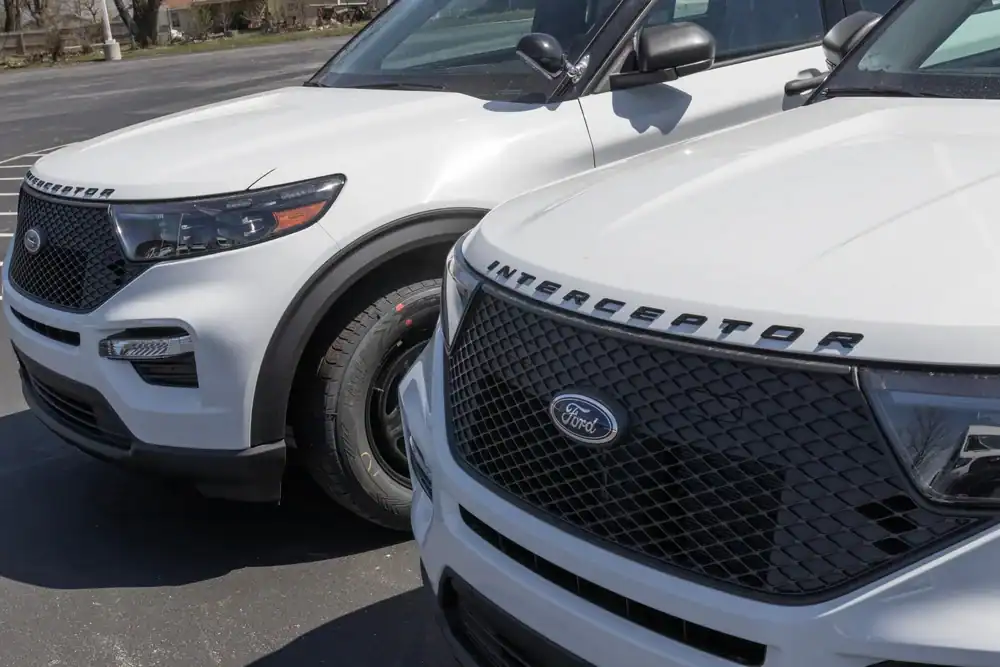
The Ford Explorer police interceptor (officially called the Police Interceptor Utility) is the SUV that replaced the Crown Vic as Ford’s primary police vehicle. It’s all-wheel drive, built on a unibody platform, and typically powered by a 3.5L EcoBoost V6 or a 3.7L V6. It offers more cargo space, better handling in bad weather, and modern safety features.
Which one makes sense for you depends on what you need. If you want something simple and bulletproof with a V8, the Crown Vic is hard to beat. If you need more space, all-wheel drive, and something newer, the Explorer is the better choice. Both were built tougher than their civilian counterparts.
In most cases, yes. Law enforcement agencies keep detailed service records because they have to. These aren’t personal vehicles where someone might skip an oil change or ignore a warning light. Departments run their fleets on schedules, and those records usually transfer with the vehicle when it’s sold.
You’ll typically see documentation for oil changes, brake work, tire replacements, and any other service performed during the vehicle’s time in service. That’s a level of transparency you rarely get with a regular used car, where you’re trusting whatever the previous owner tells you.
That said, not every vehicle will have a complete record, especially if it changed hands through an auction. But we make available whatever documentation exists. You’re not buying blind. You’re getting as much information as possible about how the vehicle was used and what’s been done to it, which is more than most used car buyers ever see.
The interior will be basic, and there will likely be holes or marks where equipment was mounted. Radios, computers, light bars—all of that gets removed before the vehicle is sold, and you’re left with the evidence that it was there. Some buyers don’t care. Others will want to patch holes or add trim to clean things up.
Cosmetically, these vehicles won’t be perfect. They’ve been in service, often for years. You might see scuffs, scratches, or wear that wouldn’t exist on a pampered civilian vehicle. But cosmetic issues don’t affect how the vehicle runs.
Mechanically, the biggest thing to watch for is how hard the vehicle was driven. Some departments are easier on their fleets than others. High idle hours, occasional high-speed driving, and constant use can wear components faster than normal driving. That’s why the maintenance history matters—it shows you whether issues were addressed or ignored. Most of the vehicles we sell were maintained properly, but you should still look closely and ask questions before you buy.
Other Services we provide in Reading