
Hear from Our Customers
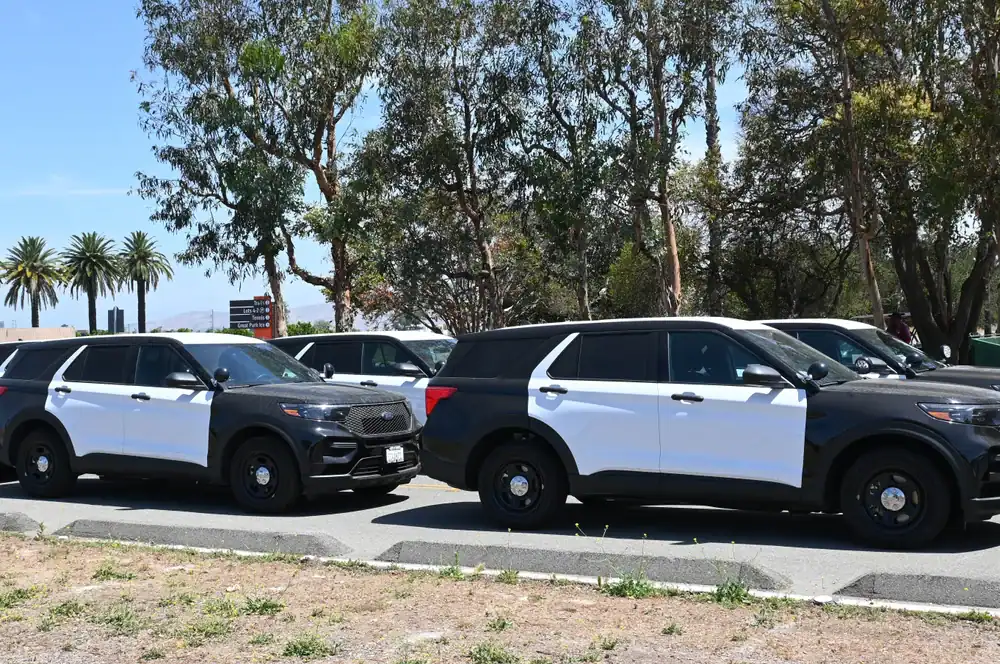
You’re not buying a regular used car. These Ford police interceptor utility vehicles were built for high-speed pursuits and severe duty cycles. That means upgraded alternators, reinforced suspension, steel wheels designed for durability, and all-wheel drive as standard equipment.
The mileage is higher than most used cars—usually between 120,000 and 160,000 miles. But here’s what matters: these vehicles were maintained on strict government schedules and built with components designed to handle punishment that civilian vehicles never see.
You’re getting a Ford Explorer police interceptor that was tested to the only 75-MPH rear-impact crash standard in the world. You’re getting pursuit-rated brakes, cooling systems, and electrical capacity. And you’re paying thousands less than a comparable civilian SUV with similar features.
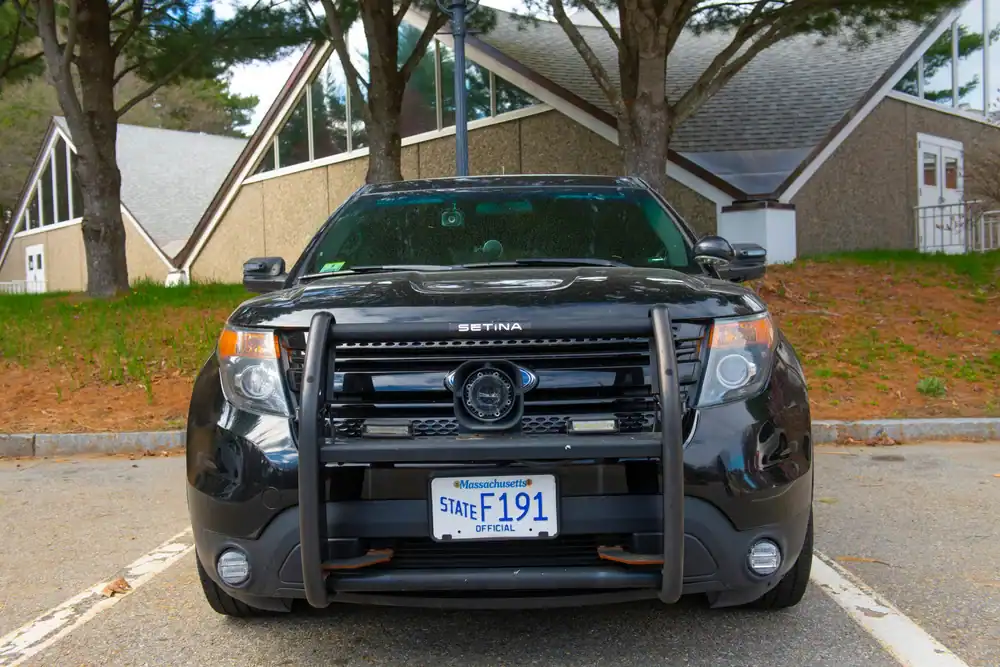
State Surplus Auto Sales specializes in one thing: used cop cars for sale from government fleets. We’re not a traditional dealership trying to move whatever’s on the lot. Every Ford interceptor for sale here comes from municipal or state agencies in Pennsylvania and the surrounding region.
Springfield, PA sits in Delaware County, where police departments cycle through vehicles regularly. When those agencies upgrade their fleets, those vehicles become available through surplus channels. That’s where we come in.
You’re dealing with people who understand what these vehicles are, how they were used, and what to look for. We’re transparent about mileage, history, and condition because that’s how this market works.
First, you look at what’s available. Our inventory changes as government agencies release vehicles, so what you see today might be different next week. Most of our Ford Interceptor and Ford Explorer police interceptor inventory comes from Pennsylvania departments.
You’ll see the mileage, the year, and the general condition listed. Some vehicles have service records available. Some don’t. That’s the nature of government surplus—you get what’s documented.
When you find something that fits your budget and needs, you can come see it in person. These aren’t showroom vehicles. They’ve been used hard. Expect basic interiors, possible holes from removed equipment, and paint that might need attention. What you’re buying is the mechanical foundation—the pursuit-rated drivetrain, the heavy-duty components, and the all-wheel drive system.
Once you decide, the purchase process is straightforward. You’re buying as-is, which is standard for police impound cars for sale. No warranties, no financing through us, just a clear title transfer and keys.
Ready to get started?
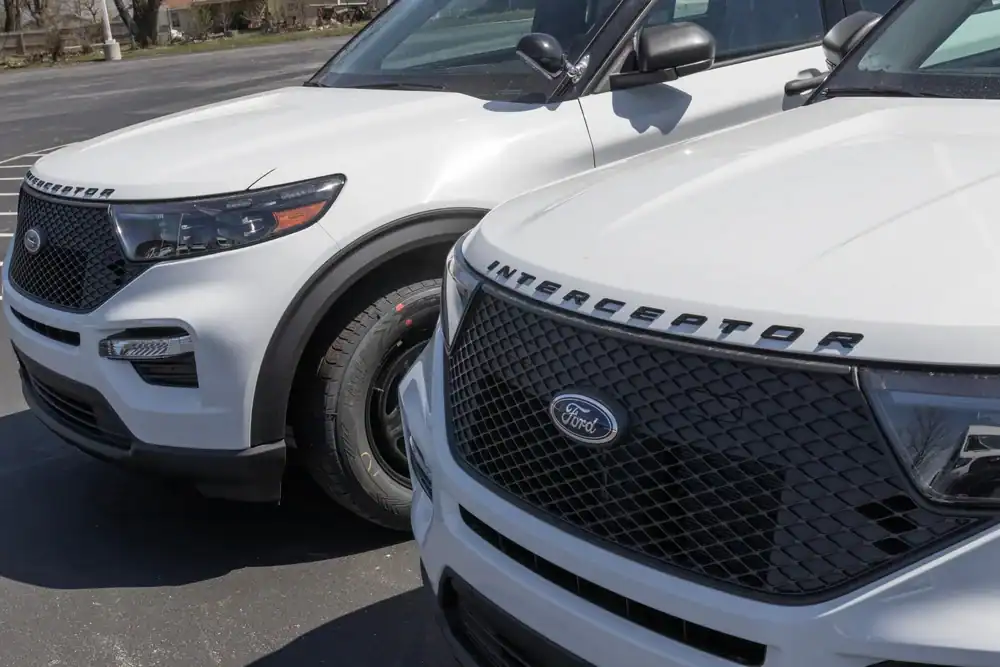
Every Ford police interceptor utility we sell comes with all-wheel drive. That’s not an option or an upgrade—it’s standard on pursuit-rated vehicles. You’re also getting the more powerful engine options that departments spec for performance, not fuel economy.
In Springfield, PA and throughout Delaware County, all-wheel drive matters. Winter weather, wet roads, and the occasional unpaved surface are part of driving here. These interceptors were built for that and worse.
The electrical systems are upgraded too. Heavy-duty alternators that powered light bars and radios now power whatever you need. The cooling systems are built for idling with the AC running for hours, then immediate high-speed driving. The brakes are larger and designed for repeated hard stops from highway speeds.
You won’t get the light bars, the push bumpers, or the police equipment. Those get removed before surplus sale. What remains is the platform—the part that matters for daily driving, performance, and longevity.
Pricing typically runs well below comparable civilian Ford Explorers with similar features. The trade-off is mileage and cosmetic condition. You decide if that trade makes sense for your situation.
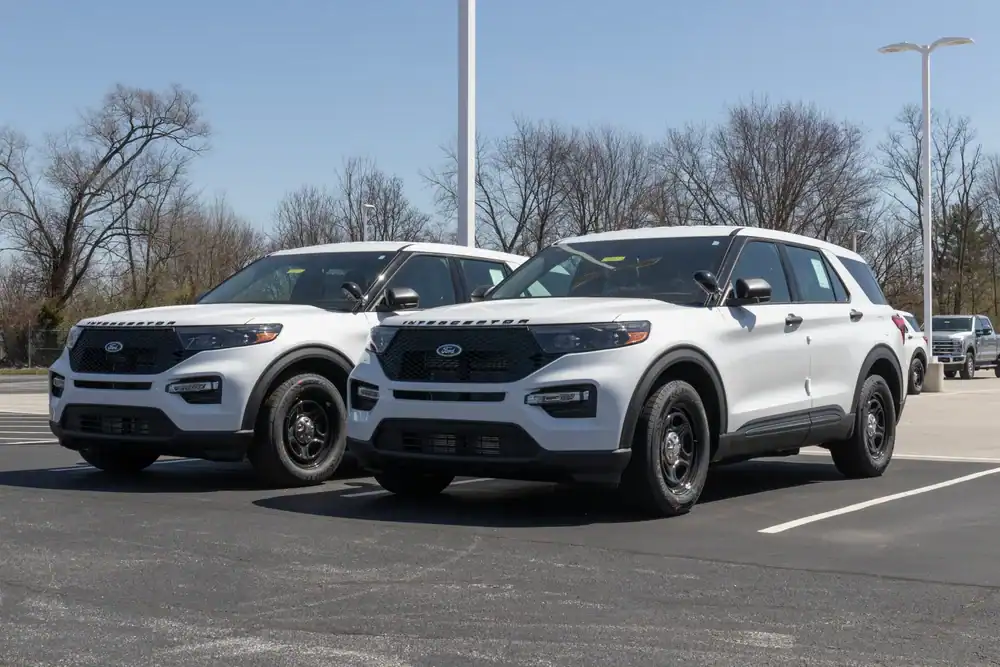
Most Ford interceptors for sale through government surplus channels have between 120,000 and 160,000 miles. Some have less, some have more. Departments typically cycle vehicles out based on age and mileage combined, not just one factor.
Those miles include a lot of idling. Police vehicles sit running for hours during shifts, which adds engine hours without adding road miles. They also include periods of aggressive driving—high speeds, hard acceleration, heavy braking. It’s not highway commuting miles.
The question isn’t really about the number. It’s whether the vehicle was built and maintained to handle that use. Ford captures about 60% of the police vehicle market specifically because their interceptors hold up under these conditions. The components are heavier duty than civilian equivalents, and most departments follow strict schedules for oil changes and fluid services. You’re buying high mileage, but you’re also buying a platform designed for exactly that kind of use.
The Ford Explorer police interceptor starts with the civilian platform, then gets pursuit-rated modifications. The engine options are more powerful—departments don’t buy the base four-cylinder. The suspension is reinforced with heavy-duty components. The wheels are steel instead of alloy because they’re stronger and cheaper to replace after curb strikes.
All-wheel drive is standard, not optional. The alternator is upgraded to handle the electrical load of emergency equipment. The cooling system is enhanced for sustained idling and immediate high-speed operation. The brakes are larger. The calibration is different—firmer shifts, different throttle response, modified stability control thresholds.
The interior is more basic. Vinyl seats instead of cloth or leather. Rubber floors instead of carpet. Simplified controls. These aren’t comfort features—they’re durability and cleaning considerations for vehicles that see multiple officers per day. The Ford police interceptor utility is built for function, not luxury. After surplus sale, you can modify the interior however you want, but it starts stripped down.
Yes. Once a police vehicle goes through surplus sale, it’s a regular used car legally. The title transfers to you just like any other vehicle purchase. You register it, insure it, and drive it like any other car.
Pennsylvania law requires that emergency equipment be removed before surplus sale, which is why you won’t see light bars, sirens, or police graphics on vehicles we sell. Some cosmetic traces might remain—holes where equipment was mounted, faded paint where decals were removed—but the functional police equipment is gone.
You can drive a former police interceptor anywhere. Some owners like the look and keep it mostly stock. Others repaint, add wheels, and make it less obvious. That’s your choice. The vehicle itself is just a used Ford Explorer with heavy-duty components. Nothing about owning it is restricted or requires special licensing.
The mileage is the main reason. A civilian Ford Explorer with 130,000 miles sells for less than one with 50,000 miles. Police interceptors hit surplus with high mileage as standard, which automatically lowers the price.
The cosmetic condition is the second factor. These vehicles weren’t babied. They have door dings, interior wear, scratched paint, and visible signs of hard use. Departments don’t detail them before surplus sale. You’re buying functional transportation, not a vehicle that looks good in photos.
The third factor is market perception. Some buyers don’t want a former police car. They worry about the hard use or don’t like the association. That limits the buyer pool, which keeps prices down. If you’re not bothered by those factors, you benefit from the lower pricing. You’re getting pursuit-rated components, all-wheel drive, and heavy-duty construction for less than a comparable civilian vehicle with better cosmetics and lower miles. It’s a value calculation. For some buyers, it makes perfect sense. For others, it doesn’t.
Sometimes yes, sometimes no. It depends on the department and what they provide with the vehicle. Some agencies include basic records showing oil changes and major work. Others provide nothing beyond the title.
Government fleet vehicles typically follow scheduled intervals for oil changes, tire rotations, and fluid services. That’s policy, not optional. But documentation of that work doesn’t always transfer with the vehicle when it goes to surplus. Some departments keep those records, some include them, some don’t track them in a way that’s transferable.
What you can usually verify is the vehicle history through the VIN—whether it’s been in reported accidents, whether the title is clear, and basic registration history. What you often can’t verify is the specific work history or exactly how many officers drove it. You’re buying based on the general knowledge that fleet vehicles follow schedules and the specific condition you can see and test when you inspect the vehicle in person. That’s the trade-off with government surplus. Lower price, less documentation.
Start with the basics you’d check on any used car. How does it drive? Any unusual noises, vibrations, or warning lights? How do the brakes feel? Does the transmission shift smoothly? Those fundamentals matter more than the fact that it’s a former cop car.
Check the body for rust, especially in the wheel wells and rocker panels. Pennsylvania winters mean salt exposure, and high-mileage vehicles have had years of it. Look at the frame and suspension components for corrosion or damage. These vehicles hit curbs, potholes, and rough terrain regularly.
Inside, expect wear. The seats will show use, the controls will be worn, and there will likely be holes or marks from removed equipment. That’s cosmetic. What matters mechanically is whether the vehicle runs properly and whether the major systems—engine, transmission, all-wheel drive, brakes—function correctly. Test everything. Run the heat, the AC, the four-wheel drive. Listen for odd sounds. Pay attention to how it handles. You’re buying a high-mileage work vehicle, so focus on whether it still works properly, not whether it looks perfect.
Other Services we provide in Springfield