
Hear from Our Customers
You’re not buying a regular used car. You’re getting a vehicle that was built with reinforced suspension, upgraded cooling systems, and brakes designed for high-speed response work. These aren’t cosmetic upgrades—they’re functional differences that affect how the vehicle handles, stops, and performs under pressure.
Most Ford Police Interceptor Utility models come with V6 engines capable of reaching speeds between 130 and 155 MPH. That’s not something you’ll find in a standard Explorer or civilian sedan at this price point. You’re also getting a vehicle that passed the 75-MPH rear-impact crash test—a standard most civilian cars don’t even attempt.
The pricing reflects reality. Nationwide, used police interceptors average around $15,400, with some starting as low as $3,500 depending on mileage and condition. Compare that to a new civilian SUV starting above $25,000, and you’re looking at serious savings for a vehicle that was built tougher from the factory.
We focus exclusively on used cop cars for sale. That’s it. No trade-ins, no civilian fleet vehicles, no side inventory. Just police interceptors sourced directly from law enforcement agencies.
We’re based in Doylestown, PA, and we work with buyers across Bucks County who want access to vehicles that were maintained by professional fleet mechanics and built to law enforcement specifications. You’re not walking onto a lot full of random used cars—you’re shopping a curated inventory of Ford interceptors that we know inside and out.
If you’ve been comparing prices on Cars.com or TrueCar and seeing police interceptors listed in Newark or New York, you already know what’s available regionally. We bring that same inventory closer to home, with local access and straightforward pricing.
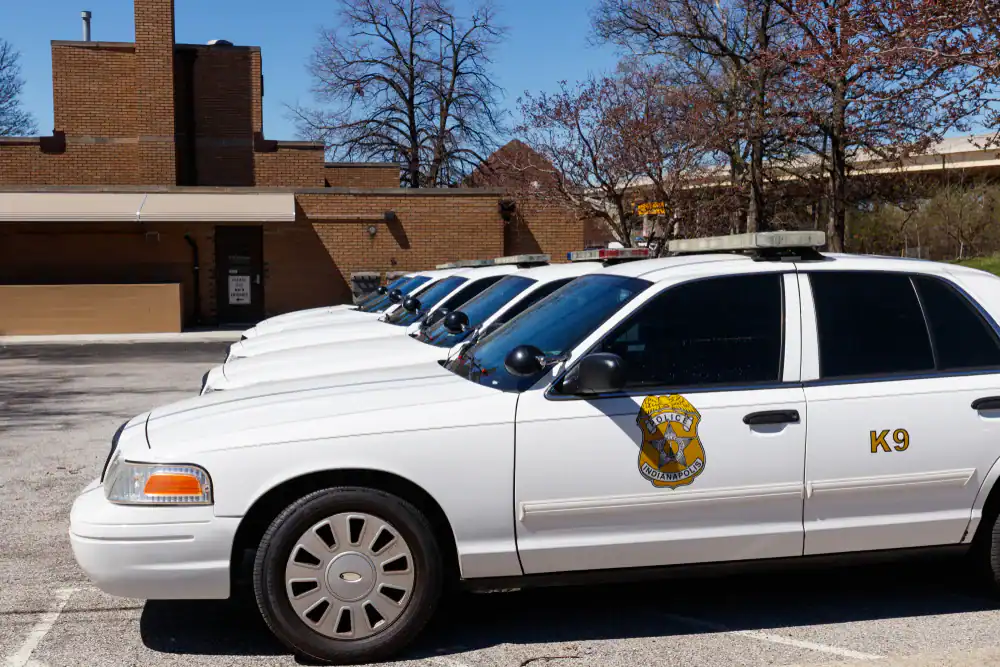
You start by browsing our current inventory of Ford Police Interceptor Utility models and other available patrol vehicles. Each listing includes the year, mileage, and key details about the vehicle’s history. Most of what we carry falls between 80,000 and 160,000 miles—standard for decommissioned police vehicles.
Once you find something that fits your budget and needs, you can schedule a time to see it in person. You’ll notice evidence of previous equipment—holes in the dash, wiring under the seats, maybe some patched panels. That’s normal. These vehicles were working cars, and the modifications reflect that.
If you decide to move forward, the transaction is straightforward. You’re buying the vehicle as-is, which is standard for police car sales. No hidden fees, no drawn-out negotiations. You get the title, the keys, and a vehicle that’s ready to drive.
Ready to get started?
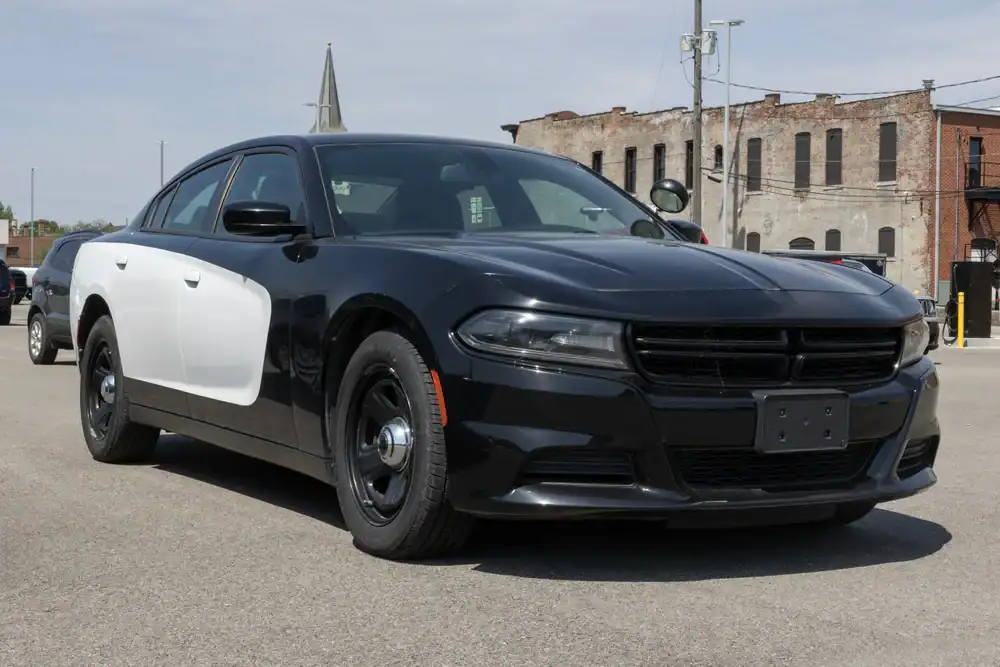
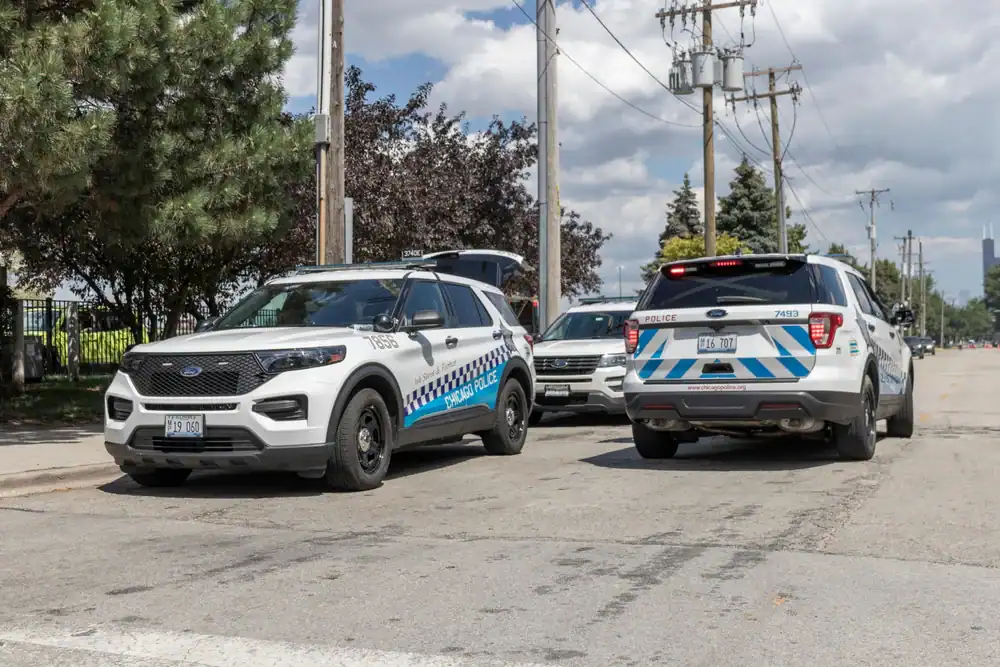
Our inventory rotates based on what becomes available from law enforcement agencies, but the core of what we carry stays consistent: Ford Police Interceptor Utility models, Dodge Charger Pursuit sedans, and occasionally other patrol-grade vehicles that meet our standards.
In Doylestown and the surrounding Bucks County area, most buyers are looking for the Ford Explorer-based Police Interceptor Utility. It’s the most common police vehicle in the U.S., holding over 60% of the market as of late 2024. That popularity means parts are easy to find, and most mechanics are familiar with the platform.
You’ll also find that these vehicles come with features you won’t see on civilian trims—things like heavy-duty alternators, transmission coolers, and reinforced door panels. These aren’t luxury features, but they matter if you’re planning to put serious miles on the vehicle or need something that can handle rough conditions.
Pricing depends on mileage, year, and overall condition, but expect to see most vehicles listed between $5,000 and $15,000. That’s thousands below what you’d pay for a comparable civilian vehicle with similar specs.
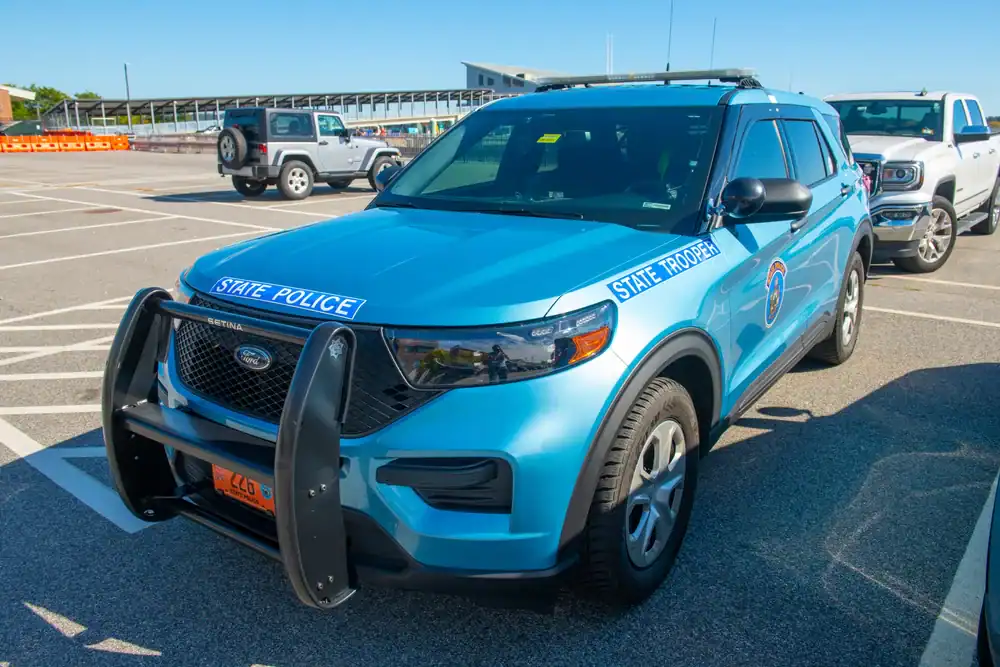
Most of the used cop cars for sale in our inventory have between 80,000 and 160,000 miles. That’s standard for decommissioned police vehicles, which rack up miles quickly due to extended idle times and multi-shift use.
High mileage on a police interceptor doesn’t mean the same thing it does on a civilian car. These vehicles were maintained by professional fleet mechanics on strict schedules. Oil changes, brake inspections, and fluid checks happened like clockwork because agencies can’t afford downtime.
That said, you’re still buying a vehicle that lived a hard life. Expect wear on the interior, evidence of equipment removal, and the reality that this wasn’t someone’s weekend driver. But the mechanical components—engine, transmission, suspension—were built to handle far more stress than a typical used car at this price point.
Yes. The Ford Police Interceptor Utility is built on the Explorer platform, but it’s not the same vehicle you’d buy off a civilian lot. Police models come with performance upgrades that include more powerful engine options, enhanced cooling systems, and tuning designed for high-speed pursuit work.
Most police interceptors can reach speeds between 130 and 155 MPH, depending on the engine and year. Civilian Explorers aren’t built or rated for that kind of performance. You’re also getting better handling at high speeds due to the upgraded suspension and braking systems.
This matters if you care about performance, but it also affects everyday driving. The vehicle responds faster, handles better under load, and stops more effectively than a standard SUV. You’re not just paying for speed—you’re paying for the engineering that makes that speed controllable.
Sometimes, but not always. Some insurance companies charge higher premiums for former police vehicles because of their history and the assumption that they’ve been driven hard. Other insurers treat them like any other used car, especially if the police decals and equipment have been removed.
Your best move is to get quotes before you buy. Call your insurance agent, give them the VIN of the vehicle you’re considering, and ask for a rate. That way you know exactly what you’re looking at before you commit.
It’s also worth noting that many buyers find the safety features—reinforced frames, advanced braking systems, additional airbags—help offset any potential rate increase. The Ford Police Interceptor Utility is one of the few vehicles rated to pass a 75-MPH rear-impact crash test, which some insurers view favorably.
You should expect a functional interior with visible signs of use. These vehicles spent years as working police cars, which means the seats have wear, the dash may have holes from equipment mounts, and there’s likely wiring tucked under the seats or behind panels.
Most agencies remove the major equipment—light bars, radios, computers—before selling the vehicles, but they don’t restore the interior to showroom condition. You’ll see patched holes, zip ties, and evidence of modifications. Some buyers don’t mind. Others plan to reupholster or replace components.
The good news is that the bones of the interior are solid. Police vehicles are built with heavy-duty materials that hold up better than standard civilian trims. The wear you see is cosmetic, not structural. If you’re handy or willing to invest a few hundred dollars, you can clean up the interior significantly.
Yes. Once a police vehicle is decommissioned and sold, it’s titled and registered like any other used car. You’ll go through the standard Pennsylvania registration process, which includes providing proof of insurance, paying the title transfer fee, and getting a new license plate.
The vehicle is no longer considered a police car once it’s sold to a civilian buyer. You’re not allowed to keep any emergency lights, sirens, or official police markings, and most agencies remove or deactivate that equipment before the sale anyway.
Pennsylvania doesn’t have any special restrictions on registering former police vehicles. You’re buying a used Ford, Dodge, or Chevy that happened to be used by law enforcement. The registration process is the same as it would be for any other used vehicle purchase in Doylestown or anywhere else in Bucks County.
Police vehicles are cheaper because of mileage, use history, and the volume at which they’re sold. Law enforcement agencies cycle through fleets regularly, and when they decommission vehicles, they sell them in bulk at auction or through surplus sales. That keeps prices low.
You’re also buying a vehicle with high mileage and a known hard-use history. Even though these cars are built tough and maintained well, the market prices them lower because of the perception that they’ve been driven hard. That perception works in your favor if you understand what you’re actually getting.
The other factor is cosmetic condition. These aren’t detailed, showroom-ready vehicles. They have wear, modifications, and visible signs of their previous life. But if you’re focused on performance, durability, and value rather than appearance, you’re getting a vehicle that was built to a higher standard than most civilian cars—and you’re paying a fraction of the price.
Other Services we provide in Doylestown