Deciding between a Ford Explorer Police Interceptor SUV and Ford Taurus sedan? This detailed comparison covers fuel economy, space, performance, and which model works best for families, work, or daily driving.
The Ford Explorer police interceptor isn’t just a regular Explorer with a light bar bolted on top. It’s built on the same platform, but it’s been engineered specifically for law enforcement use with components designed to handle long shifts, high-speed pursuits, and constant idling.
You get a 3.7-liter V6 as the base engine, pushing 304 horsepower. Some models come with the 3.5-liter EcoBoost option that delivers 365 horsepower. All-wheel drive is standard, not optional. The suspension is heavier duty. The cooling system is upgraded to handle extended idle times without overheating. The alternator is built to power multiple electrical systems at once.
The interior is more spacious than the sedan. You’re looking at an SUV layout with actual cargo room behind the second row—over 52 cubic feet when you need it. That means you can fit sports equipment, work tools, or groceries without playing Tetris every time you load up. The seating position is higher, giving you better visibility in traffic and parking lots.
Let’s talk about what it actually costs to run one of these. The Ford Explorer police interceptor with the 3.7-liter V6 gets around 16 mpg in the city and 21 mpg on the highway. That’s a combined rating of about 18 mpg. Not amazing, but reasonable for an AWD SUV with this much power and weight.
If you find one of the hybrid models, the numbers improve significantly. The hybrid version was rated at 24 mpg combined, which is about 40 percent better than the standard V6. The hybrid system lets the vehicle run lights, computers, and accessories off the battery while idling, which means less engine runtime and less fuel burned when you’re stopped. For someone who spends time in traffic or does a lot of city driving, that difference adds up fast.
The EcoBoost models with the twin-turbo V6 will cost you more at the pump. You’re looking at similar or slightly lower fuel economy compared to the base engine, but you get significantly more power. If you’re not regularly towing or needing that extra acceleration, the base engine is usually the smarter financial choice.
Maintenance costs are something to consider too. These vehicles were built with heavy-duty components, which means parts like brake pads, rotors, and suspension pieces are designed to last longer under hard use. That’s good. The downside is that when they do need replacement, those parts can cost more than standard civilian versions. AWD systems also add complexity, particularly the power transfer unit, which has been known to develop leaks if not maintained properly.
Insurance tends to run a bit higher on retired police vehicles. Some carriers see them as higher risk due to their previous use. Others don’t care. It’s worth getting quotes before you commit to buying. Registration is straightforward—these are titled as regular vehicles once they leave government service, so there’s no special process in New Jersey, New York, or Pennsylvania.
The Explorer makes sense when you need space and versatility. If you’re a family with kids, the SUV layout gives you room for car seats, strollers, and all the gear that comes with having children. The higher seating position makes it easier to load kids in and out, and the rear cargo area can handle everything from sports equipment to weekend camping gear.
For small business owners, especially those running security companies, delivery services, or contracting operations, the Explorer offers a practical work vehicle. You can fit tools and equipment in the back without needing a truck. The AWD system helps in bad weather, which matters if you’re working in the Northeast where snow and ice are part of the deal from November through March.
Rideshare and delivery drivers have found these vehicles useful too. The space accommodates larger groups or more packages. The durability means you’re not babying a vehicle that needs to rack up miles quickly. And the lower purchase price compared to a civilian Explorer means your cost per mile stays reasonable even as you put on serious mileage.
If you’re someone who likes road trips or outdoor activities, the Explorer gives you the cargo capacity to bring bikes, kayaks, or camping gear without needing a roof rack. The AWD helps on unpaved roads or in less-than-ideal conditions. And the upgraded cooling system means you’re not worried about overheating when you’re loaded down and climbing mountain roads in summer.
The Explorer doesn’t make as much sense if you’re mostly commuting solo and don’t need the extra space. You’ll pay more for fuel and insurance without getting much benefit from the larger size. In that case, the sedan might be the better fit.
Want live answers?
Connect with a State Surplus Auto Sales expert for fast, friendly support.
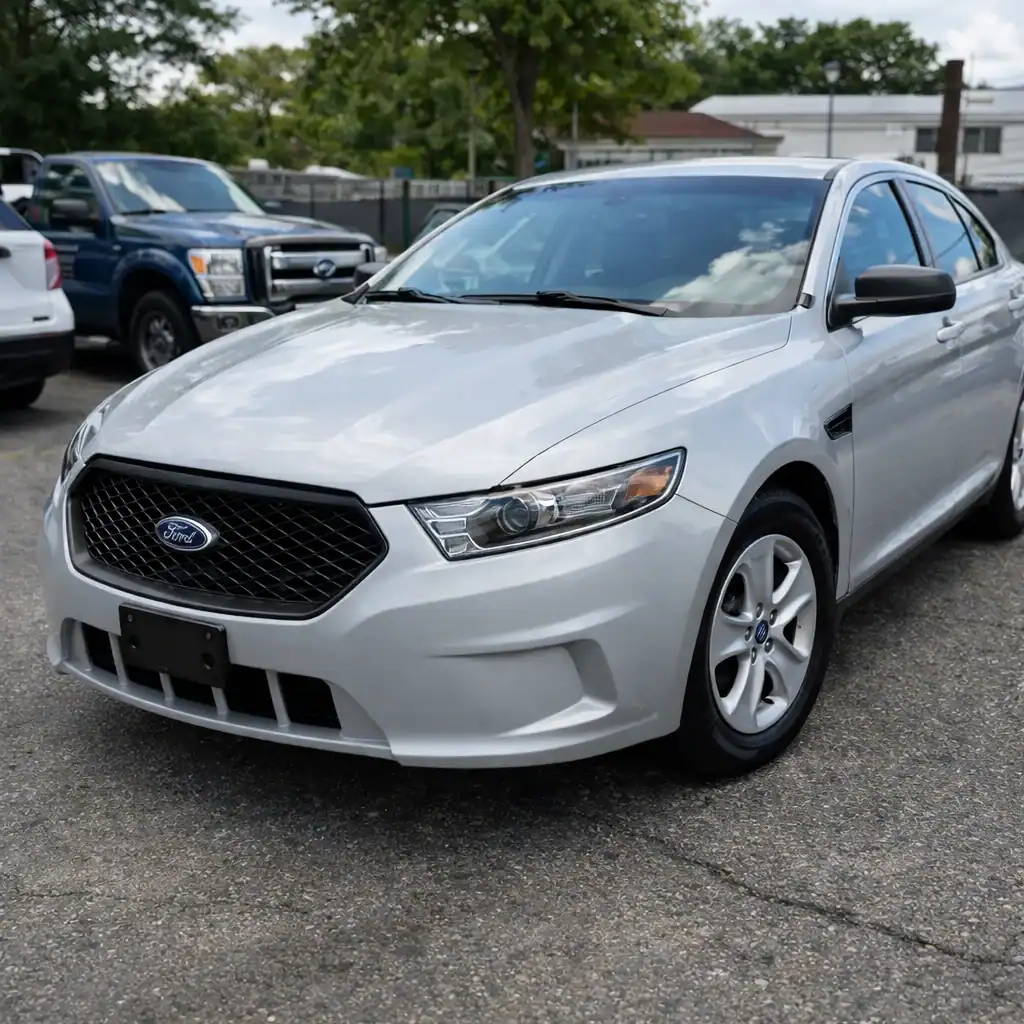
The Ford Taurus police interceptor was introduced in 2013 to replace the Crown Victoria. It ran until 2019 when Ford discontinued the Taurus entirely. So if you’re buying one now, you’re looking at a vehicle that’s at least five years old, possibly older.
The sedan came with three engine options. The base was a 3.5-liter naturally aspirated V6 making 288 horsepower. There was also a 3.7-liter V6 option. The top choice was the 3.5-liter EcoBoost V6 borrowed from the Taurus SHO, producing 365 horsepower. Most patrol vehicles you’ll find had either the base engine with front-wheel drive or the EcoBoost with all-wheel drive.
The interior is smaller than the Explorer. You’re working with a sedan trunk instead of a cargo area, which limits what you can haul. The cabin feels tighter, especially in the back seat. If you’re over six feet tall or you regularly carry passengers, the Explorer’s extra space becomes noticeable quickly.
The Taurus police interceptor with the base V6 and front-wheel drive gets slightly better fuel economy than the Explorer. You’re looking at roughly 18 mpg city and 26 mpg highway, depending on the specific model year and engine. That’s a bit better on the highway than the Explorer’s 21 mpg, which can matter if you’re doing a lot of interstate driving between New Jersey, New York, and Pennsylvania.
The AWD EcoBoost Taurus models get about 16 mpg city and 23 mpg highway. That’s similar to the Explorer with the base engine, but you’re getting significantly more power. If you want a fast sedan and don’t need SUV cargo space, the EcoBoost Taurus delivers performance that surprises people at stoplights.
Real-world fuel economy depends heavily on how the vehicle was used during its police service. High idle hours mean the engine has more wear than the odometer shows. A Taurus with 80,000 miles might have the equivalent engine wear of a civilian car with 120,000 miles if it spent years idling at traffic stops or during surveillance. That wear can affect fuel economy over time as engine efficiency decreases.
The Taurus doesn’t have a hybrid option, so if fuel economy is your top priority, the Explorer hybrid beats it by a significant margin. The Explorer hybrid’s 24 mpg combined is about 30 percent better than what you’ll get from most Taurus models. Over a year of driving, that difference can add up to several hundred dollars in fuel costs.
One thing to watch with the Taurus models, particularly the AWD versions, is transmission reliability. Some departments reported transmission issues with early models. If you’re considering a Taurus, getting maintenance records that show the transmission was serviced regularly is worth the effort. A transmission replacement on these vehicles isn’t cheap.
The Taurus makes sense if you’re primarily using it as a commuter car. It’s lower to the ground, which means it handles more like a traditional sedan. The ride is comfortable on highways. And if you’re not hauling cargo or passengers regularly, you don’t need the extra space the Explorer provides.
For someone who wants a performance sedan without paying performance sedan prices, the EcoBoost Taurus delivers. It’s quick. It handles well for its size. And it’s got enough power to make highway merging and passing effortless. You’re not buying a sports car, but you’re also not buying a boring commuter appliance.
The sedan is easier to park in tight urban spaces. If you’re in New York City or downtown Philadelphia regularly, the smaller footprint helps. Parking garages with low clearances aren’t an issue like they can be with the taller Explorer.
The Taurus also tends to cost less than the Explorer on the used market. Fewer people want sedans these days, and the Taurus has been out of production since 2019. That lower demand translates to lower prices. If your budget is tight and you can work within the sedan’s limitations, you’ll save money on the purchase price.
Where the Taurus falls short is versatility. The trunk is decent sized, but it’s still a trunk. You can’t fold seats down and slide in a piece of furniture or a bike without taking the front wheel off. If you have kids, getting car seats in and out is more awkward than with the Explorer’s higher seating position. And if you live somewhere with rough winters, the front-wheel-drive models struggle more than the AWD Explorer in snow and ice.
The other consideration is parts availability. Since the Taurus is discontinued, finding certain parts down the road might become more difficult or expensive. The Explorer is still in production as a civilian vehicle, which means the parts supply chain remains strong. That matters if you’re planning to keep the vehicle for several years.
Both the Ford Explorer police interceptor and the Ford Taurus police interceptor offer solid value if you’re shopping for a Ford Interceptor for sale without paying new-car prices. The Explorer gives you more space, better visibility, and AWD as standard. The Taurus offers slightly better highway fuel economy in a more compact package that’s easier to park.
Your decision comes down to how you’ll actually use the vehicle. If you need cargo space, have a family, or work in a field where hauling equipment matters, the Explorer makes more sense. If you’re mostly commuting and want something that handles well without the SUV size, the Taurus works.
Either way, you’re getting a vehicle that was built with heavy-duty components and maintained on a regular schedule during its service life. That’s worth something. Just make sure you get maintenance records, have a mechanic inspect it before you buy, and understand what you’re getting into with a retired police vehicle. At our Newark, NJ location, we carry both models with transparent information about their history and condition, plus zero-interest financing options that make the purchase process straightforward regardless of your credit situation.
Summary:
Article details:
Share: