Retired police vehicles offer powerful engines, heavy-duty components, and documented maintenance histories at prices well below market value. Find out if a used police car is right for you.
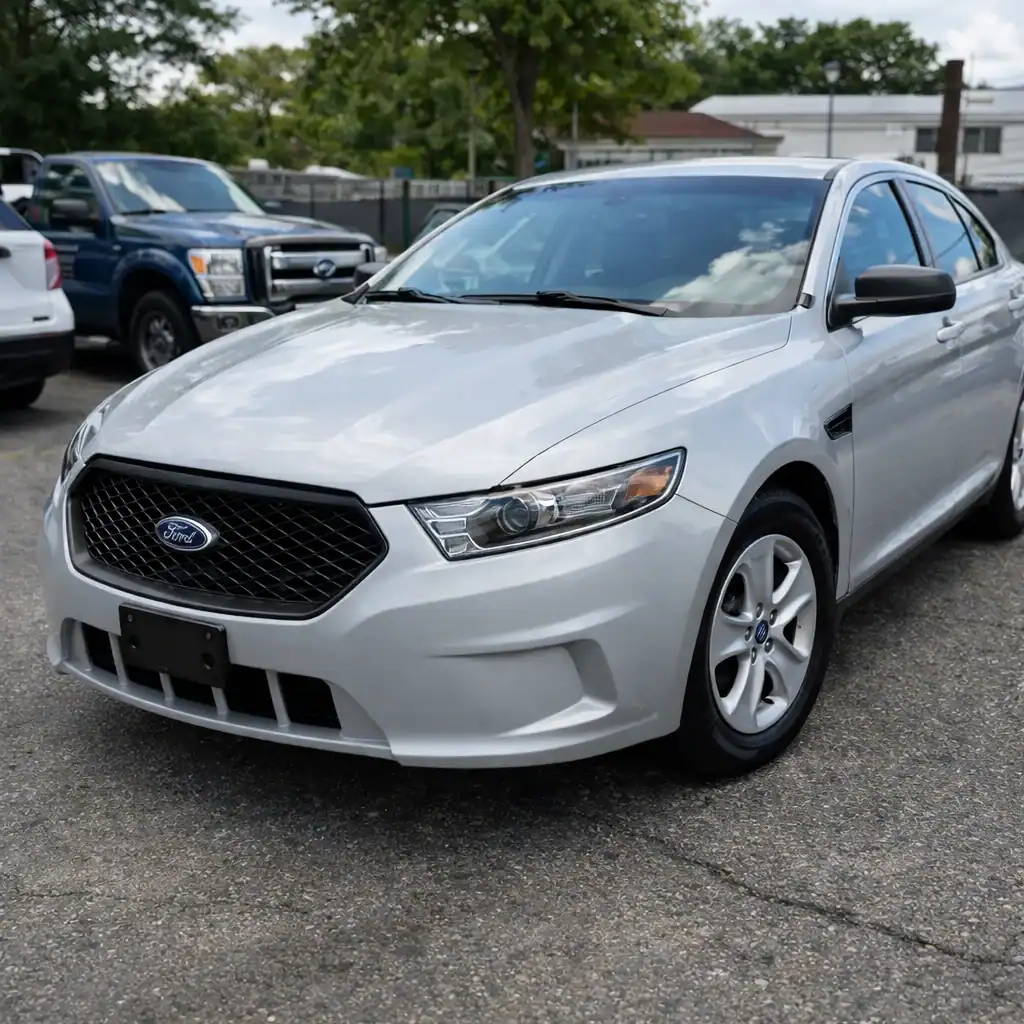
A police interceptor isn’t just a regular car with a light bar bolted on top. These vehicles are purpose-built from the factory with components designed to handle conditions that would break down civilian models.
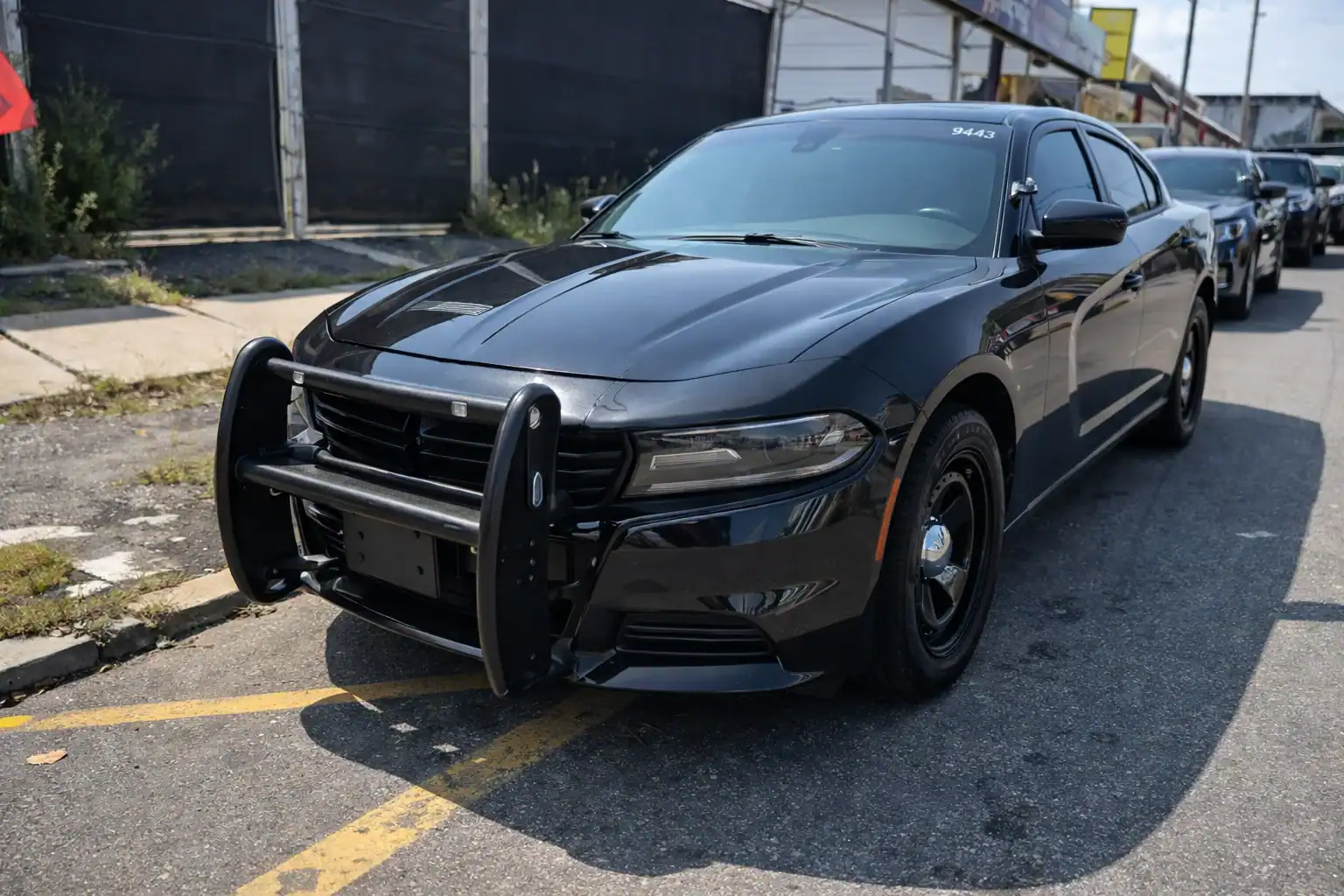
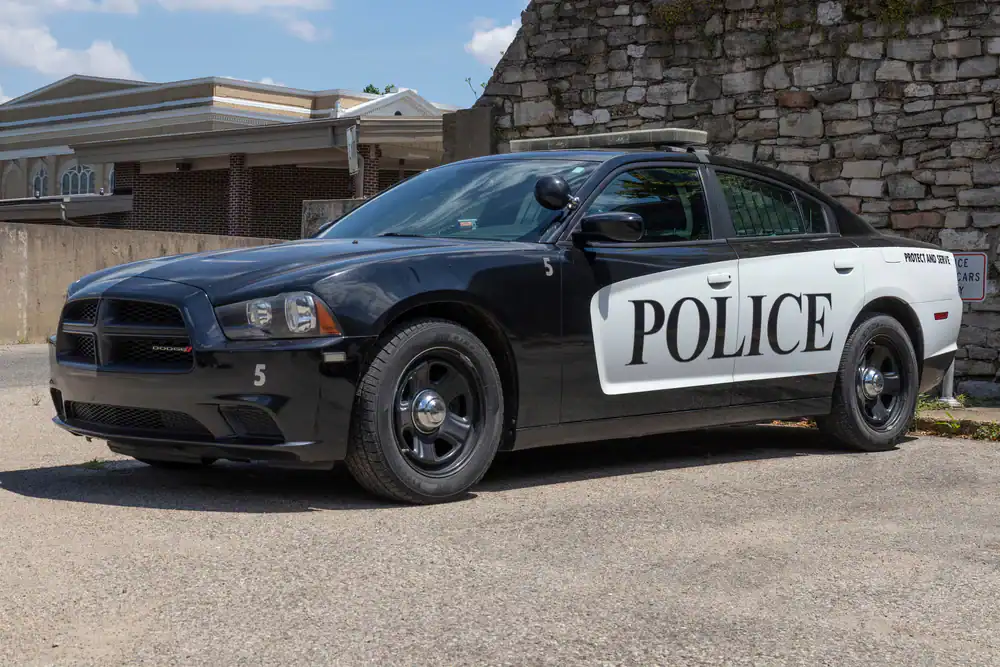
The Ford Police Interceptor Utility—the most common model you’ll find—comes with a police-tuned suspension, reinforced subframe mounts, and heavy-duty wheels rated for pursuit driving. The Dodge Charger Pursuit packs either a 3.6L V6 or a 5.7L Hemi V8 pushing 370 horsepower. These aren’t cosmetic upgrades. They’re functional differences that affect how the vehicle performs and how long it lasts.
Most interceptors come standard with all-wheel drive, something you’d pay extra for on a civilian model. The braking systems are beefed up with larger rotors and calipers that retract further from the rotor to increase cooling. Cooling systems across the board are enhanced—bigger radiators, transmission coolers, additional oil coolers—because these vehicles idle for hours at crime scenes and traffic stops without overheating.
When police departments spec out their vehicles, they’re not worried about heated seats or premium sound systems. They need cars that won’t fail during a pursuit or break down in the middle of a shift.
That means you get 18-inch steel wheels instead of alloy. Less pretty, but they handle potholes and curb strikes without cracking. You get pursuit-rated tires with superior grip and durability for high-speed handling. The alternator is upgraded—often 220 to 250 amps on newer models—to power all the electronics without draining the battery during extended idle periods.
The suspension components are reinforced to handle the weight of equipment and the stress of high-speed driving over rough terrain. Front subframe reinforcements, heavy-duty powertrain mounts, and underbody deflectors are standard. These aren’t features you can easily add aftermarket. They’re built into the vehicle from day one.
Even the seats are different. Police seats are designed for officers wearing duty belts and body armor, with specially cut side bolsters for frequent entry and exit. The vinyl or heavy-duty cloth upholstery isn’t luxury, but it’s built to withstand years of constant use and easy to clean. The flooring is vinyl instead of carpet for the same reason—durability and maintenance over comfort.
What does this mean for you? You’re buying a vehicle engineered for severe duty cycles. Components that would wear out quickly on a regular car are overbuilt on an interceptor. That translates to longevity, even after the vehicle leaves police service. The Ford Police Interceptor has been synonymous with reliability and durability in police fleets across the United States since 1992, and those same qualities benefit civilian buyers.
One of the biggest unknowns when buying any used car is how well it was maintained. Did the previous owner skip oil changes? Ignore warning lights? Drive it hard and never service it?
With retired police vehicles, that guesswork largely disappears. Police departments can’t afford to have vehicles break down mid-shift. They follow manufacturer maintenance schedules religiously—oil changes, brake replacements, fluid services, all done on time by professional mechanics or contracted service centers.
Many used cop cars for sale come with detailed service records showing every maintenance event. You can see exactly when the oil was changed, when the brakes were replaced, when major services were performed. This documentation is rare in the civilian used car market, where maintenance records are often incomplete or nonexistent.
That said, not all police vehicles are created equal. A highway patrol vehicle that spent most of its time cruising interstates at steady speeds is going to be in better shape than an urban patrol car that did constant stop-and-go driving through city streets. A take-home vehicle assigned to one officer will typically show less wear than a fleet vehicle that ran three shifts a day with different drivers.
The key is understanding what type of service the vehicle performed. Highway patrol? Supervisory use? Detective car? Urban patrol? Each has different wear patterns. Highway miles are easier on a vehicle than city miles. A supervisor’s car that mostly sat in parking lots and made occasional trips will have lower stress than a patrol car responding to calls all day.
When you’re looking at police interceptors for sale in New Jersey, New York, or Pennsylvania, ask about the vehicle’s service history. Where did it work? How was it used? What type of duty? Most departments retire vehicles at 75,000 to 100,000 miles, though some agencies in the tri-state area follow stricter 2-3 year turnover schedules to maintain residual value. The answers tell you a lot about what kind of shape it’s actually in beyond the mileage on the odometer.
Want live answers?
Connect with a State Surplus Auto Sales expert for fast, friendly support.
Let’s get to what matters most: why would you actually want to buy one of these vehicles?
The number one reason is price. Retired police vehicles sell for substantially less than comparable civilian models. A Ford Explorer with similar mileage might cost $18,000-$25,000 on the regular used market. A Police Interceptor Utility with the same mileage? You’re looking at $7,000-$15,000 depending on condition and where you buy it. That’s a significant savings for a vehicle with better components.
You’re also getting performance that would cost thousands more on a civilian vehicle. The 3.0L EcoBoost V6 in the Ford Police Interceptor Utility produces 400 horsepower and 415 lb-ft of torque, with a top speed of 148 mph. That same engine in a civilian Explorer would put you in a much higher trim level at a much higher price. The Dodge Charger Pursuit with the Hemi V8 offers muscle car performance in a practical sedan package.
Beyond the sticker price, these vehicles are built to last. The heavy-duty components mean you’re less likely to face expensive repairs in the near term. Parts are readily available and affordable because these are based on common civilian platforms—Ford Explorer, Dodge Charger, Chevrolet Tahoe. Any mechanic can work on them.
Police work is hard on vehicles. Extended idling. High-speed pursuits. Sudden acceleration and hard braking. Driving over curbs and through rough terrain. Loading and unloading heavy equipment. Operating electronics continuously.
If a vehicle can handle that for 75,000 to 100,000 miles in police service, it’s proven its durability. The components that typically fail first on civilian vehicles—suspension, brakes, cooling systems, alternators—are all upgraded on interceptors specifically to handle this abuse.
That durability continues after the vehicle leaves police service. You’re not buying a fragile car that needs to be babied. You’re buying something built to work. That’s valuable if you need a vehicle for business use—contractors, delivery services, security companies across Newark, NJ and the surrounding areas rely on these vehicles for exactly this reason. It’s also valuable if you simply want something reliable that won’t nickel-and-dime you with constant repairs.
The performance aspect is real too. These vehicles are pursuit-rated, meaning they’ve passed rigorous testing for high-speed handling, braking, and acceleration. The Ford Police Interceptor Utility and Dodge Charger Pursuit consistently outperform civilian vehicles in independent testing by agencies like the Michigan State Police and Los Angeles County Sheriff’s Department.
You get better acceleration, improved handling at highway speeds, and superior control during emergency maneuvers. For everyday driving, that translates to easier highway merging on the Garden State Parkway or I-95 corridor, safer passing, and more confidence in adverse weather conditions thanks to the standard all-wheel drive—particularly valuable during Northeast winters.
The safety features are also enhanced. Police interceptors are tested to meet a 75-MPH rear-impact crash standard—the only vehicles in the world tested to this demanding standard. They feature body-on-frame construction in many cases, which provides better collision protection than unibody designs. Some models even offer optional ballistic door panels, though these are typically removed before civilian sale.
Let’s be straight about what you’re getting into. Used police cars aren’t perfect. They come with trade-offs that you need to understand before you buy.
First, the mileage. Most retired police vehicles have between 75,000 and 160,000 miles when they’re auctioned off. According to the North Carolina Department of Public Safety, their available vehicles typically range between 120,000 and 160,000 miles—and that’s fairly standard across agencies nationwide. That’s high by used car standards. But here’s the thing: those miles are often highway miles for patrol vehicles, and the vehicles were maintained throughout. A well-maintained police interceptor with 100,000 miles can be more reliable than a neglected civilian car with 60,000 miles.
The bigger concern is idle hours. Police cars idle constantly—at traffic stops, crime scenes, stakeouts, report writing. That idle time puts wear on the engine and transmission that doesn’t show up on the odometer. A car with 80,000 miles might have the engine wear equivalent of 120,000 miles due to idling. This is why it’s crucial to know the vehicle’s service history and have it inspected by a mechanic before you buy.
The interior will show wear. Expect worn seats, especially on the driver’s side. Expect holes drilled in the dash, center console, and roof where equipment was mounted. Expect basic, utilitarian materials with zero luxury features. You’re not getting leather seats, premium audio, or fancy trim. You’re getting vinyl or heavy-duty cloth, hard plastic, and function over form.
Some vehicles will have cosmetic damage—scratches from decal removal, dents from equipment, worn paint. These are work vehicles, not garage-kept collector cars. If cosmetic perfection matters to you, a police car probably isn’t your best choice.
You’ll also deal with the “police car effect” on the road. Other drivers will slow down around you, even if your car is clearly unmarked and repainted. Some will drive erratically or overly cautiously. It can be frustrating if you’re in a hurry. On the flip side, traffic tends to part for you on the highway.
Insurance can be tricky. Some insurers charge higher rates for former police vehicles or require them to be fully modified to civilian standards. Annual insurance costs for used police vehicles can range from $1,200 to $2,000 depending on the model, driving history, and location. Shop around and ask specifically about insuring a retired police car before you buy.
The buying process itself is different. Many police cars are sold at government auctions in New Jersey, New York, and Pennsylvania where you can’t test drive them beforehand. You might get to start the vehicle and inspect it, but that’s it. You’re buying as-is, often with no warranty. That’s why having mechanical knowledge or bringing someone who does is essential. When you work with us at State Surplus Auto Sales in Newark, NJ, you get more support and transparency, but you’re still buying a vehicle with a hard working history.
Used police cars for sale offer something rare in today’s market: genuine value. You get heavy-duty components, documented maintenance, powerful performance, and pricing well below comparable civilian vehicles. For budget-conscious buyers in New Jersey, New York, and Pennsylvania who prioritize reliability and function over luxury and appearance, they’re hard to beat.
They’re not for everyone. If you want low mileage, pristine interiors, and all the comfort features, stick with civilian vehicles. But if you need something dependable that can handle real work without breaking the bank—whether that’s daily commuting, business use, or family transportation—a retired police interceptor makes sense.
The key is buying smart. Know what type of service the vehicle performed. Get the maintenance records. Have it inspected by a trusted mechanic. Understand what you’re getting and what you’re giving up. When you do your homework, you can find a vehicle that serves you well for years at a price that leaves money in your pocket.
We’ve been helping buyers in Newark, NJ and across the tri-state area find quality retired police vehicles since 2003. With zero interest financing available regardless of credit score and a no-pressure approach to sales, we understand these vehicles inside and out and can help you find one that fits your needs and budget.
Summary:
Article details:
Share: