Thinking about buying a retired police car? Discover what makes these vehicles different, what to look for, and how to find quality used cop cars for sale in the tri-state area.
Police vehicles aren’t just civilian models with lights bolted on. They’re purpose-built from the factory with components designed to handle conditions most cars never see. That means heavy-duty alternators to power equipment, enhanced cooling systems for extended idling, reinforced suspensions for rough roads and high-speed maneuvers, and upgraded brakes for repeated hard stops.
The engines are different too. A Ford Police Interceptor Utility with the EcoBoost option puts out 400 horsepower. The standard hybrid version still delivers 318 horsepower with better fuel economy during the constant idling that comes with police work. Compare that to a civilian Ford Explorer, and you’re looking at a significant performance gap.
But here’s the trade-off. While these vehicles are built tougher, they’ve also been used harder. Two or three shifts per day. Constant stopping and starting. Hours of idling. That wear doesn’t always show up in the odometer, which is why understanding what you’re actually buying matters more than the mileage alone.
If you’re looking at used cop cars for sale in the tri-state area, you’ll mostly find SUVs. That’s because police departments made a major shift away from sedans over the past decade, and the numbers tell the story. Ford’s Police Interceptor Utility outsells the sedan version two-to-one. In fact, about 80% of police vehicle sales are now SUV models.
The Ford Police Interceptor Utility is based on the Explorer, but it’s not the same vehicle you’d buy off a dealership lot. It has a column-mounted shifter instead of a floor shifter to make room for equipment. The seats are flatter to accommodate duty belts and sidearms. There’s no third-row seating—that space is used for cargo and gear. The suspension is calibrated differently. The all-wheel-drive system has police-specific tuning for better traction during aggressive driving.
Why did departments across New Jersey, New York, and Pennsylvania switch to SUVs? Practicality. Officers get in and out of their vehicles 40 or more times during a typical shift. Climbing in and out of a low sedan that many times causes back problems. SUVs sit higher, making entry and exit easier. They also offer more cargo space, better visibility, and room to mount rifles vertically between the front seats instead of in the trunk.
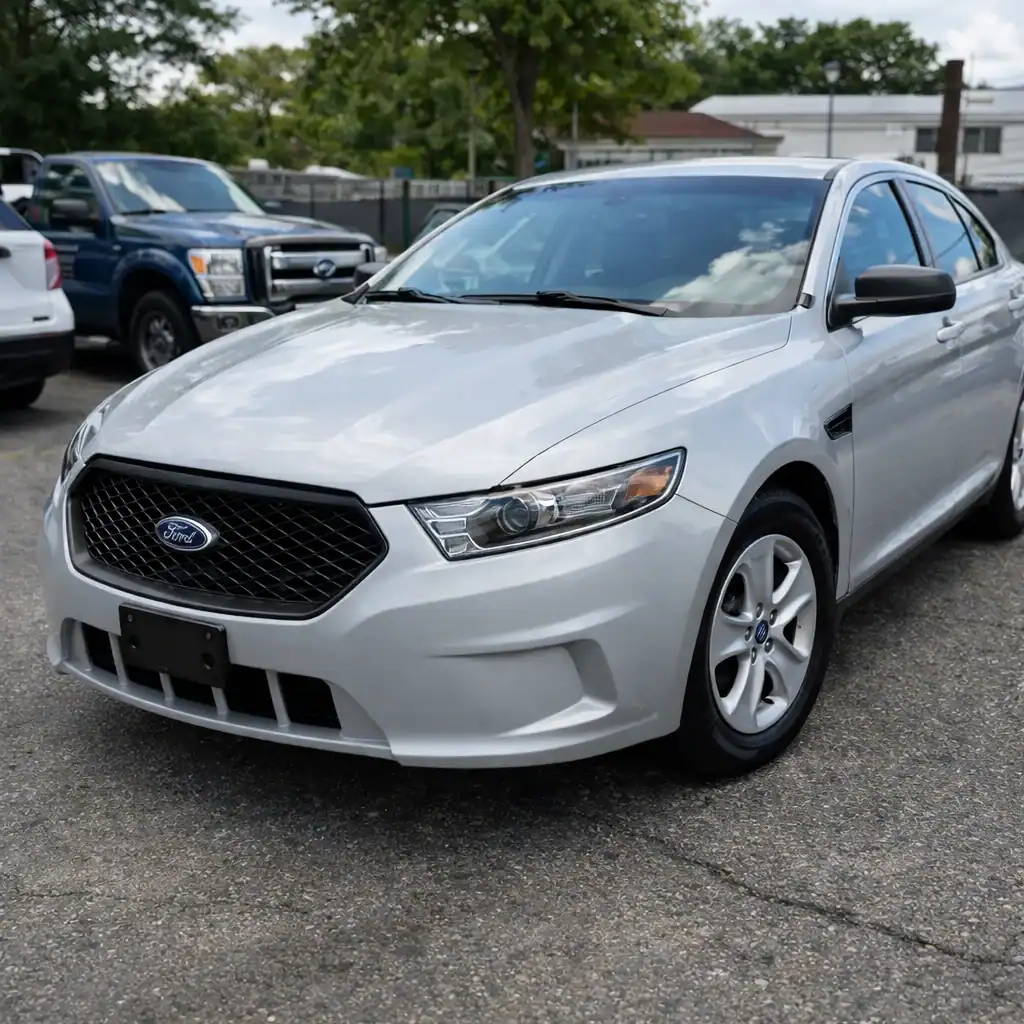
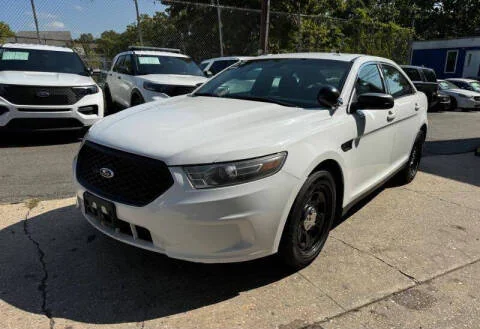
The sedan option—primarily the Ford Taurus Police Interceptor—was discontinued in 2019. You can still find them used, and some buyers prefer them. They’re lower to the ground, handle more like a car, and can be less expensive. The EcoBoost versions are genuinely quick. But they also have a reputation for transmission issues and don’t offer the same interior space or versatility as the SUV.
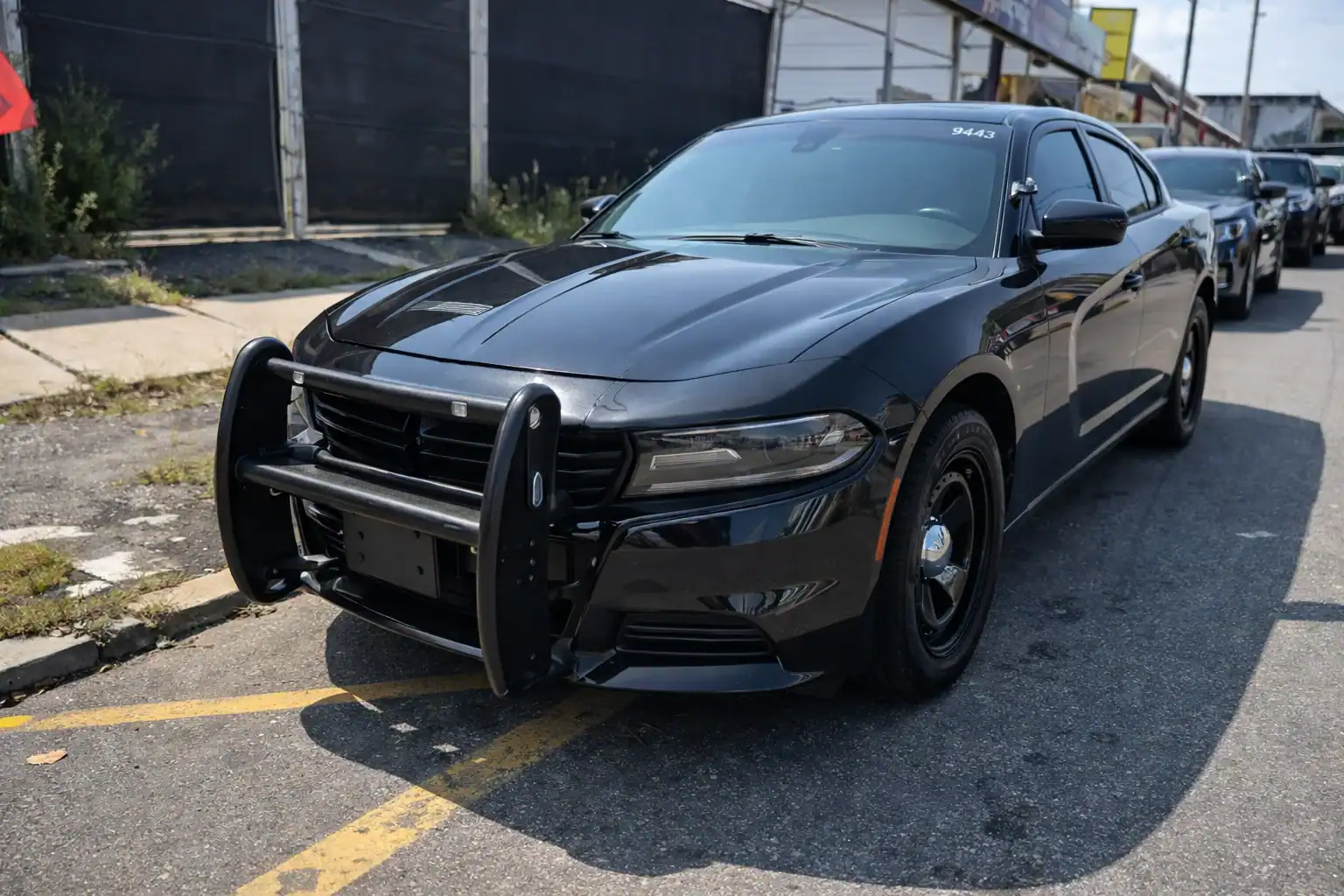
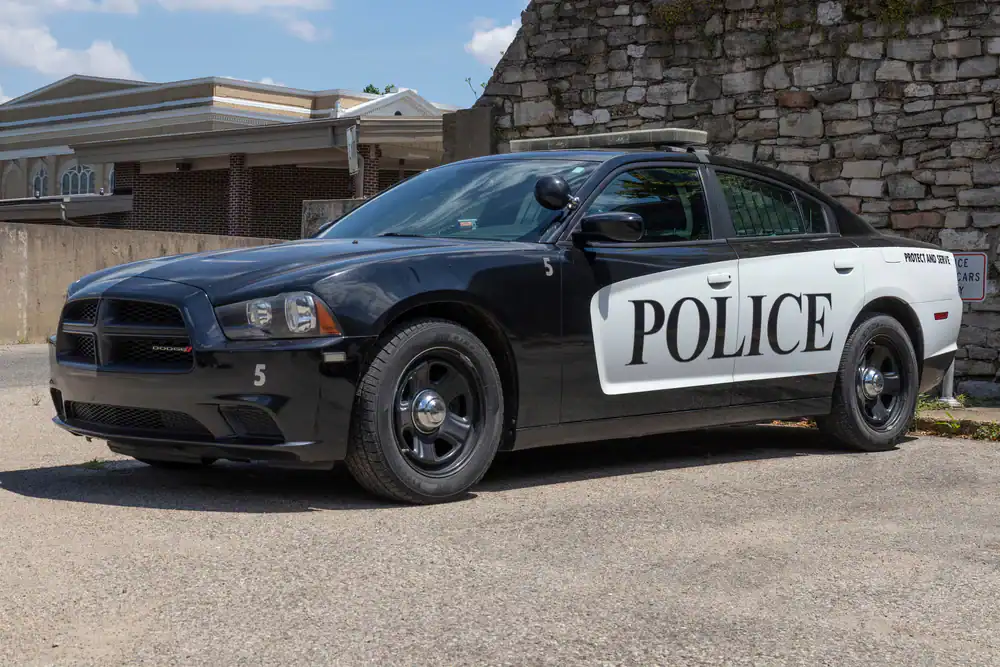
Then there’s the Dodge Charger Pursuit, which was the last pursuit-rated sedan before Dodge discontinued it in 2023. It came in two flavors: a V6 with all-wheel drive or a V8 with rear-wheel drive. The V8 models are popular with enthusiasts because of the power and that distinctive Hemi rumble. But they also burn more fuel and tend to have higher mileage since they were often used for highway patrol.
If you’re trying to decide between an SUV and a sedan, think about how you’ll actually use it. Need cargo space for work or family? The SUV makes more sense. Want something lower, sportier, and a bit less obvious? A sedan might fit better. Just know that sedans are harder to find now, and parts availability could become an issue down the road as fewer are on the road.
Let’s be clear about what you’re getting. These aren’t low-mileage garage queens. Most retired police vehicles have between 80,000 and 160,000 miles on them. Some have more. And those miles were hard miles—city driving, constant idling, quick accelerations, heavy braking. The odometer tells part of the story, but not all of it.
Idle hours matter more than most buyers realize. A police car might sit idling for six or eight hours during a shift while the officer handles paperwork, monitors traffic, or waits on a call. That’s engine wear that doesn’t show up in the mileage. It’s one reason you’ll see relatively low-mileage vehicles for sale that still show significant wear. When you’re looking at a vehicle, ask about idle hours if that information is available. It won’t always be, but it’s worth asking.
The interiors are basic. Don’t expect leather seats, premium sound systems, or fancy tech features. Most police vehicles have vinyl or heavy-duty cloth seats that are easy to clean. The center console has often been removed to make room for equipment, and when it’s reinstalled, it might not be the original. You’ll see holes in the dashboard or headliner where radios, computers, and other gear were mounted. Some of those holes get patched. Some don’t.
Equipment removal also affects the exterior. Light bars are almost always removed before sale, but you might still see a push bar on the front or a spotlight mounted near the driver’s side mirror. Some departments repaint vehicles before selling them. Others don’t. You might end up with a car that still has faint outlines where decals used to be.
But here’s what you do get: maintenance records. Police departments follow strict service schedules because they can’t afford to have vehicles break down in the field. Oil changes happen on time. Brakes get replaced when needed. Fluid checks are routine. Many vehicles come with documentation showing every service performed, which is rare in the used car market.
You also get heavy-duty components that were designed for this kind of use. The brakes are bigger and more robust. The cooling system is enhanced to handle extended idling and high-speed driving. The alternator is beefed up to power all the electrical equipment. The suspension is reinforced. These aren’t upgrades you can easily add to a civilian vehicle, and they add real value if you’re planning to use the vehicle for work or in demanding conditions.
The other thing to understand is that not all police cars are created equal. A vehicle used by a detective or police chief typically has lower wear than a patrol car that ran three shifts a day in an urban area. Administrative vehicles might have highway miles and minimal hard use. Patrol cars from rural departments might have lower idle hours than those from city departments. If you can find out how the vehicle was used, that information is worth more than the mileage number alone.
Want live answers?
Connect with a State Surplus Auto Sales expert for fast, friendly support.
If you’re searching for “police interceptor near me” in New Jersey, New York, or Pennsylvania, you have a few options. Government auctions are the most common source. Departments sell retired police vehicles either through their own auctions or through third-party auction companies. These auctions can be in-person or online, and they’re open to the public.
New Jersey holds public auctions for surplus state vehicles through the Distribution and Support Services in Trenton. Local municipalities also sell vehicles through county or city auctions. You can find auction schedules on government websites or through auction companies that specialize in government surplus.
The other option is buying from a dealer who specializes in these vehicles. We buy retired police cars in bulk from departments and auctions, then make them available to buyers who want more time to inspect and evaluate before purchasing. The advantage is that you can often inspect the vehicle more thoroughly, and we address repairs or clean up cosmetic issues before selling. You’ll pay more than you would at auction, but you’re also getting more certainty about what you’re buying.
Buying a used police car is different from buying a typical used car, and your inspection process should reflect that. If you’re at a government auction, you usually can’t test drive the vehicle. You might get 15 or 20 minutes to look it over before bidding starts. That means you need to know what to check and how to check it quickly.
Start with the basics. Check the VIN and run a vehicle history report if possible. Look for service records or maintenance logs. Many departments provide these, and they’re the best indicator of how the vehicle was cared for. If there are no records available, that’s a red flag.
Pop the hood and look for leaks, corrosion, or obvious damage. Check fluid levels and their condition. Dark, burnt-smelling oil or dirty coolant suggests deferred maintenance. Look at the battery—many auction vehicles have dead batteries because they’ve been sitting, so bring jumper cables if you’re allowed to start it. Listen to how the engine sounds. Any knocking, ticking, or rough idling should make you cautious.
Check the suspension by pushing down on each corner of the vehicle. It should bounce once and settle. If it keeps bouncing, the shocks or struts are worn. Look at the tires for uneven wear, which can indicate alignment issues or suspension problems. Check the brake rotors for scoring or excessive wear.
Inside, test everything that moves or turns on. Windows, locks, wipers, lights, HVAC controls. Look for tears in the seats, damage to the dashboard, and check the cargo area for water damage or rust, especially around where equipment was mounted. Smell matters too—if it smells like mold, mildew, or anything foul, that’s a problem that’s hard to fix.
If you’re buying from a dealer and you have more time, bring a mechanic. Pay for a pre-purchase inspection. It’ll cost you a couple hundred dollars, but it can save you thousands if the mechanic finds issues you missed. Specific things to have them check: transmission condition (especially on Ford Taurus models), transfer case leaks (common on AWD models), water pump condition (a known issue on EcoBoost engines), and exhaust system integrity.
One thing people forget to check: how the vehicle was used. If you can find out whether it was a patrol car, detective car, or administrative vehicle, that context matters. Patrol cars see the hardest use. Detective and administrative vehicles are often driven more gently and have lower idle hours. Some sellers will tell you. Some won’t. But it’s worth asking.
Different models have different weak points, and knowing what to look for can save you from expensive surprises. The Ford Police Interceptor Utility, which is based on the Explorer, is generally reliable but has a few known issues. The 3.5-liter EcoBoost engine can develop water pump leaks, and replacing the water pump on these engines is not a simple or cheap job. It requires removing the timing cover, which means significant labor costs. If you’re looking at an EcoBoost model, ask if the water pump has been replaced. If it hasn’t and the vehicle has over 100,000 miles, budget for that repair.
The all-wheel-drive system on these vehicles uses a transfer case that can develop leaks. The fluid capacity is small, so if it leaks and you don’t catch it quickly, the transfer case can fail. That’s an expensive repair. Check under the vehicle for any signs of leaking fluid, and if you can, have a mechanic inspect the transfer case before you buy.
Ford Taurus Police Interceptor sedans have a reputation for transmission problems, especially the naturally aspirated V6 models with all-wheel drive. The transmissions can be sluggish, hesitant to shift, or fail prematurely. Some departments had so many issues with these that they switched to other models. If you’re considering a Taurus Interceptor, pay close attention to how the transmission behaves. Any slipping, hard shifts, or delayed engagement should make you walk away.
The Taurus also had issues with suspension components wearing out faster than expected, particularly in vehicles used in urban areas with rough roads. Control arms, ball joints, and tie rods can all wear prematurely. It’s not a deal-breaker if you’re handy with repairs, but it’s something to factor into your budget.
Dodge Charger Pursuit vehicles are generally more robust, but they have their own quirks. The V8 models, while powerful and fun to drive, are hard on fuel. Expect 15-18 mpg in mixed driving, and less in city use. The rear-wheel-drive V8 models can also be challenging in winter weather if you’re in an area with snow and ice. The all-wheel-drive V6 models are more practical for year-round use in the Northeast, though they lack the performance and character of the V8.
Electrical issues can crop up in Chargers, especially in older models from 2006-2010. Sensors fail, modules go bad, and tracking down electrical gremlins can be frustrating and expensive. Newer Chargers (2011 and up) are generally better in this regard, but it’s still worth checking that all electrical systems work properly before you buy.
Across all models, pay attention to the brakes. Police vehicles go through brakes faster than civilian cars due to the constant stopping and high-speed use. Replacing brakes isn’t expensive, but if the rotors are scored or warped, that adds to the cost. Also check the exhaust system. Many police vehicles have had their exhaust systems modified or replaced, and some of those modifications are done cheaply. A rusted or leaking exhaust can fail inspection and cost you money to fix.
Buying a retired police car isn’t for everyone, but for the right buyer, it can be a smart move. You get a vehicle built to higher standards than its civilian equivalent, often with documented maintenance history and heavy-duty components that add real value. The cost savings are significant—you’ll pay 30 to 50 percent less than a comparable civilian vehicle with similar mileage and features.
But you’re also buying a vehicle that’s been used hard. High mileage, extended idle hours, basic interiors, and cosmetic wear are part of the package. If you need a pristine vehicle with all the bells and whistles, this isn’t it. If you can accept some cosmetic flaws and you value durability, performance, and value over luxury, it might be exactly what you’re looking for.
Do your homework. Inspect thoroughly. Ask questions about how the vehicle was used and what maintenance has been done. If you’re in New Jersey, New York, or Pennsylvania and you’re serious about finding affordable used police vehicles, we’ve been specializing in quality government vehicles since 2003, offering transparent service and zero-percent financing to help you get behind the wheel of a reliable, performance-built vehicle without breaking the bank.
Summary:
Article details:
Share: