
Hear from Our Customers
You’re not buying someone’s neglected trade-in. These Ford Police Interceptor Utility vehicles were built for high-speed pursuits, long idle times, and daily abuse that would destroy a standard SUV. Heavy-duty cooling systems, reinforced subframes, upgraded brakes, and AWD come standard—not as add-ons.
The average price for a Police Interceptor Utility nationwide is around $15,400, but you’ll find vehicles here starting as low as $3,500 depending on mileage and condition. That’s thousands less than a comparable civilian Explorer from the same year. You’re getting pursuit-rated capability—148 mph top speed, 400 horsepower from the 3.0L EcoBoost V6—for the price of a basic commuter car.
Most of these vehicles have between 120,000 and 160,000 miles. That sounds high until you realize these engines are built for it. Police fleets follow strict maintenance schedules because downtime isn’t an option. You’re buying a vehicle that was maintained professionally, not by someone who skipped oil changes.
We don’t dabble in police interceptors as a side inventory. This is all we do. That focus matters when you’re trying to figure out if a specific unit is worth your money or if the idle hours should concern you.
We’re located in Central Islip, serving Long Island and the greater New York area. If you’ve been searching for used patrol cars for sale near you, you’ve probably noticed most listings are auctions with no test drives and no transparency. We operate differently. You can see the vehicle, ask questions, and make an informed decision.
Central Islip sits right off the Long Island Expressway, making it easy to get here from Nassau County, Suffolk County, or anywhere in the tri-state area. You’re not driving hours into the middle of nowhere to look at a cop car you can’t even start.
First, you browse what’s currently in stock. Our inventory changes regularly as we source vehicles from government surplus auctions and retired fleet sales. When you see a Ford Crown Interceptor or Police Interceptor Utility that fits your budget, you can come see it in person.
You’ll get the mileage, the service history if available, and a straight answer about the vehicle’s condition. We’re not hiding dashboard holes from equipment mounts or pretending the interior looks showroom-new. These are used cop cars for sale—you’re going to see wear. What matters is whether the engine, transmission, and drivetrain are solid.
Once you’ve decided, the buying process is straightforward. No drawn-out negotiations or pressure tactics. You’re either comfortable with the price and condition, or you’re not. If you are, we handle the paperwork and you drive off in a vehicle that was designed to outlast and outperform anything else in its class.
Ready to get started?
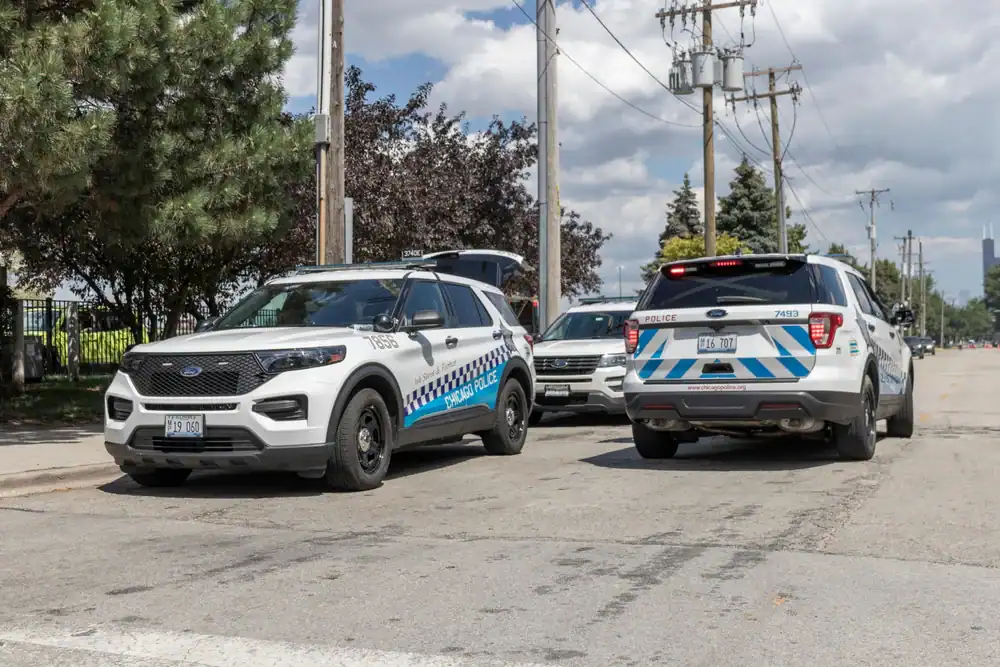
Our inventory focuses heavily on Ford Police Interceptor Utility models—the Explorer-based SUV that replaced the Crown Victoria as the standard patrol vehicle. These are AWD, V6-powered, and built on the same platform as the civilian Explorer, but with components designed for pursuit duty.
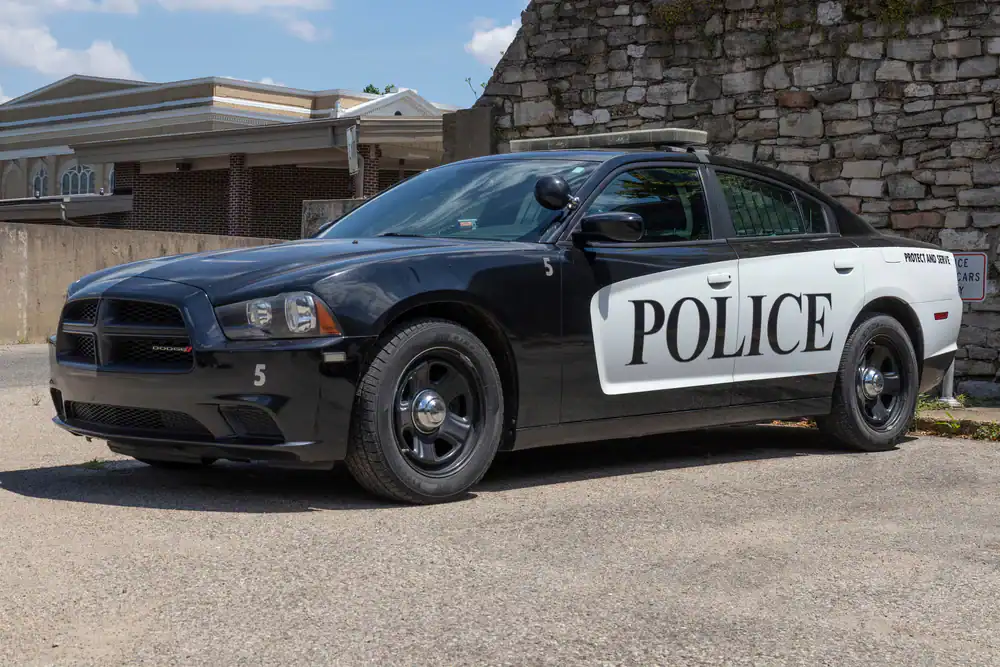
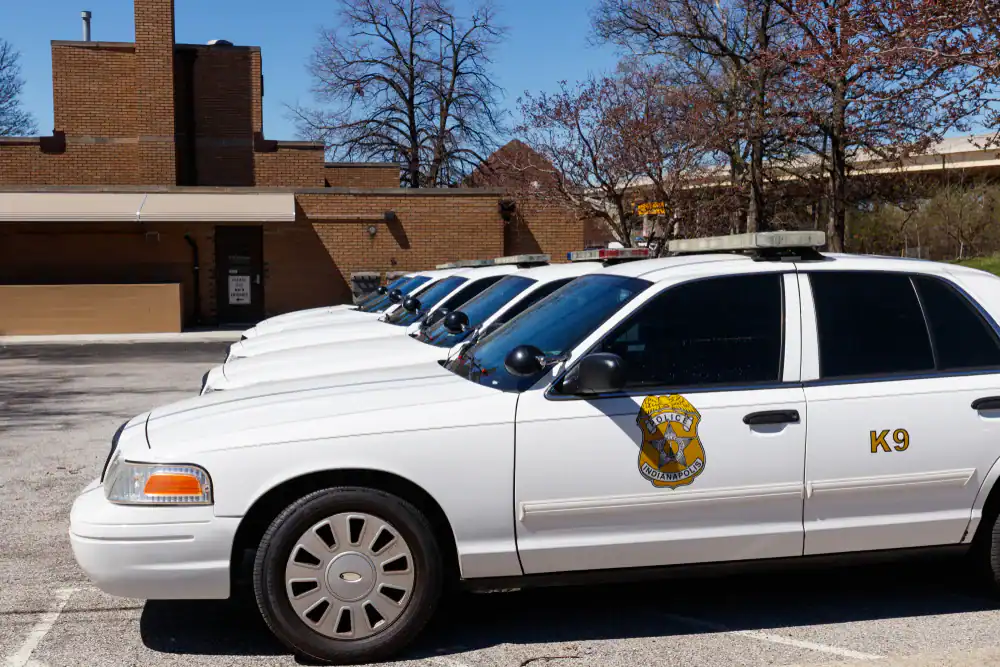
You’ll also find Ford Crown Interceptors when available. The Crown Vic is no longer in production, but it’s still one of the most reliable police vehicles ever made. Parts are cheap, mechanics know them inside and out, and they’re nearly indestructible if maintained properly.
In Central Islip and across Long Island, buyers are looking for vehicles that can handle winter weather, pothole-riddled roads, and stop-and-go traffic without falling apart. Police interceptors were designed for exactly that kind of punishment. The cooling systems are oversized to handle long idles in summer heat. The suspensions are reinforced to absorb curbs and rough terrain. The brakes are built to stop a 4,500-pound SUV from highway speeds repeatedly.
You’re not buying a luxury vehicle. You’re buying something that works.
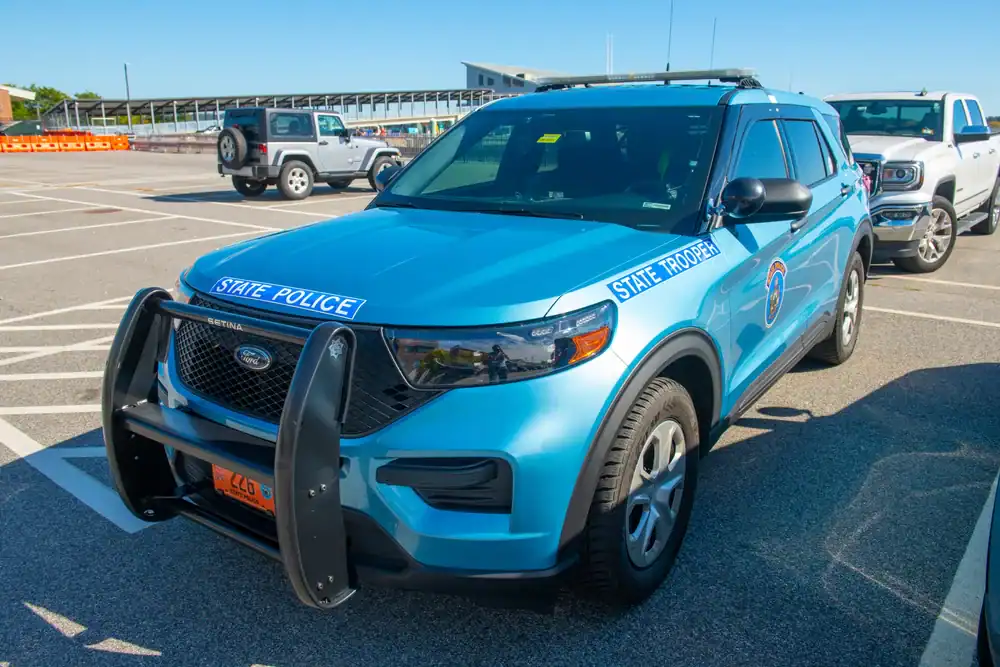
The price gap comes down to three things: mileage, appearance, and perception. Most police interceptors have over 100,000 miles when they’re retired from service, and high idle hours add wear that doesn’t show on the odometer. Agencies sell them as-is with no warranty, which scares off buyers who want guaranteed protection.
The interiors show heavy use. You’ll see worn seats, holes in the dash from equipment mounts, and sometimes water damage around where the light bar was installed. Cosmetically, these vehicles look like they’ve been through a lot—because they have.
But here’s what matters: the powertrain components are built heavier-duty than civilian versions. Larger radiators, upgraded alternators, reinforced suspension mounts, better brakes. Police fleets maintain these vehicles religiously because breakdowns cost departments money and put officers at risk. You’re buying a vehicle that was maintained by professionals on a schedule, not by someone who ignored the check engine light for six months. The price reflects the mileage and cosmetic wear, but the mechanical foundation is often stronger than a lower-mileage civilian car that was neglected.
Mileage on most police interceptors ranges between 120,000 and 160,000 miles, but idle hours tell a more complete story. Police vehicles spend a lot of time idling—running radar, working traffic stops, sitting in parking lots with the engine on. An hour of idle time creates as much engine wear as 25 to 30 miles of driving, depending on who you ask.
That means a vehicle with 130,000 miles might have the engine wear equivalent of 160,000 or more. It sounds concerning until you consider that these engines were built for it. The 3.0L EcoBoost V6 in the Police Interceptor Utility is designed to handle sustained high RPMs, repeated wide-open throttle runs, and long idle periods without overheating or breaking down.
The key is whether the vehicle was maintained properly during its service life. Police departments follow strict maintenance schedules because they can’t afford downtime. Oil changes happen on time, coolant gets flushed, transmissions get serviced. That professional maintenance history matters more than the raw mileage number. You’re not buying a 130,000-mile vehicle that someone beat on and ignored—you’re buying one that was used hard but maintained correctly.
No. Police interceptors are sold as-is with no warranty, no guarantees, and no recourse if something breaks the day after you buy it. That’s standard across the industry, whether you’re buying from a dealer like us or at a government auction.
This is why it’s important to inspect the vehicle before you buy. We’re transparent about condition, but we’re not offering a safety net. You’re taking on the risk in exchange for paying a fraction of what a comparable civilian vehicle would cost.
The trade-off is worth it for a lot of buyers. You’re getting a vehicle with heavy-duty components, professional maintenance history, and pursuit-rated performance for $3,500 to $15,000. A civilian Ford Explorer from the same model year with similar mileage would cost you $18,000 to $25,000 or more—and it wouldn’t have the upgraded cooling, reinforced suspension, or AWD that comes standard on the Police Interceptor Utility. You’re saving thousands up front. Just understand that if the transmission fails two months later, that’s on you. Most buyers find that acceptable given the price difference and the durability of these vehicles.
Yes. Unlike government auctions where you’re bidding sight-unseen with no test drive, we let you see the vehicle in person and take it for a drive before you commit. That’s a huge advantage when you’re spending thousands of dollars on a used vehicle.
You’ll be able to check for engine noise, transmission shifting, brake feel, and suspension issues. You can see how the vehicle handles, whether the AWD engages properly, and if there are any warning lights or mechanical concerns. It’s not a guarantee that nothing will go wrong, but it gives you a much better sense of what you’re buying than clicking “bid” on an online auction and hoping for the best.
Most auction sites don’t allow test drives because of liability and logistics. You show up, inspect the vehicle while it’s parked, and make a decision based on appearance and mileage alone. We think that’s a terrible way to buy a car. You should know how it runs before you hand over money. If something feels off during the test drive—rough shifting, strange noises, pulling to one side—you can walk away. That option alone is worth the trip to Central Islip.
The Police Interceptor Utility is built on the same platform as the Ford Explorer, but it’s not the same vehicle. Ford adds heavy-duty components specifically for law enforcement use, and those upgrades make a real difference in durability and performance.
The cooling system is significantly larger. You get an oversized radiator, engine oil cooler, and transmission fluid cooler designed to handle long idle periods and high-speed pursuits without overheating. The electrical system is upgraded with a higher-output alternator to power lights, radios, computers, and other equipment without draining the battery. The suspension uses reinforced mounts, larger hubs and bearings, and heavy-duty shocks to handle rough roads and aggressive driving.
The brakes are bigger and more robust, designed to stop a fully-loaded vehicle from highway speeds repeatedly. The front subframe is structurally reinforced to handle the stress of pursuit driving. The AWD system comes standard, not as an option. And the calibration is different—the Police Interceptor Utility is tuned for performance, not fuel economy. The 3.0L EcoBoost V6 produces 400 horsepower and can push the vehicle to 148 mph, outperforming most V8-powered sedans in independent testing by Michigan State Police and the Los Angeles County Sheriff’s Department. A civilian Explorer with the same engine doesn’t get that level of performance tuning.
Most insurance companies will cover a former police vehicle without issue, but some may ask questions or hesitate because of the vehicle’s history. The concern usually revolves around how the vehicle was used—high-speed chases, rough driving, and heavy wear can make insurers nervous about future claims.
The best approach is to call your insurance agent before you buy and ask directly. Give them the VIN if possible and explain that it’s a retired police vehicle. Some companies treat them like any other used car. Others may charge slightly higher premiums or exclude certain coverage options. It’s rare for an insurer to flat-out refuse coverage, but it’s worth confirming ahead of time so you’re not surprised.
If your current insurer pushes back, shop around. There are plenty of companies that insure former police vehicles without hassle, especially if the vehicle has been re-titled as a civilian car and the emergency equipment has been removed. You’re not driving around with lights and sirens pretending to be a cop—you’re driving a used Ford SUV that used to be a patrol car. Most insurers understand that and treat it accordingly.
Other Services we provide in Central Islip